How Industrial Automation Systems Are Redefining Modern Manufacturing Efficiency
6 min
- Understanding Industrial Automation
- Why Industrial Automation Matters Today
- Key Components of Industrial Automation Systems
- Types of Industrial Automation Systems
- Industries Leveraging Automation
- Selecting the Right Automation System
- Transform Your Factory with JLCMC — Precision. Reliability. Performance.
- Frequently Asked Questions
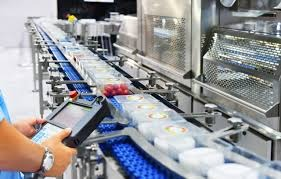
A worker operating industrial automation systems, controlling a conveyor to transport products on the production line
Modern industries demand speed, precision, and operational reliability to remain competitive. With growing production volumes and increasingly complex supply chains, industrial automation systems have become essential for streamlining operations, maintaining consistent output, and reducing human error.
Industrial automation systems integrate machines, sensors, controllers, and software to automatically monitor and control industrial processes. Rather than relying solely on manual supervision, these systems collect real-time data, analyze conditions, and adjust operations autonomously.
By leveraging these technologies, organizations can improve operational efficiency, make data-driven decisions, optimize production strategies, manage resources effectively, and maintain product quality at scale.
Understanding Industrial Automation
System Automation vs. Industrial Automation
System automation refers broadly to the use of technology to perform tasks automatically. In industrial settings, it involves coordinating multiple machines, controllers, and software into a unified workflow.
Industrial automation goes further by connecting all components of a production process so they communicate and operate in precise sequence under controlled conditions. This integration ensures stable output, reduces errors, and streamlines complex workflows.
For example, in an automotive assembly line, robotic arms, conveyor belts, and vision inspection systems work together through coordinated control logic, minimizing manual intervention while ensuring consistent assembly quality.
How Industrial Automation Works
Industrial automation systems operate through a continuous cycle of monitoring, analysis, decision-making, and execution:
- Data Collection: Sensors such as thermocouples, pressure transducers, flow meters, and proximity switches capture precise real-time measurements from machines and production lines.
- Data Processing: PLCs (Programmable Logic Controllers) and DCS (Distributed Control Systems) analyze sensor data against programmed thresholds or control algorithms, identifying anomalies or deviations.
- Decision Making: Control algorithms—such as PID, fuzzy logic, or model predictive control—determine actuator responses to optimize machine performance, reduce energy consumption, and prevent potential faults.
- Execution: Actuators, including electric motors, pneumatic or hydraulic cylinders, servo systems, and valves, implement mechanical adjustments to maintain target operating conditions.
This feedback loop enables real-time response to production fluctuations, minimizes downtime, and ensures uniform product quality across batches.
Why Industrial Automation Matters Today
Industry Trends Driving Automation
Several factors are accelerating the adoption of industrial automation:
- Increasing production demands
- Higher quality and regulatory compliance standards
- Labor shortages and workforce limitations
- Growing operational complexity across supply chains
- Rising demand for predictive maintenance and energy efficiency
Operational Benefits
Automation provides measurable advantages:
- Faster production: Continuous operation with reduced cycle times through synchronized machinery
- Consistent product quality: Machines follow programmed procedures, reducing human variability
- Reduced human error: Automated inspections and material handling reduce defects and rework
- Enhanced monitoring: Real-time diagnostics enable predictive maintenance and rapid fault detection
- Improved safety: Machines perform hazardous operations, lowering workplace injury risks
For instance, in a food processing plant, automated vision systems detect defective products, while robotic arms package items efficiently, reducing waste and labor requirements.
Return on Investment
Automation improves key performance metrics:
- Production output: +20–50%
- Defect rate: −30–70%
- Labor costs: −15–40%
- Equipment downtime: Significantly reduced through predictive maintenance and continuous monitoring
Early adoption provides a strategic advantage through improved efficiency, predictable quality, and lower long-term costs.
Key Components of Industrial Automation Systems
Industrial automation relies on several core technologies:
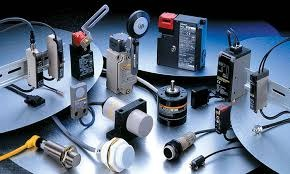
Various industrial automation products were displayed, including sensors, PLCs, and control devices
- Sensors: Monitor temperature, pressure, vibration, flow, and position. Examples include thermocouples in furnaces, vibration sensors on rotating equipment, and proximity sensors on conveyors.
- Actuators: Translate control signals into mechanical actions, such as motors driving robotic arms, pneumatic or hydraulic cylinders moving equipment, or valves regulating fluid flow.
- Programmable Logic Controllers (PLCs): Process sensor data and manage equipment responses, robustly handling harsh industrial environments.
- Human-Machine Interfaces (HMIs): Dashboards that allow operators to monitor system status, adjust parameters, and respond to alerts.
- Communication Networks: Industrial Ethernet, fieldbus systems, and IIoT connectivity enable fast, secure data exchange between devices.
- SCADA Systems: Supervisory platforms that consolidate data from multiple PLCs and sensors, providing centralized monitoring, trend analysis, and predictive maintenance support.
Together, these components enable automation across complex, large-scale production environments.
Types of Industrial Automation Systems
- Fixed Automation: Designed for high-volume, repetitive production with minimal variation. Equipment is dedicated to specific tasks, maximizing speed and efficiency but offering limited flexibility. Applications: Automotive assembly lines, automated bottling and packaging, PLC-controlled mass production.
- Flexible Automation: Supports multiple product types using the same equipment. Programmable controllers and robots adjust operations quickly, allowing production lines to switch tasks with minimal downtime. Applications: CNC machining centers, robotic electronics assembly, and automated guided vehicles (AGVs) in warehouses.
- Programmable Automation: Used for batch production. Machines can be reprogrammed for new products, balancing efficiency and flexibility. Applications: Industrial robots for welding/assembly, CNC batch production, PLC-controlled batch processes.
Industries Leveraging Automation
Automation is widely applied in sectors requiring precise control and consistent output:
| Industry | Examples of Automation |
| Manufacturing | Robotic assembly, automated packaging, CNC machining |
| Oil & Gas | Pipeline monitoring, refinery process control, compressor stations |
| Mining | Automated drilling rigs, material transport systems |
| Food & Beverage | Sorting, filling, packaging, and temperature-controlled processing |
| Logistics | Automated warehouses, conveyor systems, AGVs |
| Energy | Power plant monitoring, smart grid control, predictive maintenance |
In each case, automation ensures high productivity, quality consistency, and operational safety.
Selecting the Right Automation System
Key considerations include:
- Operational needs: Identify processes that benefit most from automation and define performance targets.
- Compatibility: Ensure smooth integration with existing machinery and software systems.
- Flexibility: Choose scalable solutions to accommodate future production demands.
- Budget and ROI: Evaluate long-term productivity gains against upfront costs.
- Vendor support: Reliable technical assistance and maintenance services minimize downtime and maximize efficiency.
Transform Your Factory with JLCMC — Precision. Reliability. Performance.
In an era where downtime costs thousands and precision defines success, industries demand automation solutions they can trust. JLCMC delivers a comprehensive portfolio of mechanical and automation components—from linear actuators and motion control systems to aluminum extrusion frameworks and specialized automation modules—supporting everything from simple upgrades to fully integrated industrial systems.
Our components are engineered for accuracy, tested to withstand continuous operation under harsh conditions, and backed by global logistics and technical support, ensuring your production lines run smoothly, efficiently, and without interruption.
Join thousands of manufacturers worldwide who rely on JLCMC's precision solutions to reduce operational costs, enhance production scalability, and maintain impeccable quality standards. With JLCMC, your factory doesn't just automate—it performs at its peak.
Frequently Asked Questions
What are industrial automation systems?
Technologies that automatically control machines and processes using sensors, controllers, and software to improve efficiency, accuracy, and consistency while reducing manual intervention.
What are the main types of industrial automation?
Fixed, flexible, programmable, and integrated/hybrid automation, supporting everything from repetitive mass production to adaptable smart factory operations.
What are examples of industrial automation?
Robotic assembly lines, CNC machining systems, automated conveyors, PLC-controlled packaging machines, machine-vision inspection systems, and automated warehouse AGVs.
What are the top automation tools?
PLCs, SCADA systems, HMIs, industrial robots, and sensor-actuator networks that monitor, control, and execute automated processes.
Keep Learning
How Industrial Automation Systems Are Redefining Modern Manufacturing Efficiency
A worker operating industrial automation systems, controlling a conveyor to transport products on the production line Modern industries demand speed, precision, and operational reliability to remain competitive. With growing production volumes and increasingly complex supply chains, industrial automation systems have become essential for streamlining operations, maintaining consistent output, and reducing human error. Industrial automation systems integrate machines, sensors, controllers, and software......
How to Interpret Industrial Automation & Robotics Correctly
Industrial processes today are increasingly controlled by intelligent systems rather than manual labour alone. The shift toward industrial automation and robotics has allowed factories, laboratories, and production facilities to operate with greater speed, consistency, and accuracy than ever before. At a basic level, these technologies use computers, control systems, and programmable machines to perform tasks previously handled by humans. They manage everything from assembly lines and packaging system......
Evolution of Pneumatics-2: How did pneumatics originate
How did Pneumatics Originate? Pneumatic technology has been recognized and utilized by humans for millennia. The first pneumatic gadget was discovered in 429 AD, when blow-guns, used by prehistoric hunters to shoot their prey, were discovered. The Greek mathematician Hero of Alexandria first recorded the principles of pneumatics in writing in the first century. He wrote about his inventions, which generated power and moved objects using the wind. The vacuum pump was created in the 1600s by German phys......
Industrial Sensors 2025: Trends, Technologies, and Market Outlook
Introduction Industrial sensors are the lifeblood of every contemporary manufacturing and automation application. These little powerhouses help keep the world’s industries running smoothly and safely. With factories and production lines getting upgraded, the importance of sensors only gets multiplied. This guide covers all you need to know about industrial sensors the types available, what they do, new developments, and upcoming areas of the industry. See our list of Leading Manufacturers of Temperatu......
3D Printing Industry Outlook in 2025
With the economic recovery and technological progress, the 3D printing industry will usher in new opportunities in 2025. Although the market fluctuates in 2024, the growth of low-cost printers and the increase in demand for metal printing. This article will introduce the current status of the 3D printing industry and what new development opportunities there will be in 2025. CONTEXT's latest report on the 3D printing market According to the latest report from market intelligence company CONTEXT, the ou......
From Exclusive to Accessible: The Evolution of 3D Printer Prices Since the Early 2000s
3D printing has had an extraordinary journey from an industrial wonder to a widely used technology. In the early days of 3D printing, the cost was far beyond the reach of small businesses or hobbyists. So how did 3D printers become popular? This article will cover the pricing of 3D printers in the early 21st century and the subsequent evolution that made 3D printing popular. The High Cost of Early 3D Printers In 1984, Chuck Hull invented SLA printing technology and patented additive manufacturing tech......