Reducing Ball Screw Noise: Troubleshooting and Optimization
6 min
- Troubleshooting the Cause of Noisy Ball Screws
- Methods for Reducing Noise by Lubrication and Maintenance
- Alignment and Installation Options for Quieter Function
- System Tuning: Breaking Resonance and Vibration
- Component Selection and Design Considerations
- Wrapping It Up!
- Frequently Asked Questions
The noise generation of the ball screw is a difficult problem for the design of modern automation and motion-control systems. As machines grow faster and more exacting, they can be easily tripped up even by small amounts of unwanted sound. Noise disturbs the working environment. It can distract operators. It can also be an indicator of deeper mechanical problems that reduce the accuracy and the life of the components.
Such questions are asked by many engineers and technicians: How to decrease noise in the ball screw without loss of its performance? The good news is that most noise issues have an identifiable root cause. By following troubleshooting tips and making some smart optimizations, you can potentially reduce noise quite a bit.
This article details the major causes of ball screw noise. It also walks you through real solutions. Four key areas are highlighted: lubrication, alignment, installation, and system-level enhancements.
If you're unsure what ball screws are or how they work, you can refer to JLCMC's expert insights. Additionally, the JLCMC catalog offers a variety of ball screw models and compatible components to suit your needs.
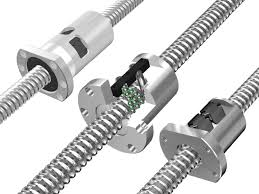
Troubleshooting the Cause of Noisy Ball Screws
Before you can fix the noise, you first need to understand what is causing it. Not every sound indicates that you’ve failed. Some noise is normal. The key is distinguishing between normal operational sounds and signs of failure.
Normal and Problem Noises
It can be challenging to distinguish standard operating sounds from real problems. Ball screws produce noise while in operation. This is expected. Balls roll along the raceway. They recirculate through the nut. Light rolling noise is normal.
Problem noise usually sounds different. Watch out for:
- High-pitched squealing during motion
- Clunking or knocking at low speeds
- Intermittent humming or mild vibration at certain speeds
Normal noise stays consistent. Typically, problematic sound changes with speed, load, or direction. If the sound worsens over time, do not brush it off.
Common Mechanical Sources of Noise
Various mechanical elements and conditions contribute to the generation of noise in a ball screw system.
Common sources include:
- Worn or damaged bearings on the screw ends
- Poor ball recirculation circuit inside the nut
- Insufficient or uneven nut preload
- Surface wear and tear on the screw raceway
Small flaws can lead to big noise problems at high speeds. That is why inspection always comes first.
Methods for Reducing Noise by Lubrication and Maintenance
The amount of noise that a ball screw makes depends greatly on how well it is lubricated. One of the most frequent causes of noise is inadequate lubrication.
How Proper Lubrication Reduces Ball Screw Noise?
Correct lubrication reduces friction. It protects balls and raceways from dust and contaminants. It also prevents metal-to-metal contact.
Key points to consider:
- Grease vs. oil: Grease is often used for general applications. Oil is better for high-speed or high-duty systems.
- Correct viscosity: Too thick causes drag. Too thin does not protect surfaces.
- Proper quantity: Too little causes wear and noise. Too much leads to churning and heat.
Always follow the manufacturer’s lubrication instructions. Random lubricant selection usually makes the system noisier.
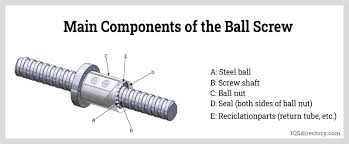
Optimal Preload to Eliminate Rattle
Preload removes internal clearance between the balls and the raceway. Without preload, the balls can shift slightly. This movement causes noise and vibration.
Proper preload offers several benefits:
- Reduces axial play
- Improves positioning accuracy
- Reduces impact noise during direction changes
Too much preload is also harmful. It increases friction and heat. The goal is balance. Proper preload maintains smooth and quiet motion.
Alignment and Installation Options for Quieter Function
Even a perfectly manufactured ball screw can become noisy due to poor installation. Alignment mistakes are a major hidden source of noise and vibration.
The Critical Role of Alignment in Noise Reduction
The ball screw must align with the guide rails and the motor shaft. Any mismatch creates side loads. These forces cause the balls to rotate unevenly.
Misalignment often causes:
- Cyclic noise during rotation
- Increased bearing noise
- Accelerated nut and screw wear
Use precision tools during installation. Check parallelism and verify concentricity, as small adjustments can make a big difference.
End Bearing Support and Fixation
End support bearings control axial and radial movement. Poor support leads to runout. Runout leads to noise.
Best practices include:
- Using paired angular contact bearings
- Applying the correct bearing preload
- Securing the housing and mounting rigidly
A stable support structure allows the screw to rotate smoothly. This reduces vibration and noise.
System Tuning: Breaking Resonance and Vibration
Sometimes the issue is not the ball screw itself. Excessive noise can come from resonance within the overall system.
Techniques for Mitigating System Resonance
Resonance occurs when the operating frequency matches the system’s natural frequency. Noise can suddenly increase at specific speeds. Ways to reduce resonance include:
- Changing operating speed ranges
- Increasing system stiffness
- Adding mass or damping elements
Even a small speed adjustment can move the system out of resonance and reduce noise immediately.
Decoupling and External Noise Reduction Methods
External isolation helps prevent vibration from spreading through the machine structure.
Common solutions include:
- Anti-vibration pads under mounting points
- Flexible motor couplings
- Acoustic covers or enclosures
These methods do not fix internal noise sources. They reduce how much of noise that reaches the environment. This is useful when a redesign is not possible.
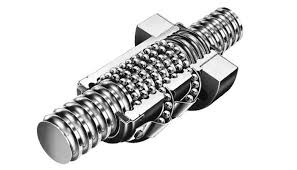
Component Selection and Design Considerations
Noise control often begins at the design stage. Choosing the right components helps prevent problems later.
Choosing High-Precision, Low-Vibration Ball Screws
Not all ball screws are the same. High-precision models are usually quieter.
Ground ball screws offer:
- Smoother raceway surfaces
- Better ball contact consistency
- Lower vibration at high speeds
Rolled ball screws cost less but tend to be noisier in precision applications. Selection should match performance needs.
Adjusting Ball Recirculation System Design
The ball recirculation system affects how smoothly balls re-enter the raceway. Poor design causes impact noise.
Modern improvements include:
- Optimized return tubes
- Internal deflectors with smoother transitions
- Special guide shapes to avoid collisions
These designs reduce shock during recirculation. Less shock means less noise and longer service life.
Wrapping It Up!
So, how can ball screw noise be effectively reduced? The answer lies in a mix of smart maintenance and sound design decisions.
Start with proper lubrication. Use the right type and amount. Apply correct preload to eliminate rattle. Focus on accurate alignment during installation. Use durable, well-supported end bearings. Address system resonance through speed and stiffness adjustments. Finally, choose high-precision components with improved recirculation designs.
When these steps work together, the results are clear. Quieter operation and better accuracy. Longer-lasting ball screw systems.
Frequently Asked Questions
What kind of noise is bad for a ball screw?
Grinding, high-pitched squealing, knocking, or sudden vibration usually indicate mechanical problems. These noises should be addressed quickly to avoid damage.
Does lubricant choice really affect sound?
Yes. Wrong lubricant type or insufficient quantity are common causes of noise. Speed, load, and environment determine the correct choice.
Does a noisy ball screw have a shorter lifespan?
In most cases, yes. Noise often signals friction, misalignment, or wear. Early noise control can significantly extend service life.
Popular Articles
Keep Learning
Reducing Ball Screw Noise: Troubleshooting and Optimization
The noise generation of the ball screw is a difficult problem for the design of modern automation and motion-control systems. As machines grow faster and more exacting, they can be easily tripped up even by small amounts of unwanted sound. Noise disturbs the working environment. It can distract operators. It can also be an indicator of deeper mechanical problems that reduce the accuracy and the life of the components. Such questions are asked by many engineers and technicians: How to decrease noise in......
Why Do Your Drawer Slides Get Stuck, How to Fix It?
Drawer slides are everywhere in your workshop, kitchen, office, or bedroom. Ensuring their smoothness and durability is key to maintaining the convenience and comfort of your furniture. If you're reading this article, you've likely faced the frustration of drawer slides getting stuck. Let's explore why this happens and how JLCMC can help you prevent it and find effective solutions. Common Issues and Analysis Incorrect Drawer Slide Selection One of the most common causes of stuck drawer slides is choos......
Hoses and Clamps Multi-Scenario Leak Repair Guide
Fig. 1 A picture of Hose Clamps In high-performance environments, system failures aren’t always triggered by failing sensors or seized motors. More often than not, it’s the hose and clamps—small, everyday components—that quietly undercut performance. Industry data suggests that nearly 15% of hydraulic system leaks can be traced back to poor-quality fittings, components, and hose and clamp connections. Why these happenings? It starts with something as simple as a poor fit or mismatched hose clip. Left ......
What Happens When a Timing Belt Breaks?
Fig. 1 A picture of a Timing Belt You're cruising comfortably down the highway when suddenly the engine sputters, stutters, and quits. No warning. No check engine light. Just an eerie silence. If the timing belt broke or the cam belt snapped, you've just experienced one of the most damaging failures an engine can suffer. Whether it's in a vehicle or industrial machine, a timing belt is the quiet hero that synchronizes your engine's internal components. It keeps the crankshaft and camshaft in lockstep ......
5 Ball Valve Mistakes That Can Wreck Your Machine Systems—and How to Avoid Them
Alt: A picture of Ball Valve applications In industrial and commercial systems, the smallest hardware often dictates the biggest outcomes. The ball valve—while compact—plays a pivotal role in regulating flow, managing pressure, and maintaining operational integrity. Yet, despite their small size, ball valve failures remain one of the leading causes of machine downtime. In many industrial systems, valve-related issues disrupt uptime more often than motors or controls. Not software. Not sensors. Just va......
Compression Springs in Manufacturing: 5 Machine Failures You Can Prevent Today
Fig. 1 A picture of a Compression Spring In CNC systems and automated equipment, machine failure rarely starts with a loud bang. It begins with something quieter: a drifting axis, a stalled actuator, or inconsistent pressure in a tool head. Often, the underlying cause is force instability, and behind that? A worn or improperly specified compression spring. These small, coiled components play an outsized role in industrial reliability. They manage loads, absorb shock, reset motion, and protect precisio......