Ball Screw Types Explained: Features, Differences & Applications
10 min
- Key Takeaways
- Ball Screw Types by Production Method
- Ball Screw Types by Nut Configuration and Preload Method
- Ball Screw Types by Ball Circulation Method
- Ball Screw Selection by Operating Conditions and Application Requirements
- Special-Design Ball Screws
- Common Applications of Ball Screws
- Ball Screw Types Comparison
- How to Choose the Right Ball Screw
- Ball Screw Manufacturing at JLCMC
- Frequently Asked Questions
- Conclusion
You need accurate motion control for your industrial equipment. A ball screw changes rotary drive into linear movement with high efficiency. You will find many ball screw types across modern hardware shops today. Each design serves a specific role in your setup. This guide helps you pick the best model for your next project.
Key Takeaways
- People select specific models based on simple mechanics.
- Production methods affect the accuracy level of the screw shaft.
- Nut designs control how steel balls circulate through the unit.
- Preload methods reduce axial play and raise stiffness for demanding work.
- Proper selection ties mechanical traits to actual machine tasks.
- Load limits and work site conditions guide your final choice.
Ball Screw Types by Production Method
These components are usually manufactured by rolling or grinding, forming two main categories.
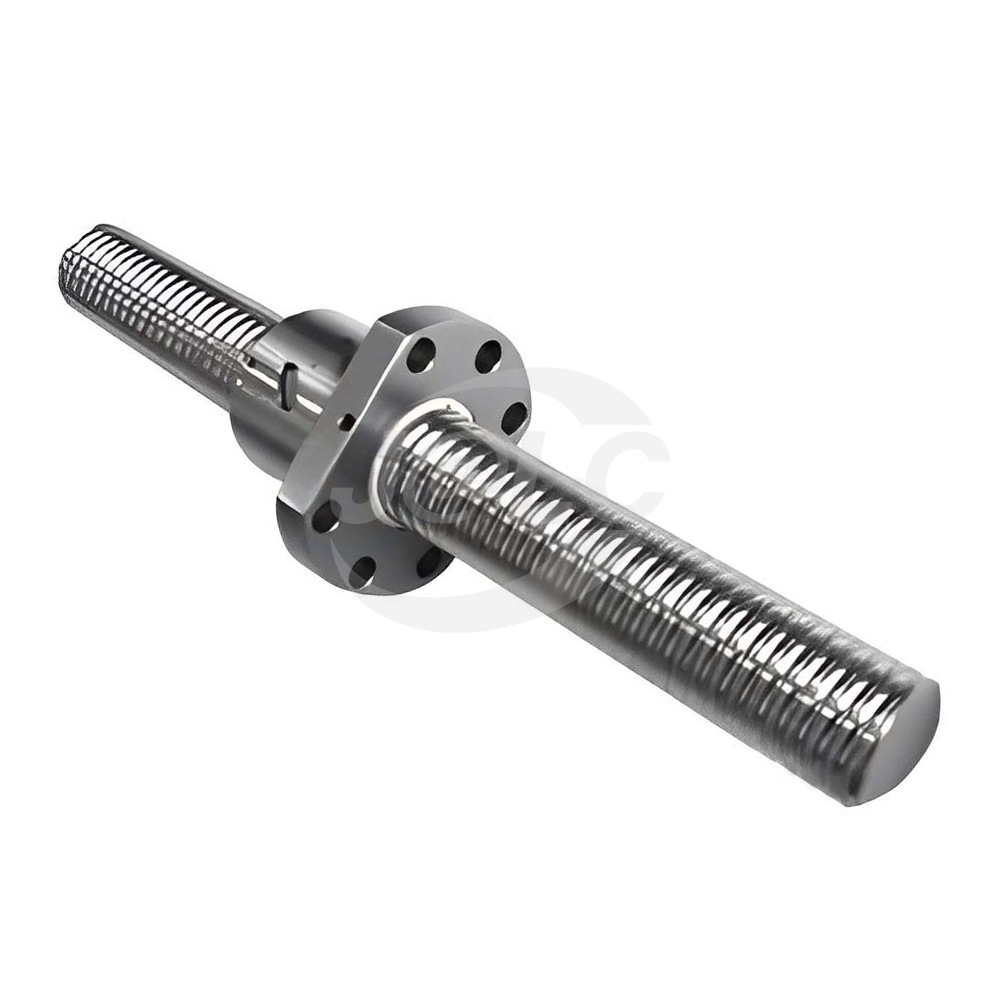
Rolled Ball Screws
Workers force thread profiles onto a steel rod with heavy rollers. This cold process shapes threads fast and keeps costs low. You get smooth metal surfaces and solid performance for general tasks.
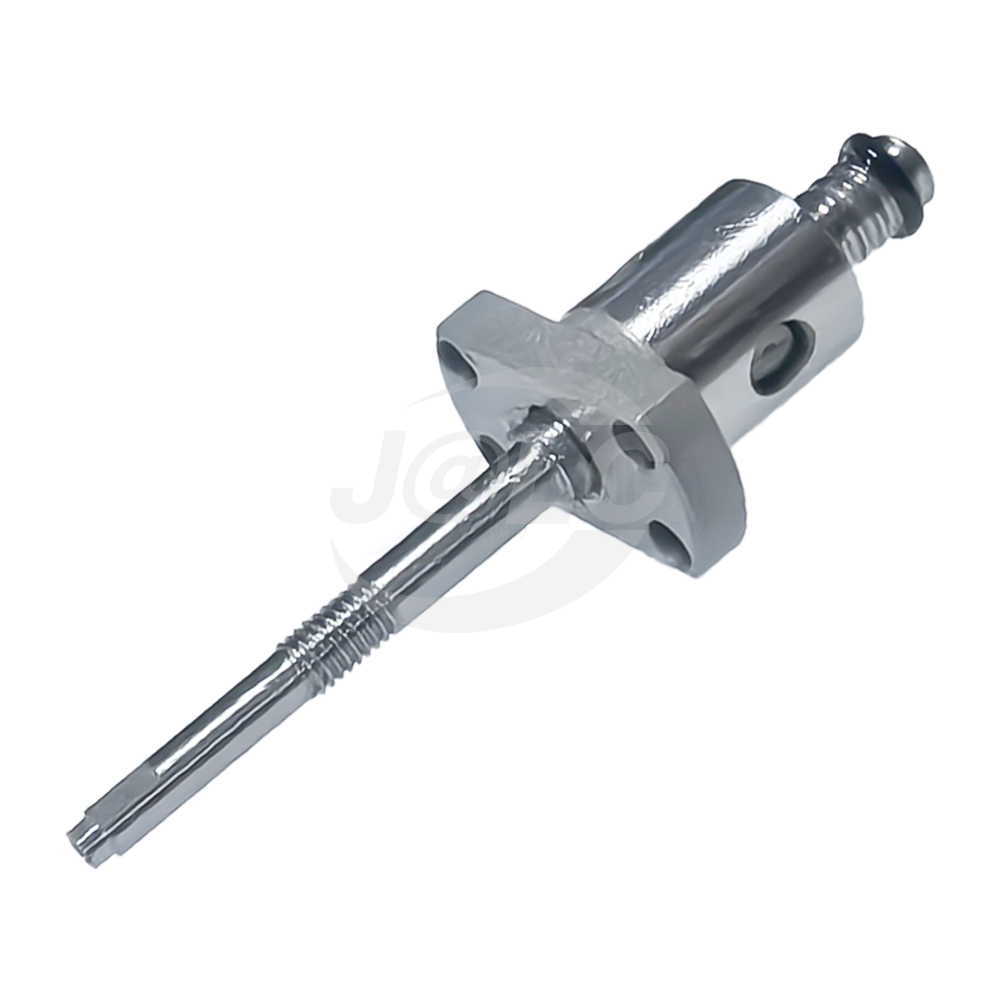
Ground Ball Screws
An abrasive wheel grinds exact thread paths into a steel rod. This step delivers high lead accuracy and repeatability for positioning tasks. People use ground units in equipment with demanding position requirements.
Ball Screw Types by Nut Configuration and Preload Method
The nut holds the steel balls and links the shaft to the payload. Preload reduces unwanted axial play and increases stiffness between the balls and raceways, and it is implemented through these nut structures — for example, clamping a spacer between two nut bodies realizes preload on the double-nut structure.
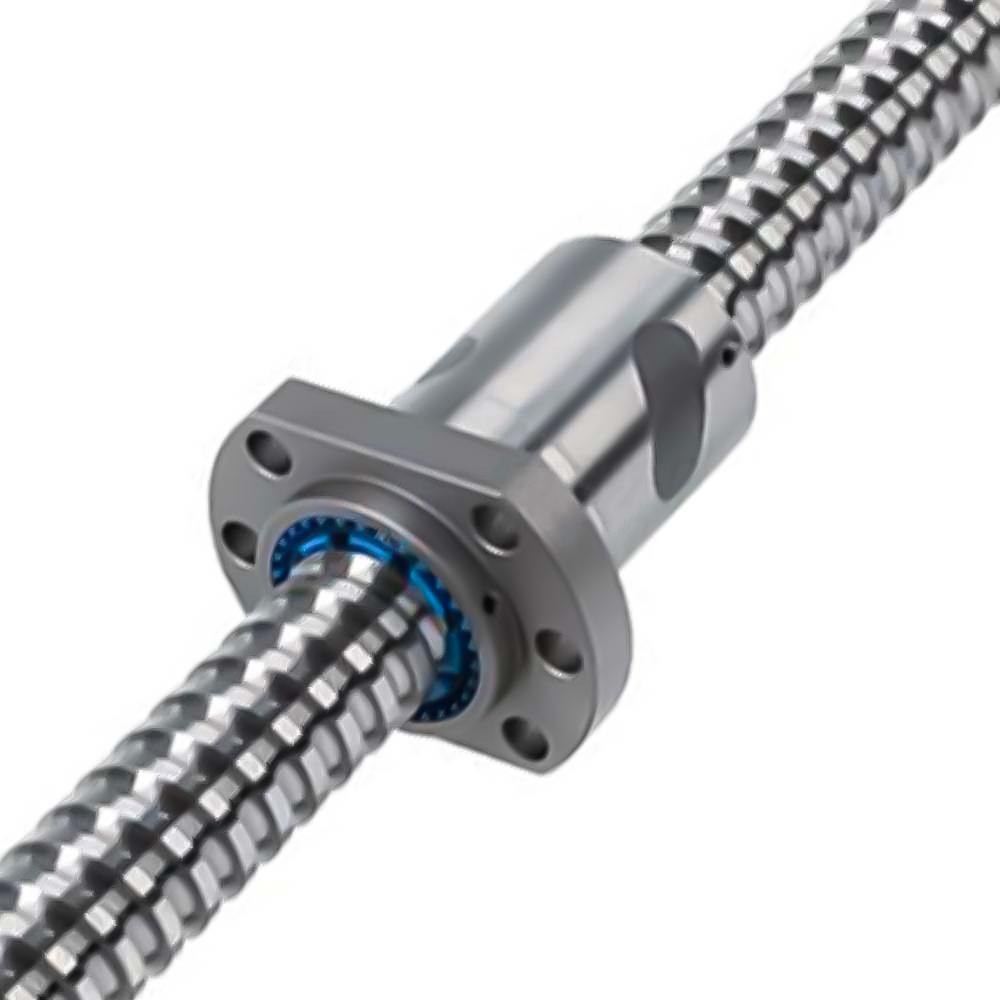
Single-Nut Ball Screws
This style uses one nut body to carry the load. The design saves space and reduces overall equipment expenses. You can use this option when the required stiffness and positioning accuracy can be achieved without a second nut.
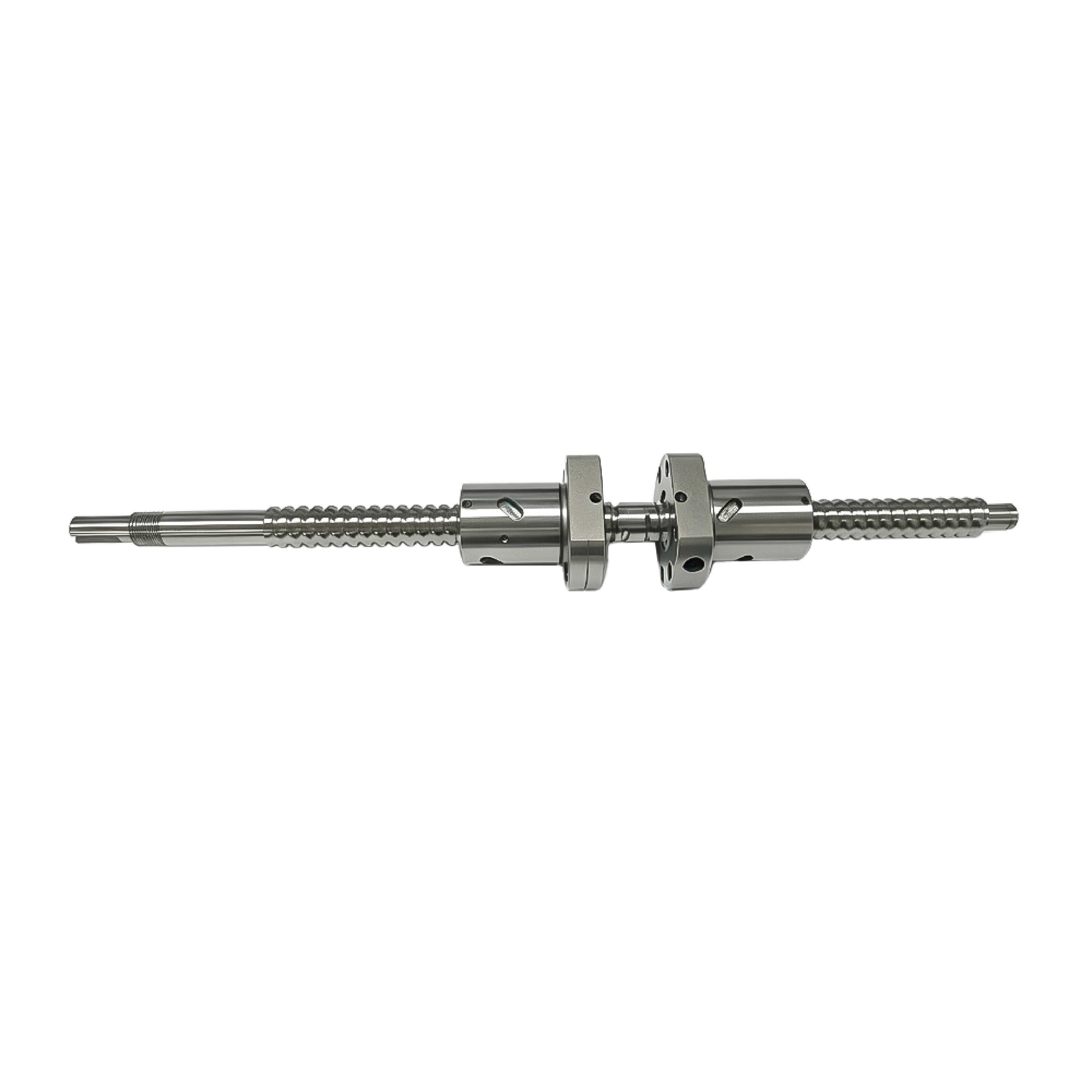
Double-Nut Ball Screws
Two nut bodies sit on one shaft with a spacer set between them. This design allows controlled preload between the nuts to reduce axial play. You gain high stiffness for demanding machinery tasks.
Special Nut Configurations
Some designs feature unique mount flanges or custom outer shapes. These custom units solve space limits inside tight machine bodies. People set them up to match unique mounting goals.
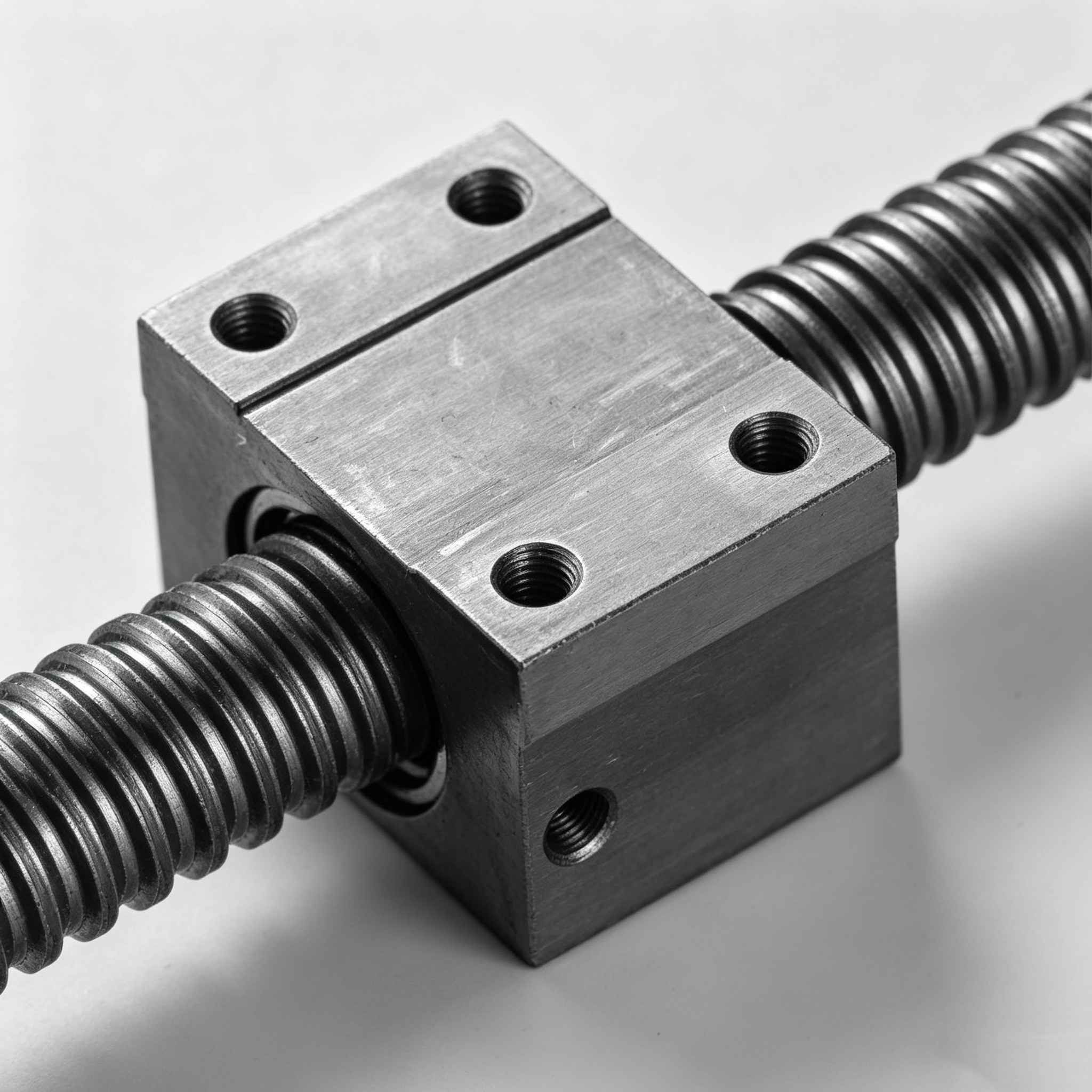
Non-Preloaded Ball Screws
These units do not intentionally apply preload between the balls and raceways. You get lower friction and lower costs. People buy them for applications where the required stiffness and positioning performance can be achieved without significant preload.
Double-Nut Preload
A solid spacer can sit between two separate nut bodies. Controlled axial positioning between the nuts creates preload and increases contact stiffness. This method gives you high stiffness under demanding loads.
Offset-Lead Preload
Engineers introduce a controlled lead offset within a single nut assembly to create preload. This shift forces the balls to contact both sides of the raceways. You get a compact setup with reduced axial play.
Constant-Pressure Preload
A spring element pushes against internal parts inside the nut body. The spring helps maintain preload as operating conditions and component dimensions change. You maintain more consistent performance across long work periods.
Oversized-Ball Preload
Manufacturers use balls with a controlled diameter difference to create interference between the balls and raceways. The tight fit reduces axial play inside one nut body. You achieve simple backlash control without extra nut bodies.
Ball Screw Types by Ball Circulation Method
Steel balls must cycle through the nut track without pause.
Return-Pipe Type
An outer metal pipe guides balls from the end of the load-bearing circuit back to the start point. The pipe provides a continuous return path through the nut. This simple system handles common industrial tasks well.
Deflector Type
A small insert inside the nut redirects balls from the end of one circuit back into the return path. This design can create a compact nut configuration for tight spaces.
End-Cap Type
End caps guide balls through passages at the nut ends. Internal passages return the balls through the nut body. You get smooth operation at high-speed levels.
Ball Screw Selection by Operating Conditions and Application Requirements
Different work tasks demand unique physical traits from your hardware. Note that these are not mutually exclusive physical types, but performance combinations configured for specific operating conditions.
High-Speed Ball Screws
Special ball return paths handle quick movement while limiting circulation problems. Unique caps can lower noise from ball impacts. You run these units in fast pick-and-place tools.
High-Precision Ball Screws
Strict production rules yield minimal lead errors along the shaft length. Ground threads give high positioning accuracy and repeatability. You select these models for precise tool setups.
High-Load Ball Screws
Large ball sizes and suitable raceway geometry can carry heavy loads. Nut geometry and stiffness influence deflection under axial force. You install them in heavy machinery when the required load rating and service life are met.
Large-Lead Ball Screws
A large lead moves the nut a greater linear distance per shaft revolution. One shaft turn shifts the nut a long distance. You achieve fast linear travel with lower motor speeds.
Special-Design Ball Screws
Engineers build specialized hardware for unique mechanical needs.
Hollow and Cooled Ball Screws
A hollow center allows coolant flow through the screw shaft. Coolant removes heat generated during operation. You control thermal expansion with precise tools.
Rotary-Nut Ball Screws
The nut turns while the long screw shaft stays fixed in place. Support parts mount on the outer surface of the nut body. You can reduce critical-speed and shaft-whip concerns on long-stroke units.
Common Applications of Ball Screws
Different industries rely on specific ball screw types to power their machines.
CNC Machine Tools
Mill tools use precision ball screws for high positioning accuracy and repeatability. Rigid parts resist heavy force without excessive deflection. You cut metal parts to exact specs.
Semiconductor Equipment
Cleanroom systems need smooth movement with low particle output. Special circulation designs can deliver quiet motion inside compact tools. People rely on them for precise positioning in semiconductor equipment.
Industrial Automation
Factory transfer lines can use rolled single-nut units to shift goods. These tough parts can reduce machine build costs where their accuracy and load ratings are suitable. You move goods across long shifts.
Robotics
Linear robot arms require light motion parts with fast response times. Large-lead units can drive quick arm moves across large work zones. You speed up work times on factory floors.
Other Precision Equipment
Medical and laboratory equipment can use precision ball screws to move positioning mechanisms. Precision tools can rely on suitable preload and circulation designs for controlled movement. You achieve smooth movement without excessive vibration.
Ball Screw Types Comparison
Selection of hardware requires a clear check of ball screw type choices.
| Ball Screw Types | Precision Level | Production Cost | Main Strength |
| Rolled Models | Low to High, depending on specification | Low | Lower Cost |
| Ground Models | Typically high | High | High Accuracy |
| Single-Nut Models | Depends on design | Low to Moderate | Small Size |
| Double-Nut Models | Depends on design | Higher | High Stiffness |
People compare these ball screw types to match budget goals with performance needs.
How to Choose the Right Ball Screw
You must review several work factors before you buy your hardware.
Accuracy
Match your required positioning accuracy and lead accuracy to the ball screw's specified accuracy grade. Ground shafts offer tight limits for exact location work. Rolled shafts suit basic transport systems.
Load
Calculate total static weight and active forces. High loads demand a ball screw with an appropriate dynamic and static load rating, stiffness, and service life. Always include peak force spikes in your math.
Speed
Check your goal velocity against critical speed limits. Fast travel requires consideration of lead, rotational speed, ball circulation, lubrication, and thermal behavior. High speed can cause shaft vibration.
Lead
Pick a lead fit for your motor speed and torque range. Short leads offer fine control and high drive force. Large leads give fast linear travel.
Preload
Select preload levels based on your stiffness needs. High preload removes play but raises friction and heat. Low preload works fine for simple motion.
Thermal Behavior
Friction creates heat that expands across the steel screw shaft. High work cycles require suitable cooling or thermal management. Temperature control keeps your accuracy stable.
Lubrication
Oil and grease reduce friction inside nut tracks. Grease stays in place for easy maintenance schedules. Oil flows well in high-speed tools.
Work Site Environment
Dust, water, and other contaminants can enter the ball screw assembly, accelerating wear or corrosion. Use flexible seals or cover boots in dirty places. Corrosion-resistant materials can improve performance in wet or corrosive work zones.
Service Life
Check the expected service life against the ball screw's dynamic load rating, operating load, speed, and duty cycle. Proper sizing helps prevent premature wear and maintains consistent motion performance.
Critical Speed and Buckling
For long shafts, check critical speed to prevent excessive vibration during rotation. Applications subject to axial compressive load should also be checked for buckling based on the unsupported screw length, screw diameter, end support conditions, and compressive load.
Ball Screw Manufacturing at JLCMC
Choosing the right ball screw is only part of the process. Manufacturing accuracy, material selection, dimensions, tolerances, and inspection requirements also affect final performance. JLCMC can support custom manufacturing requirements when standard ball screw specifications do not meet your machine's needs.
For a custom ball screw, provide the required dimensions, lead, accuracy, load, speed, material, and application requirements. These details help determine the appropriate manufacturing approach for your project.
Frequently Asked Questions
Are single-nut ball screws always non-preloaded?
No. Single-nut ball screws can be either preloaded or non-preloaded. Preload can be created through methods such as offset-lead or oversized-ball designs.
Does a double-nut ball screw always use preload?
Not necessarily. Double-nut ball screws are commonly preloaded, but the specific configuration and preload method depend on the design.
Does preload increase ball screw accuracy?
No. Preload primarily raises stiffness and reduces axial play, while manufacturing accuracy and lead accuracy determine the screw's positioning performance.
Can a rolled ball screw be used in a precision application?
Yes. Precision rolled screws can handle moderate accuracy requirements where their specified lead accuracy, repeatability, load rating, and service life are suitable.
What factors limit ball screw speed?
Shaft critical speed, maximum rotational speed, ball circulation, lubrication, load, and thermal conditions can limit ball screw speed.
Does a larger lead always mean higher linear speed?
For the same screw speed, yes. A larger lead moves the nut farther per shaft revolution and therefore produces greater linear speed.
How does temperature affect ball screw performance?
Temperature changes can cause thermal expansion of the steel shaft and affect positioning accuracy.
How often should a ball screw be lubricated?
You lubricate units based on work hours, work speed, load levels, lubricant type, and the manufacturer's recommendations.
Conclusion
Knowledge of ball screw types helps you build efficient machinery. You can balance accuracy and load capacity when you choose proper parts. Pick your next model based on your motion control needs today.
For custom dimensions, materials, tolerances, or manufacturing requirements, JLCMC can help you develop a ball screw solution suited to your application.
Keep Learning
Ball Screw Types Explained: Features, Differences & Applications
You need accurate motion control for your industrial equipment. A ball screw changes rotary drive into linear movement with high efficiency. You will find many ball screw types across modern hardware shops today. Each design serves a specific role in your setup. This guide helps you pick the best model for your next project. Key Takeaways People select specific models based on simple mechanics. Production methods affect the accuracy level of the screw shaft. Nut designs control how steel balls circula......
Why Does Your Stepper Motor Always Make a Squealing Noise?
A squealing stepper motor is almost never a mechanical grinding issue. The noise is electrical: PWM chopping, magnetic resonance, or current misconfiguration exciting the stator laminations. This article provides a four-step workflow to isolate the root cause and fix it without losing torque or steps. Key Causes of Stepper Motor Squealing 1. PWM Chopping Frequency in the Audible Range Motor drivers control current by rapidly switching MOSFETs. If the chopping frequency sits below 20 kHz, each switchin......
Linear Guide Rails and Bearings: What's the Difference and Which Should You Use?
Pick any machine that moves in a straight line — a CNC router, a pick-and-place unit, a 3D printer gantry — and somewhere inside it you will find either a linear bearing riding on a round shaft or a linear guide rail carrying a carriage block. Although they are sometimes discussed interchangeably, round-shaft linear bearings and profiled linear guide rails are two different linear motion systems designed for different levels of precision, rigidity, and load capacity. Both deliver low-friction, guided,......
What Actually Goes Into a Linear Guide Rail System
A linear guide rail system is more than one rail. On its own, the rail cannot provide guided motion. What supports the load and maintains positioning accuracy is how the rail, carriage, rolling elements, and seals work together. This is a quick tour of those parts, and how they add up to a complete motion axis. For engineers speccing a new axis and buyers matching a system to a machine. If you just need the basics — what a linear guide is or the different types of linear rails — start with those two g......
What Are Linear Guides and Why Do They Matter in Factory Automation?
Every CNC machine, every pick-and-place robot, every wafer handler on a semiconductor line — they all share one fundamental need: moving something in a straight line, accurately and repeatedly. That's where linear guides come in. Despite being one of the most widely used components in factory automation, linear guides are often misunderstood — partly because the industry can't agree on what to call them. This article breaks down what linear guides actually are, what's inside them, the main types of li......
Exploring Mechanical Shaft Collars and Their Different Types
Though quite elementary in design, shaft collars serve an important mechanical purpose. In simple terms, a shaft collar is a round clamping device that can be used for axial positioning of components, acting as mechanical stops, or securing parts in place along a shaft. While they may look like simple components, shaft collars must be chosen wisely to ensure performance, accuracy, and longevity of the system. This article focuses on the common types of mechanical shaft collars in transmission systems,......