Barcode Scanner Basics: What It Is & How It Works
9 min
- What Is a Barcode Scanner
- How Barcode Data Connects to Your System
- 1D vs 2D Barcodes — What Can a Barcode Scanner Read?
- How Does a Barcode Scanner Work?
- What Barcode Scanner Components Make This Possible?
- What Are the Benefits of a Dedicated Barcode Scanner?
- How Do Barcode Scanners Improve Business Efficiency?
- Choosing the Right Barcode Scanner for Your Needs
- FAQs
- Final Thoughts
- About JLCMC
Originally used as a simple retail tool, barcodes have now evolved into a core technology widely applied across industries such as logistics, healthcare, manufacturing, and asset management. They play a key role in inventory management, compliance tracking, and real-time data processing, ensuring operational accuracy across various sectors.
To truly understand the capabilities of barcode scanner technology, one must look beyond the printed label. The real impact comes from how quickly information is transmitted once a code is captured.
Choosing the right barcode scanner that fits your environment depends on how your operation handles data, volume, and integration.
The sections below break down how scanning works and why it remains essential in modern business systems.
What Is a Barcode Scanner
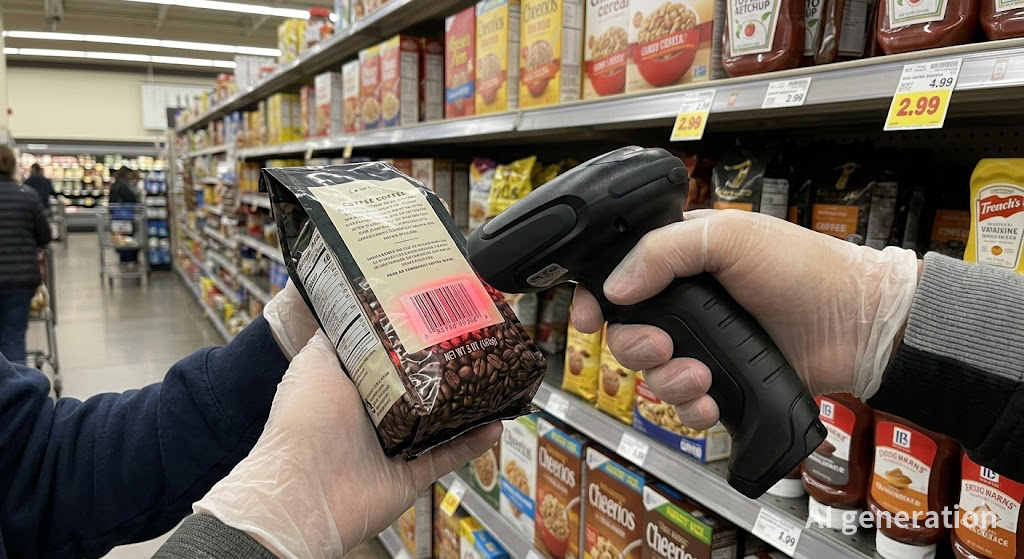
The supermarket staff are using a scanner to scan product QR codes to input inventory data
A barcode scanner simplifies the process by eliminating the need for manual data entry. Rather than manually typing product codes into a system, the scanner can quickly read the barcode and automatically input the data.
The device performs three essential tasks:
- Capture the barcode image.
- Convert that image into electrical signals.
- Decode and transmit readable data to software.
That data typically links to:
- Product pricing
- Inventory levels
- Serial numbers
- Asset records
- Tracking history
While many assume scanners are simple retail tools, modern systems are used in healthcare, manufacturing, warehousing, logistics, government, and asset management.
In many operations, barcode scanning is the backbone of traceability and compliance.
Understanding the primary role of a barcode scanner clarifies why businesses rely on them for operational accuracy. They are not just readers; they serve as connectors between the physical and digital worlds.
How Barcode Data Connects to Your System
Scanning alone is not enough. The value comes from integration.
Barcode scanners connect to systems in two primary ways:
- Wired connections (USB or serial)
- Wireless connections (Bluetooth or Wi-Fi)
Once the scanner decodes the barcode, it sends the data directly into the active field of your system.
In most cases, it functions as a keyboard emulator, providing significantly higher data entry speed and accuracy than manual input.
Within milliseconds:
- The system performs a database lookup.
- It retrieves item details.
- It updates records in real time.
For example:
- At checkout, it pulls pricing and deducts inventory.
- In a warehouse, it updates stock movement.
- In asset management, it logs location or maintenance history.
This seamless connection is why businesses evaluating what barcode scanner to purchase must prioritize compatibility with their software infrastructure.
Real-time data prevents stock discrepancies, pricing errors, and manual entry mistakes. Over time, this reduces operational friction and improves reporting reliability.
1D vs 2D Barcodes — What Can a Barcode Scanner Read?
Choosing the correct scanner begins with understanding barcode types.
1D (Linear) Barcodes
- Appear as parallel black lines with white spaces
- Store approximately 20 to 25 characters
- Common in retail environments (UPC, EAN)
- Read by laser or linear scanners
These codes store information horizontally. They are efficient and widely used but limited in data capacity.
2D Barcodes
- Square or matrix-style patterns (e.g., QR codes)
- Store significantly more information
- Can include URLs, serial numbers, encryption, and tracking data
- Require image-based scanners
2D codes store data bi-directionally, dramatically increasing capacity and incorporating robust error-correction algorithms to ensure readability of damaged labels.
As supply chains demand greater traceability, 2D codes are becoming standard. A key decision point when evaluating barcode scanner technology is determining whether your operation uses or plans to adopt 2D codes. Investing in a 1D-only scanner today may limit scalability tomorrow.
Looking for versatile scanning options? Browse our Industrial Barcode Scanners for future-proof performance.
How Does a Barcode Scanner Work?
Understanding how scanning works explains why dedicated devices outperform manual entry and many mobile-based solutions.
Step 1: Light Projection and Reflection
The scanning process begins with light.
A barcode scanner projects light onto the barcode using either:
- A laser beam
- An LED light source
The barcode itself is a pattern of black bars and white spaces.
- Black bars absorb light.
- White spaces reflect light.
The scanner measures the intensity of reflected light. The contrast between dark and light areas forms the signal used for decoding.
Around every barcode is a "quiet zone," a blank margin that ensures the scanner does not misinterpret surrounding graphics. Without this zone, scanning accuracy drops.
This simple optical contrast is the foundation of barcode technology.
Step 2: Signal Conversion
After reflection, the light hits a sensor, often a photodiode or imaging sensor.
The sensor converts light intensity into electrical signals.
Different scanner types process this step differently:
- Laser scanners sweep a beam across the barcode.
- CCD scanners measure ambient light across multiple sensors.
- Image-based scanners capture a full digital image for processing.
Each method utilizes photoelectric conversion to transform visual patterns into modulated electronic signals. Signal integrity at this stage determines scan reliability, especially when deciphering damaged or low-contrast labels.
Understanding this process helps clarify why some scanners perform better at a distance, in low light, or with worn labels.
Step 3: Decoding and Data Transmission
Once converted into electrical signals, the data moves to the decoder.
The decoder:
- Interprets signal patterns.
- Converts them into alphanumeric characters.
- Verifies checksum accuracy.
After decoding, the information is transmitted to the connected system.
The entire process typically takes milliseconds.
That speed enables high-volume environments such as retail checkout lanes or warehouse picking operations to operate efficiently without bottlenecks.
What Barcode Scanner Components Make This Possible?
Every scanner contains four core components:
- Light Source: Projects illumination onto the barcode.
- Sensor: Detects reflected light.
- Decoder: Translates the signal into usable data.
- Interface Module: Communicates with the host system.
Higher-end scanners may include advanced optics, multiple sensors, or enhanced processing chips for faster and more accurate reads.
Durability, scan distance, and reading tolerance depend heavily on component quality.
What Are the Benefits of a Dedicated Barcode Scanner?
While smartphones can scan barcodes, dedicated devices offer measurable advantages.
Seamless System Integration
Barcode scanners plug directly into POS or ERP systems.
They function like keyboards but operate faster and more consistently. Minimal configuration is required, and compatibility is generally straightforward.
Reliability and Software Stability
Dedicated scanners:
- Do not receive calls or notifications.
- Rarely require firmware updates.
- Are not susceptible to common mobile security risks.
This stability reduces downtime and operational interruptions.
Durability and Longevity
Industrial scanners are built to withstand:
- Repeated drops
- Dust exposure
- Continuous daily use
Many operate reliably for years without significant maintenance.
Performance and Speed
Compared to manual entry or mobile applications, scanners provide:
- Faster scan times
- Long-range capability
- Strong wireless battery performance
In high-volume operations, these advantages translate into measurable productivity gains.
Understanding a barcode scanner's operational value often comes down to its performance under real-world conditions.
How Do Barcode Scanners Improve Business Efficiency?
Scanning is not just about convenience. It is about control.
Retail & POS Acceleration
At checkout, barcode scanning:
- Reduces queue times.
- Minimizes pricing errors.
- Improves transaction accuracy.
Faster transactions increase throughput and customer satisfaction.
Inventory and Asset Management
In warehouses, scanners enable:
- Real-time inventory tracking
- Automated stock updates
- Theft reduction
- Lean inventory practices
Each scan updates the system immediately, preventing discrepancies.
Fixed Asset Tracking
Beyond inventory, barcode systems track fixed assets such as:
- Laptops
- Tools
- Safety equipment
- Sensitive files
Scanning supports maintenance logging, depreciation tracking, and check-in/check-out systems.
Data Accuracy and Operational Visibility
Manual entry errors can reach several percent in large operations. Barcode scanning dramatically reduces these errors.
Accurate data leads to:
- Better reporting
- Improved forecasting
- Stronger compliance
- More informed decision-making
For businesses evaluating which barcode scanner investment makes the most sense, the long-term benefits to data integrity often outweigh the upfront costs.
Choosing the Right Barcode Scanner for Your Needs
Selecting the right scanner requires evaluating your environment, barcode type, and operational goals.
What Barcode Scanner Should You Choose for 1D vs 2D Codes?
If your operation uses only linear retail barcodes, a laser or CCD scanner may suffice.
If you handle QR codes, serialized inventory, or compliance labeling, choose a 2D area imager.
Future scalability should guide your decision.
Environment and Durability Requirements
Consider:
- Drop ratings
- Dust and moisture resistance
- Required scan distance
- Lighting conditions
Warehouses demand rugged devices. Retail counters may prioritize speed and compact design. Healthcare environments may require disinfectant-ready housing.
Mobility and Connectivity Considerations
Wired scanners provide stable power and consistent connectivity.
Wireless scanners offer mobility, flexibility, and extended range. Battery life and charging cycles should be evaluated carefully.
The right choice depends on workflow design and physical layout.
FAQs
How do barcode scanners work in grocery stores?
They scan UPC codes at checkout, retrieve pricing from a database, and update inventory in real time.
What are the common problems with barcode scanners?
Poor print quality, damaged labels, incompatible barcode types, or improper lighting conditions.
How does a barcode scanner work step by step?
It projects light, measures reflection, converts signals to data, decodes information, and transmits it to a connected system.
Why would you need a barcode scanner?
To improve speed, reduce errors, track assets accurately, and integrate physical inventory with digital systems.
Final Thoughts
So, what is a barcode scanner's role in modern operations? It is a precision tool that connects physical assets to digital intelligence.
Whether you are evaluating what the barcode scanner technology is for retail, healthcare, logistics, or manufacturing, the right device improves accuracy, strengthens visibility, and supports scalable growth.
Understanding which barcode scanner capabilities align with your operational needs is not simply a technical decision. It is a strategic one.
About JLCMC
At JLCMC, we not only offer a wide range of high-performance barcode scanners but also provide tailored solutions designed to meet your specific needs. With years of industry experience, our team is dedicated to offering personalized support and guidance. All our products incorporate advanced technology and exceptional stability, catering to the diverse needs of industries ranging from retail and logistics to manufacturing.
Whether you're looking for handheld or fixed barcode scanners or specialized accessories, we provide a premium purchasing and service experience to ensure you get exactly what you need.
Whether you're just starting to use barcode systems or looking to optimize your existing processes, we can help you find the best equipment to make your operations more efficient and accurate.
Give us a call today, and we'll be happy to offer professional advice and support, helping you stay ahead in every step of your barcode scanning journey!
Keep Learning
The Essence of Barcode Symbology: A System of Data Encoding Rules
Introduction Most people only notice barcodes when something moves through a checkout counter or gets sorted in a warehouse. It's a quick flash of light, sometimes a beep, and then the moment is gone. But what's actually happening is more structured than it looks. A barcode is not just a visual pattern—it's a structured relationship between how data is encoded and how machines interpret it under imperfect conditions. In practice, that agreement is called a barcode symbology. And once you start looking......
Spot Common Barcode Scanner Issues Early to Prevent Business Losses
Barcode scanning sits quietly at the center of modern operations. From warehouse receiving docks to hospital inventory rooms and retail checkout counters, it enables speed, traceability, and accuracy at scale. When scanning works, workflows move seamlessly. When it doesn’t, even a small disruption can trigger inventory discrepancies, shipping delays, or reconciliation errors that ripple through the system. A recurring problem with barcode scanners rarely stems from sudden device failure. Instead, most......
Understanding 1D Barcode Technology: Types, Standards, and Applications
In today's fast-paced business environment, efficiency and accuracy are paramount. The 1D barcode, also known as a linear barcode, stands as one of the most transformative technologies in data capture and inventory management. From the checkout counters of retail stores to the complex supply chains of global logistics, these simple yet powerful codes have revolutionized how businesses track, manage, and process information. This comprehensive guide explores the world of 1D barcodes, examining their st......
Explore Barcode Scanner Types: Technology, Form Factor, and Practical Uses
If you have ever stood in a checkout line, watched a warehouse worker pull items from shelves, or seen a nurse scan a patient's wristband, you have witnessed barcode scanning in action. It is one of those technologies that has become so integrated into routine workflows that most people rarely think about what is actually happening when that red light flashes across a label. But for the people responsible for choosing, implementing, or maintaining these systems, the differences between scanner types m......
Barcode Scanner Basics: What It Is & How It Works
Originally used as a simple retail tool, barcodes have now evolved into a core technology widely applied across industries such as logistics, healthcare, manufacturing, and asset management. They play a key role in inventory management, compliance tracking, and real-time data processing, ensuring operational accuracy across various sectors. To truly understand the capabilities of barcode scanner technology, one must look beyond the printed label. The real impact comes from how quickly information is t......
Scan Code Types: What They Are & Why They Matter
Barcodes and matrix symbols quietly move products and components through every industry—from retail checkout lanes to medical equipment parts. Choosing the right scan code affects scanning speed, data accuracy, label durability, and long-term scalability. Some codes excel at rapid retail scanning. Others are engineered for tiny or curved surfaces, like surgical instruments, electronics, or micro-packaging. The right type ensures readable codes even when space is limited, or labels are damaged, while t......