Types of Conveyor Belt in Warehouse Operations Across Industries
15 min
- How Conveyor Belt Systems Work in a Warehouse
- Key Types of Conveyor Belts in Warehouse Operations
- How to Select Conveyor Belts by Industry Warehousing Needs
- Engineering Considerations for Conveyor Belt Design
- Integration with Warehouse Automation Systems
- Advantages of Using a Conveyor Belt in Warehouse Operations
- Common Challenges and Maintenance Best Practices
- Real-World Case Examples
- Future Trends in Warehouse Conveyor Systems
- Frequently Asked Questions
- Conclusion
A few years ago, I walked through a mid-sized distribution center in the Midwest that had just finished its first automation retrofit. What struck me wasn't the robotics or the software dashboards—it was the conveyor belt. Hundreds of meters of it, running at different speeds, handling everything from fasteners to equipment hardware, all while the floor manager tracked throughput on a tablet. That single piece of equipment, often overlooked, turned out to be the backbone of the entire operation.
Conveyor belts in warehouses aren't just about moving boxes from point A to point B. They're about timing, sequencing, and reducing the number of decisions a human worker has to make in a shift. When a belt is properly specified for the load, the environment, and the downstream process, the difference is measurable: fewer jams, less product damage, and throughput that scales without proportionally scaling labor.
How Conveyor Belt Systems Work in a Warehouse
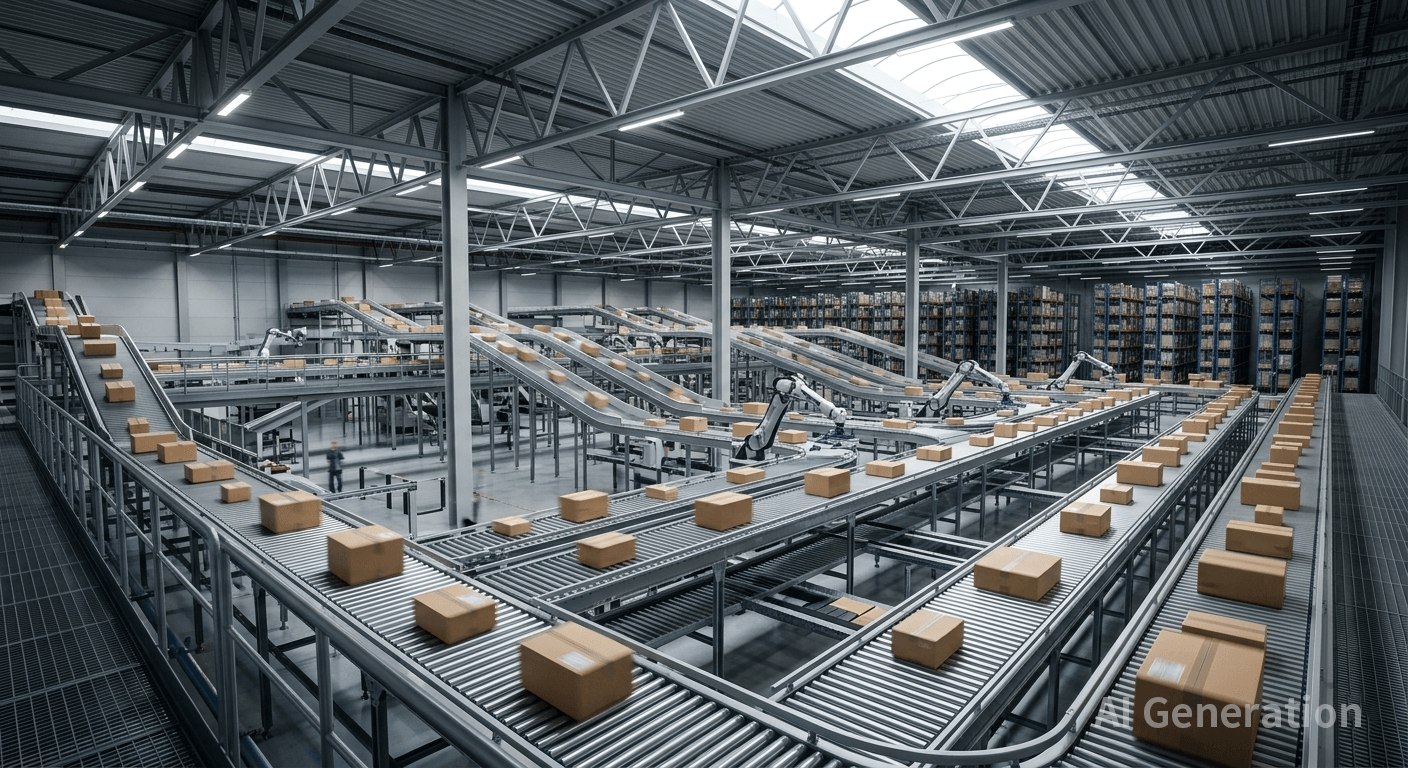
In a warehouse environment, conveyor belt systems operate as a coordinated flow network rather than a simple transport line. Goods typically enter from receiving or induction points, are scanned, and then routed via controlled belt segments to storage, sorting, or packing stations. Decisions are executed through WMS commands translated into PLC signals, with sensors ensuring spacing, tracking, and correct diversion.
The core of conveyor belt systems is based on the belt, drive, idler rollers, electric motor (often VFD-controlled), tensioning units, and a layered control system of photo-eyes and encoders that regulate speed and positioning.
Compared with manufacturing conveyor belts, warehouses must handle high variability in SKU size, packaging, and volume, prioritizing flexibility and routing logic over fixed, repetitive production flow.
Key Types of Conveyor Belts in Warehouse Operations
If you start digging into conveyor belt specifications, the number of options can feel overwhelming. I've found it helps to think in four layers: what the belt is made of, what its surface looks like, how it's structured, and what it can do under stress.
Conveyor Belt Classification by Material
- PVC Conveyor Belts: PVC conveyor belts are the workhorse of warehouse logistics. Polyvinyl chloride (PVC) is durable, resistant to oils and chemicals, and available in a wide range of thicknesses. For general parcel handling and carton transport, PVC is typically the default choice. It is cost-effective and performs reliably under ambient temperature conditions.
- PU Conveyor Belts: PU (polyurethane) conveyor belts are used when cleanliness or food contact requirements are critical. PU is smoother and less porous than PVC, and it does not shed particulates as easily as some plastics. It is commonly used in food-grade applications and pharmaceutical environments where contamination control is essential.
- Specialty Material Conveyor Belts: Specialty belts include TPE and TPU for flexibility in cold environments, silicone for high-temperature zones, felt for delicate surfaces that must not be scratched, and PTFE (Teflon) for extreme chemical resistance and non-stick performance. These are typically used in application-specific scenarios rather than standard warehouse operations.
Conveyor Belt Classification by Surface Patterns
- Smooth Surface Conveyor Belts: Smooth surface belts are suitable for stable, flat-bottom cartons where product stability is consistent during transport.
- High-Grip Conveyor Belts: High-grip belts include rough top (fine sandpaper-like texture), diamond patterns, and grass patterns. These increase friction and contact areas without damaging packaging. They are commonly used in incline conveyors and accumulation zones to prevent slipping.
- Functional Surface Finish Conveyor Belts: Matte surfaces reduce glare for vision inspection systems, while glossy surfaces are easier to clean and preferred in sanitary environments. Selection depends largely on surrounding operational conditions rather than only the conveyed product.
Conveyor Belt Classification by Structural Features
- V-Guided Conveyor Belts: V-guided belts feature a ridge on the underside that runs within a matching groove in the conveyor frame. This prevents lateral belt wandering and is especially important in long runs or curved conveyor systems.
- Cleated Conveyor Belts: Cleated belts have raised profiles (cleats) that form barriers or pockets on the belt surface. They are essential for steep inclines and controlled movement of small items during sorting.
- Perforated Conveyor Belts: Perforated belts allow airflow or drainage through the belt surface. They are used in cooling processes, food handling, or applications requiring liquid removal.
- Sponge-Coated Conveyor Belts: Sponge-coated belts add a cushioning layer that protects fragile goods. They are often used in electronics distribution where impact sensitivity is high.
Conveyor Belt Classification by Functional Properties
- Anti-Static Conveyor Belts: Anti-static belts prevent electrostatic discharge (ESD), which is critical in electronics handling and environments with explosive risk.
- Flame-Retardant Conveyor Belts: Flame-retardant belts are designed to meet fire safety standards and are commonly used in airport baggage systems and high fire-risk facilities.
- Abrasion-Resistant Conveyor Belts: Abrasion-resistant belts extend service life when handling rough or sharp-edged materials.
- Low-Noise Conveyor Belts: Low-noise belts use softer compounds or special constructions to reduce operational noise, improving workplace comfort and communication.
- Friction Classification Conveyor Belts: High-friction belts provide a strong grip for incline transport and precise stopping, while low-friction belts enable smooth sliding for accumulation or repositioning. Incorrect selection can lead to inefficiency, product damage, or safety hazards.
How to Select Conveyor Belts by Industry Warehousing Needs
The same conveyor belt that performs well in frozen food handling will not be suitable for laptop computer logistics. Industry-specific context and operational requirements are the primary factors that determine the correct conveyor belt selection.
When selecting a conveyor belt for warehousing, use the table below to align your load type, environment, and throughput needs with suitable belt specifications, helping reduce misselection, unexpected wear, and handling inefficiencies.
| Warehouse Conveyor Belt Selection Table | ||||
| Industry Context | Belt Material & Surface | Functional Requirements | Operational Challenges | Typical Configurations |
| E-commerce and Retail Warehousing | PVC belts with rough top or diamond-pattern surfaces to handle the mix of polybags, cartons, and irregular parcels | High throughput, reliable sortation handoffs, and compatibility with barcode scanners and weight scales | Variability: one hour a steady stream of identical shoeboxes; the next hour oversized pet supplies and fragile glassware—requiring adaptability without reconfiguration | Modular belt conveyors with divert stations, merge lanes, and accumulation zones; belts running at different speeds (slow for scanning, fast for long-haul transport) |
| Food and Beverage Warehousing | PU belts or food-grade PVC; smooth, non-porous surfaces resistant to oils, acids, and moisture | FDA or EU compliance for direct food contact, easy cleanability (often high-pressure washdown), and resistance to temperature swings (especially in cold storage or freezer environments where standard PVC becomes brittle) | Strict compliance requirements and hygiene control under frequent sanitation cycles and fluctuating temperatures | Stainless steel frames, sealed motors, and belts designed for quick removal for sanitation; incline cleated belts for bottled products and flat belts for primary packaging lines |
| Pharmaceutical Warehousing | PU or specialty TPU belts designed for low particulate shedding and high chemical resistance | No dust or fiber generation, resistance to aggressive cleaning agents, and compatibility with cleanroom or controlled-environment protocols; GMP compliance and traceability requirements | Extremely strict contamination control, frequent sanitization, and operation in temperature-controlled environments where standard materials may degrade | Highly customized systems: stainless steel construction, sealed bearings, anti-static properties, and belts validated for GMP compliance; traceable belt materials for audit purposes |
| Manufacturing and Industrial Storage | Heavy-duty PVC, rubber, or metal belts for handling sharp edges, abrasive materials, and heavy loads | High durability and load capacity, with emphasis on abrasion resistance, tear strength, and impact resistance rather than speed | Exposure to harsh conditions such as sharp metal edges, cutting oils, solvents, and heavy impacts | Roller bed conveyors for heavy pallets, chain-driven belts for positive drive under load, reinforced edges to prevent fraying, and optional flame-retardant designs depending on facility risk profile |
Engineering Considerations for Conveyor Belt Design
Once an initial screening is made using a "Warehouse Conveyor Belt Selection Table", additional fundamental engineering calculations must be considered, as they determine whether the system operates reliably under load or fails silently in operation.
Load Capacity and Throughput
Load capacity and throughput are the starting points. Engineers calculate the maximum weight per linear meter, the peak flow rate (items per hour), and the duty cycle. A belt rated for 50 kg/m running at 0.5 m/s handles a different reality than one rated for 200 kg/m at 2 m/s.
Thickness, Ply Count, and Cover Hardness
Material selection extends beyond PVC versus PU. Thickness, ply count (how many layers of reinforcement fabric), and cover hardness all factor in. A thin belt on a short conveyor might be fine. The same belt on a 50-meter run with heavy loads will stretch, sag, and fail prematurely.
Energy Efficiency
Energy efficiency is increasingly relevant. Motor sizing should match the actual load profile, not just the theoretical maximum. Variable frequency drives (VFDs) let motors ramp up or down based on real demand, saving significant energy in partial-load conditions.
Safety Standards
Safety standards vary by region and industry. ISO 10218 covers robot safety in warehouse contexts; OSHA regulations in the U.S. mandate guards, emergency stops, and lockout/tagout provisions. In Europe, CE marking requires conformity with machinery directives. These aren't checkboxes—they shape how the conveyor is physically designed, where controls are placed, and how maintenance access works.
Integration with Warehouse Automation Systems
A conveyor belt without integration is just a moving sidewalk. Its value multiplies when it becomes part of a coordinated system.
Warehouse Management Systems (WMS) direct where items need to go. The conveyor becomes the physical execution layer of those digital instructions. When a WMS flags an order for picking, the conveyor belt routes the tote to the right zone, waits for the pick, then moves it to packing. Without tight integration, you get bottlenecks—digital speed outrunning physical capacity, or belts running empty while orders wait.
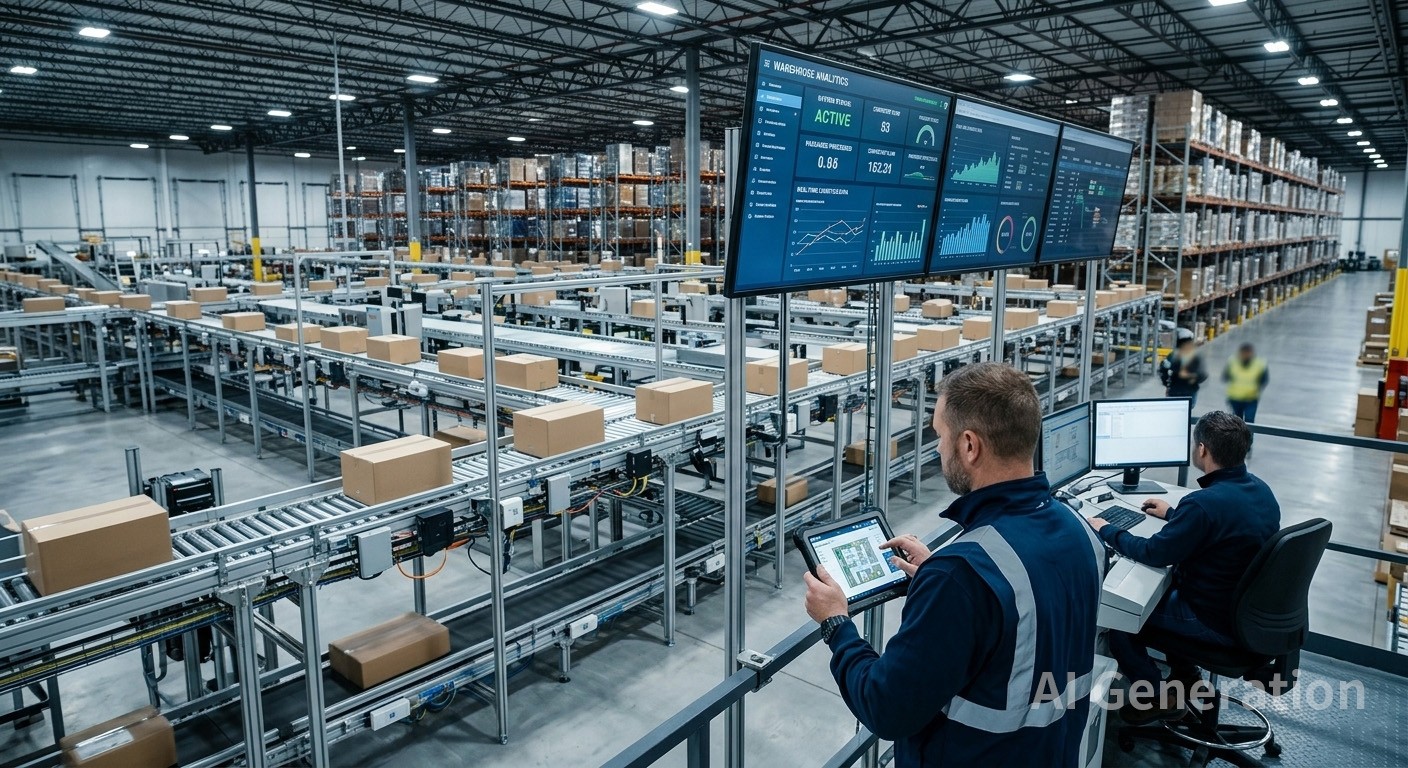
Robotics and automated sorting place new demands on conveyor precision. A robotic arm picking from a belt needs the item to be in a predictable position at a predictable time. That requires photo-eye sensors, encoder feedback, and sometimes individual belt zone control so the robot has a stable window to work.
Sensors and IoT are changing how belts are monitored. Vibration sensors detect bearing wear before it causes failure. Temperature sensors flag motor overloads. Belt tension monitors alert maintenance when the stretch exceeds thresholds. Some systems now use edge computing to process this data locally, only escalating anomalies to central systems. The result is less catastrophic downtime and more predictable maintenance windows.
Advantages of Using a Conveyor Belt in Warehouse Operations
The benefits sound obvious until you quantify them. I've seen facilities where adding a modest conveyor network reduced order cycle time by 30% without adding headcount. The gains come from several angles.
Productivity increases because workers stop walking. In a manual picking operation, a significant portion of labor time is transit time—moving between locations. Conveyors compress that to seconds. One person can stay in a zone and handle higher throughput because the belt brings work to them and takes completed work away.
Accuracy improves when belts are paired with scanning and weighing. A package that hits a check-weigh station on a conveyor can be verified against the expected weight in real time. Mis-sorts drop dramatically when divert mechanisms are automated rather than manual.
Reduced damage comes from gentle, consistent handling. A box that slides down a roller chute might hit a corner. The same box on a controlled belt with proper spacing arrives intact. For fragile or high-value goods, this alone justifies the investment.
Scalability is the long-term advantage. A modular conveyor system can be extended, rerouted, or supplemented with additional lanes as volume grows. Compare that to expanding a manual cart-based operation, which requires more floor space, more labor, and more supervisory overhead.
Common Challenges and Maintenance Best Practices
Conveyor belts are durable, but they're not maintenance-free. The issues that engineers encounter most frequently are mechanical and often preventable.
Belt Wear
Fraying edges, surface cracking, or ply separation caused by misalignment, overloading, or running on damaged rollers. Even slight off-center tracking can lead to uneven edge wear and eventual failure.
Misalignment Issues
Typically caused by uneven tension or structural frame inaccuracies. Non-parallel rollers or improper installation tension lead to belt wandering. V-guided belts can assist, but do not resolve structural misalignment.
Preventive Maintenance
Scheduled inspections of belt tension, roller condition, motor temperature, and scraper blade wear help identify issues early. Regular lubrication, cleaning to prevent material buildup, and tracking adjustments extend operational lifespan.
Downtime Reduction Strategies
Maintaining critical spare belts and rollers reduces repair delays. Cross-trained maintenance personnel improve response flexibility. Predictive maintenance using sensor data enables component replacement before failure, reducing both downtime and maintenance costs.
Real-World Case Examples
Concrete examples help ground the theory. I've observed or studied several implementations that illustrate the range of outcomes.
In a regional e-commerce fulfillment center, a modular belt conveyor system with 12 sortation divert points replaced a manual sort operation. The result: throughput increased from 3,200 to 5,800 packages per hour with the same staffing level. Mis-sorts dropped from 1.8% to 0.3%. The belt investment paid back in 14 months through labor savings and reduced shipping error costs.
A frozen food distribution warehouse switched from standard PVC to low-temperature PU belts with stainless steel frames. The previous system required belt replacement every 8 months due to cold-room brittleness. The new belts, specified for -25°C operation, lasted 36 months. Energy costs also dropped because the motors no longer strained against stiff, cold-stressed belts.
In a pharmaceutical packaging facility, an anti-static PU belt with integrated V-guiding replaced a general-purpose belt that had been generating particulate contamination. After the switch, environmental monitoring showed a 60% reduction in airborne particles at the packaging line. The belt cost 40% more upfront but eliminated a recurring compliance risk.
Future Trends in Warehouse Conveyor Systems
The technology is evolving in three directions that matter for anyone specifying or operating these systems.
AI-Driven Automation
Machine vision and AI systems are advancing beyond basic sortation. Conveyor-integrated cameras can identify package dimensions, detect damage, and dynamically route items based on real-time downstream capacity. The conveyor system becomes part of an intelligent feedback loop that continuously optimizes flow and efficiency.
Sustainability and Material Innovation
Sustainability is driving new developments in belt materials and system design. Bio-based compounds, recycled PVC and PU materials, and energy-efficient motor technologies are increasingly adopted. Some manufacturers also provide belt recycling programs, allowing worn belts to be reprocessed instead of disposed of in landfills.
Modularity and System Scalability
Conveyor system design is shifting from fixed, monolithic installations to modular, plug-and-play architectures. These systems allow rapid reconfiguration with minimal downtime. Instead of permanent infrastructure, warehouses can deploy interchangeable conveyor segments, enabling flexibility similar to assembling standardized track sections rather than building a fixed railway network.
Frequently Asked Questions
What's the difference between PVC and PU conveyor belts for warehouse use?
PVC is more common for general warehouse applications—durable, cost-effective, and chemically resistant. PU is preferred where cleanliness, food contact, or low particulate shedding matters. PU also performs better in cold environments.
How do I choose the right belt surface pattern?
Smooth tops work for stable, flat-bottomed loads. Rough top or diamond patterns add grip for inclines, irregular shapes, or accumulation zones. The choice depends on what you're moving and the conveyor geometry.
What causes conveyor belt misalignment, and how do I fix it?
Misalignment usually stems from uneven tension, non-parallel rollers, or frame distortion. Start by checking tension across the belt width, then inspect roller alignment. V-guided belts can help, but they won't compensate for major frame issues.
How often should warehouse conveyor belts be replaced?
It depends on duty cycle, load, and environment. A light-duty PVC belt in ambient conditions might last 3–5 years. A heavy-duty belt in abrasive or temperature-extreme conditions might need replacement every 1–2 years. Sensor-based predictive maintenance is replacing fixed schedules.
Can conveyor belts be integrated with existing WMS and robotics?
Yes, but integration complexity varies. Modern conveyor controllers use standard protocols (like OPC UA or Modbus) that interface with WMS platforms. Robotics integration requires precise timing and often custom programming for handoff zones.
Are there energy-efficient conveyor belt options?
Yes. Variable frequency drives, efficient motor designs, and lightweight belt materials all reduce energy consumption. Some systems now use regenerative drives that recover energy during deceleration.
Conclusion
After spending time in enough warehouses and talking to enough operations managers, I've come to see the conveyor belt as something more than infrastructure. It's a decision point. The type of belt you choose, the surface you specify, the way you integrate it with upstream and downstream systems—all of these reflect how you think about flow, efficiency, and risk in your operation.
There's no universal best conveyor belt. There is only the right belt for your load, your environment, and your throughput requirements. Getting that match right isn't glamorous work, but it's where the real gains hide. The facilities that treat belt selection as a strategic decision rather than a commodity purchase tend to be the ones that scale smoothly when demand spikes and hold together when things get complicated.
If you're evaluating conveyor options for a warehouse project, start with your operational reality: what moves, how fast, under what conditions, and with what constraints. Then work backward to the belt. That's the only way the system will do what you actually need it to do.
Keep Learning
Leveling Casters: Load Transfer and Workbench Setup
Key Takeaways Load Separation: Assess rolling loads and stationary support loads separately; a general capacity label does not explain every operating condition. Total Weight Sizing: Include the bench, equipment, fixtures and maximum payload in the load estimate. Corner Reaction Differences: Four installed casters do not guarantee four equal reactions, especially on uneven floors or with equipment concentrated at one end. Mounting & Clearance Checks: Check adjustment access, wheel sweep and pad cleara......
How to Identify V Belts and Their Types to Improve Factory Automation Efficiency
What Is a V-Belt? A V-belt is a flexible power transmission belt with a trapezoidal (V-shaped) cross-section. It transmits torque through the friction generated between the belt’s sidewalls and the grooves of a pulley. Typically constructed from rubber compounds reinforced with fiber or steel cords, V-belts combine strength with flexibility. They are designed to improve transmission efficiency, reduce slippage, and dampen vibration and noise. As a result, V-belts are widely used in applications such a......
How to Tension a Belt: Exact Methods for Peak Drive Performance
Belt tensioning is the single variable that determines whether a power transmission system operates efficiently or consumes itself from the inside out. Get it wrong, and the damage extends far beyond the belt itself—bearings overload, pulleys wear unevenly, and shaft seals begin leaking. There is no warning siren before a belt snaps; the first indication of trouble is often slippage under load or the acrid smell of overheated rubber. By that point, the failure has already propagated through the drive ......
Types of Conveyor Belt in Warehouse Operations Across Industries
A few years ago, I walked through a mid-sized distribution center in the Midwest that had just finished its first automation retrofit. What struck me wasn't the robotics or the software dashboards—it was the conveyor belt. Hundreds of meters of it, running at different speeds, handling everything from fasteners to equipment hardware, all while the floor manager tracked throughput on a tablet. That single piece of equipment, often overlooked, turned out to be the backbone of the entire operation. Conve......
V-Belt Measurement for Accurate Sizing and Replacement
A V-belt is a power transmission belt with a V-shaped cross-section that efficiently transmits motion between pulleys through wedging friction. How to Measure a V-Belt (Vee Belt) Beginners often make several common mistakes when measuring V-belt size, such as estimating length by folding the belt, using a simple ruler for approximate measurement, ignoring the belt cross-section, or measuring the belt in a slack condition. These are incorrect practices and can lead to improper belt selection or even da......
Best Conveyor Belt Materials & Their Uses
Conveyor belts are the backbone of modern manufacturing and distribution, silently driving efficiency across countless operations. But their performance isn't just about motors or pulleys—it hinges on one critical factor: the material used for conveyor belt construction. Choosing the wrong conveyor belt material can quickly lead to operational headaches—premature wear, product damage, contamination risks, and soaring maintenance costs. A conveyor belt works under constant stress. It bends around pulle......