V-Belt Measurement for Accurate Sizing and Replacement
13 min
- How to Measure a V-Belt (Vee Belt)
- Decoding V-Belt Part Numbers
- Banded and Specialty V-Belts Explained
- How to Choose the Right Drive Belts by Size
- Frequently Asked Questions
- Final Thoughts
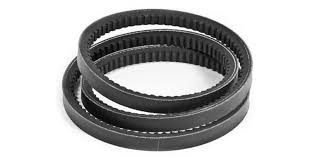
A V-belt is a power transmission belt with a V-shaped cross-section that efficiently transmits motion between pulleys through wedging friction.
How to Measure a V-Belt (Vee Belt)
Beginners often make several common mistakes when measuring V-belt size, such as estimating length by folding the belt, using a simple ruler for approximate measurement, ignoring the belt cross-section, or measuring the belt in a slack condition. These are incorrect practices and can lead to improper belt selection or even damage to expensive equipment.
V-belt dimensions should not be determined using rough or non-professional methods. Such approaches are especially problematic during belt replacement, where measurement accuracy is critical. Therefore, it is essential to understand and follow industry-standard measurement procedures before replacing a V-belt.
Accurate measurement requires the right tools, such as a belt length gauge, calipers, and a flexible tape measure. These tools should be used alongside key parameters such as belt length, top width, height (thickness), and the included angle (typically 40°), as well as operating factors like wear, tension, and installation environment.
By applying correct measurement techniques, you can ensure that the replacement belt matches the system precisely, achieving safe and efficient power transmission.
This guide solves that problem using a practical, field-tested approach built around a reliable V-belt measurement chart and a clearly structured V-belt dimensions chart.
You will learn how to:
- Identify the cross-section correctly
- Measure circumference accurately
- Convert outer length to inner length
- Decode part numbers without confusion
- Select the correct drive belts by size for your pulley system
Understanding V-Belt Dimensions and Cross-Sections
When determining how to measure V-belt size, the cross-section always comes first—length comes second. This sequence is critical because pulley grooves are precisely engineered for specific belt profiles. If the cross-section is incorrect, even a properly measured belt length will not transmit power efficiently.
How to Identify V-Belt Dimensions (Top Width & Height)
A V-belt's cross-section is defined by two primary measurements:
- Top width: the flat upper surface
- Height (depth): vertical distance from top to bottom
Use a caliper whenever possible, as tape measures can introduce significant measurement error.
Measurement steps:
- Place the belt on a flat, stable surface.
- Measure across the top width—not along the angled sidewalls
- Measure height without compressing the rubber.
These values define the V-belt dimensions and determine its section classification (such as classical A, B, C profiles or narrow SPZ, SPA types). Even a 1 mm deviation can place the belt into a different category.
Because V-belt drives rely on friction enhanced by a wedging action between the belt sidewalls and the pulley groove, both top width and height directly influence torque transmission and efficiency.
This is where understanding V-belt dimensions becomes critical. Pulley grooves are designed for specific cross-sections. A mismatch changes load distribution and increases slip, and reduces overall drive efficiency.
In addition, incorrect belt profiles can lead to premature sidewall wear, excessive heat buildup, and vibration within the drive system.
V-Belt Standard Sizes and Width Reference
A V-belt standard sizes chart helps engineers and maintenance teams quickly identify the correct belt cross-section, width, and height before selecting a replacement. Belt sections determine pulley compatibility, so choosing the correct profile is critical because an incorrect cross-section cannot be corrected once installed.
Common standard sections include:
- Z (10 mm width, 6 mm height) – light industrial use
- A (13 mm, 8 mm) – general machinery
- B (17 mm, 11 mm) – medium-duty drives
- C (22 mm, 14 mm) – heavy-duty systems
Narrow belts such as 3V (9.7 mm width) and 5V (15.8 mm width) support compact, high-speed or higher-horsepower applications, while metric wedge belts like SPZ and SPA are commonly used in metric drive systems. Fractional belts such as 3L (9.5 mm width) are typically installed on small motors.
These classifications exist because different machines require different power capacities, pulley diameters, and operating speeds. Choosing the correct belt section ensures proper contact with the pulley and stable torque transmission
A V-belt width chart also helps compare metric and imperial measurements to avoid conversion errors during ordering. For example:
- Z and 3V belts ≈ 3/8 inch wide
- A belts ≈ 1/2 inch
- B belts ≈ 21/32 inch
- C belts ≈ 7/8 inch
- D belts ≈ 1-1/4 inch
However, metric wedge belts and classical inch belts are not automatically interchangeable because groove angles and pitch positions differ, meaning belts that appear similar may not seat correctly in the pulley.
Another critical specification is the pulley groove angle. Classical belts typically use a 40° groove angle, while wedge belts operate with a narrower angle to increase wedging action and power transmission efficiency.
In addition to width and height, belt length classification is another important specification in a full V-belt dimensions chart. Standard A-section belts often increase in 1-inch length increments, SPZ metric belts may increase in 13 mm pitch increments, and 3V narrow belts commonly use a length code based on outer circumference multiplied by ten. When referencing a V-belt size chart, it is also essential to confirm whether the listed measurement refers to Li (inside length), Lo (outside length), or Lp (pitch length), since confusion between these measurements is one of the most common causes of belt replacement errors.
The table below summarizes common sections found in a typical V-belt standard sizes chart.
| Category | Section | Top Width | Height | Typical Use |
| Standard | Z | 10 mm | 6 mm | Light industrial |
| Standard | A | 13 mm | 8 mm | General machinery |
| Standard | B | 17 mm | 11 mm | Medium-duty drives |
| Standard | C | 22 mm | 14 mm | Heavy-duty systems |
| Narrow | 3V | 9.7 mm | 8 mm | Compact, high-speed |
| Narrow | 5V | 15.8 mm | 14 mm | Higher horsepower |
| Wedge | SPZ | 9.7 mm | 8 mm | Metric drives |
| Wedge | SPA | 12.7 mm | 10 mm | Industrial metric |
| Fractional | 3L | 9.5 mm | 5.6 mm | Small motors |
Industry-standard measurement methods for V-belts
Accurately measuring a V-belt is essential when replacing a worn or unlabeled belt. Incorrect measurements can lead to poor pulley fit, slipping, or reduced drive efficiency. Once the correct cross-section is identified, the next step is determining the belt's effective length so that the drive maintains proper tension and alignment. Most measurement errors occur when determining belt length.
Inside vs Outside Circumference Explained
To measure a V-belt correctly, it is important to understand a few standard measurement terms used in belt sizing.
- Inner Circumference (Ci or Li): the belt’s inside length
- Outer Circumference (Co or Lo): the belt’s outside length
- k: a section-specific deduction constant used to convert outer length to inner length
Most classical V-belts are designated by their inner circumference. When the printed belt label is missing or worn out, the most practical approach is to measure the outer circumference first and then convert it to the inner measurement using the formula:
Inner Circumference (Ci) = Outer Circumference (Co) − k
The deduction constant k varies by belt section. For example:
- A-section belts: 2 inches
- B-section belts: 3 inches
- C-section belts: 4 inches
- D-section belts: 5 inches
These constants are based on industry-standard V-belt charts and allow technicians to estimate the correct inner length when selecting a replacement. Metric wedge belts follow the same principle but use millimeter-based constants.
In high-precision industrial drives, technicians may also calculate pitch length, which represents the belt’s neutral axis under tension and determines exact pulley engagement. Understanding this is critical for drives where precise torque transmission and minimal slip are required.
Step-by-Step Guide: How to Measure a Used V-Belt
Since used V-belts experience some wear, conventional measurement methods may not be accurate. Please follow the steps below to determine the correct dimensions:
- Measure the outer circumference with a flexible tape.
- Identify the cross-section using your V-belt width chart.
- Subtract the section-specific deduction constant (k) to calculate the inner circumference or pitch length.
- Verify the result in a V-belt measurement chart.
- Verify the availability of the V-belt at the designated supplier, such as JLCMC.
Important tips:
Avoid stretching the belt during measurement. A worn belt can elongate 1 to 2%, so always cross-reference with the pulley center distance if available.
Another practical method involves measuring the center distance between pulleys and calculating the required belt length using standard belt-drive formulas. This approach is commonly used when the original belt is missing.
This double-check method reduces sizing errors by over 90% in maintenance environments.
Decoding V-Belt Part Numbers
Understanding belt codes eliminates guesswork. Once the belt section and length are known, decoding the manufacturer's part number allows technicians to order the correct replacement without relying solely on physical measurements
How Belt Size Codes Work
Most V-belt part numbers follow a simple format: Section plus Length.
Examples include:
- A22 – A section, 22" inner circumference
- SPA732 – SPA section, 732 mm pitch length
- 3V500 – 3V section, 50" outer circumference
A V-belt dimensions chart can be used to verify that the letter corresponds to the expected width and height for that section.
Common Suffixes:
- X – Cogged construction
- BX – Cogged B section
- Raw-edge and other designations vary by manufacturer
Always decode both the section and length before ordering.
Some manufacturers also include temperature ratings or material designations in extended part numbers, which indicate belts designed for high-heat, oil-resistant, or heavy-duty environments
Understanding Cogged and Wrapped Belt Designations
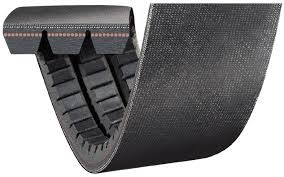
V-belts can be classified by their construction into wrapped belts and cogged (notched) belts.
V-belts are not only classified by size and cross-section but also by construction type. The two most common designs are wrapped belts and cogged belts, each engineered for different operating conditions.
Understanding these belt constructions helps you choose a drive belt that delivers the right balance of durability, flexibility, and efficiency for your pulley system.
Wrapped belts:
- Fabric outer layer
- Durable in dusty environments
- Standard flexibility and efficiency
Cogged belts:
- Notched underside
- Greater flexibility for tighter pulley bends
- Improved heat dissipation
- Higher efficiency, especially on small-diameter pulleys
Because cogged belts bend more easily around small pulley diameters, they reduce internal heat buildup and improve energy efficiency in compact drive systems. Cogged designs are often recommended when reducing energy loss in high-speed drives.
Important note: Construction type (wrapped vs. cogged) does not change the length calculation rules shown in a V-belt measurement chart, but they affect performance and lifespan.
Banded and Specialty V-Belts Explained
It is important to note that banded and specialty V-belts differ from standard V-belts in several key aspects, particularly in terms of measurement methods, tolerance control, and selection criteria. Despite these differences, they play an equally important role in practical industrial applications, especially in demanding operating conditions.
Therefore, they are introduced here as supplementary knowledge. These differences can be understood from the following aspects.
How Banded V-Belts Are Sized
Banded belts combine multiple ribs under one backing. When sizing these belts, it is important to note that cross-section values listed in any V-belt dimensions chart refer to a single rib, not the total width.
Format example: 3/BX23
Meaning:
- 3 – number of ribs
- B – belt section
- 23" – inner circumference
- X – cogged construction
The cross-section values listed in any V-belt dimensions chart apply to one rib, not the total width.
Banded belts improve stability in:
- High shock loads
- Vertical shafts
- Long center distances
They are commonly used in agricultural machinery, crushers, compressors, and other heavy-duty industrial equipment where single belts may flip or twist.
When to Use Specialty V-Belt Sizes
Certain V-belt sizes are specifically engineered for high-demand applications, including:
- High-horsepower power transmission
- Heavy-vibration environments
- Drives requiring precise alignment
Narrow and wedge belts transmit more power per unit width compared to classical sections. This allows smaller pulleys and more compact systems.
Selecting specialty V-belts by size should always involve reviewing torque load, operating speed, and duty cycle—not just matching physical dimensions. Engineers also consider belt speed, typically measured in feet per minute (FPM), because excessive speed can increase centrifugal forces and reduce belt grip on the pulley.
How to Choose the Right Drive Belts by Size
Correct V-belt size selection requires balancing geometry, load, and operating conditions; simply matching dimensions is not enough.
Matching Belt Size to the Pulley System
When choosing a belt, ensure:
- Groove profile compatibility with the pulley
- Minimum pulley diameter rating is not exceeded
- Required speed ratio matches system design
- Center distance between pulleys is correct
If the belt sits too low, it bottoms out. Too high, and it loses sidewall grip.
Selecting drive belts by size without confirming groove match is one of the most common installation errors.
Proper alignment between pulleys is equally important because even a few millimeters of misalignment can accelerate belt wear and reduce drive efficiency.
Key Factors Beyond Dimensions
Dimensions alone do not determine lifespan. Consider the following factors:
- Load type – steady vs. shock loads
- Ambient temperature – high heat can accelerate wear
- Oil or chemical exposure – may degrade belt material
- Duty cycle – continuous vs intermittent operation
A properly selected V-belt size combined with environmental compatibility can double service life compared to a dimension-only selection approach.
Regular inspection and correct belt tensioning further extend service life and prevent premature belt glazing, cracking, or sidewall wear.
Frequently Asked Questions
How do you know what size V-belt to get?
Measure the belt's top width and height to identify the correct section, then measure the outer circumference and subtract the section constant using a V-belt measurement chart.
After converting to the correct length, confirm the result in a V-belt standard sizes chart and ensure the belt also matches the pulley groove profile and minimum pulley diameter requirements to avoid slippage or premature wear.
What are the different V-belt sizes?
Common categories include standard belts (Z–E), narrow belts (3V, 5V, 8V), wedge belts (SPZ–SPC), hexagonal belts (AA–CC), and fractional horsepower belts (2L–5L).
Each category follows defined V-belt dimensions listed in a full V-belt dimensions chart, and they are designed for different power capacities, pulley sizes, and industrial drive applications.
Final Thoughts
Accurate measurement prevents premature wear, slippage, and costly downtime.
Use a verified V-belt measurement chart, confirm section using a V-belt width chart, and always cross-check against a reliable V-belt standard sizes chart before ordering.
Measure carefully. Verify twice. Order once.
For reliable performance and consistent dimensional accuracy, consider JLCMC's precision-engineered V-belt range designed for demanding industrial drives.
Call us today, and we shall be more than happy to help.
Keep Learning
Leveling Casters: Load Transfer and Workbench Setup
Key Takeaways Load Separation: Assess rolling loads and stationary support loads separately; a general capacity label does not explain every operating condition. Total Weight Sizing: Include the bench, equipment, fixtures and maximum payload in the load estimate. Corner Reaction Differences: Four installed casters do not guarantee four equal reactions, especially on uneven floors or with equipment concentrated at one end. Mounting & Clearance Checks: Check adjustment access, wheel sweep and pad cleara......
How to Identify V Belts and Their Types to Improve Factory Automation Efficiency
What Is a V-Belt? A V-belt is a flexible power transmission belt with a trapezoidal (V-shaped) cross-section. It transmits torque through the friction generated between the belt’s sidewalls and the grooves of a pulley. Typically constructed from rubber compounds reinforced with fiber or steel cords, V-belts combine strength with flexibility. They are designed to improve transmission efficiency, reduce slippage, and dampen vibration and noise. As a result, V-belts are widely used in applications such a......
How to Tension a Belt: Exact Methods for Peak Drive Performance
Belt tensioning is the single variable that determines whether a power transmission system operates efficiently or consumes itself from the inside out. Get it wrong, and the damage extends far beyond the belt itself—bearings overload, pulleys wear unevenly, and shaft seals begin leaking. There is no warning siren before a belt snaps; the first indication of trouble is often slippage under load or the acrid smell of overheated rubber. By that point, the failure has already propagated through the drive ......
Types of Conveyor Belt in Warehouse Operations Across Industries
A few years ago, I walked through a mid-sized distribution center in the Midwest that had just finished its first automation retrofit. What struck me wasn't the robotics or the software dashboards—it was the conveyor belt. Hundreds of meters of it, running at different speeds, handling everything from fasteners to equipment hardware, all while the floor manager tracked throughput on a tablet. That single piece of equipment, often overlooked, turned out to be the backbone of the entire operation. Conve......
V-Belt Measurement for Accurate Sizing and Replacement
A V-belt is a power transmission belt with a V-shaped cross-section that efficiently transmits motion between pulleys through wedging friction. How to Measure a V-Belt (Vee Belt) Beginners often make several common mistakes when measuring V-belt size, such as estimating length by folding the belt, using a simple ruler for approximate measurement, ignoring the belt cross-section, or measuring the belt in a slack condition. These are incorrect practices and can lead to improper belt selection or even da......
Best Conveyor Belt Materials & Their Uses
Conveyor belts are the backbone of modern manufacturing and distribution, silently driving efficiency across countless operations. But their performance isn't just about motors or pulleys—it hinges on one critical factor: the material used for conveyor belt construction. Choosing the wrong conveyor belt material can quickly lead to operational headaches—premature wear, product damage, contamination risks, and soaring maintenance costs. A conveyor belt works under constant stress. It bends around pulle......