What Role Does a Stepper Motor Play In a 3D Printer?
7 min
- What Is a Stepper Motor?
- The Role of Stepper Motors in a 3D Printer
- Operating Principle: Why Motion Occurs in Steps
- Advantages and Limitations of Stepper Motors in 3D Printers
- Key Factors Affecting Print Quality
- Precision Motion, Perfect Prints: JLCMC Stepper Motors for 3D Printing
- Frequently Asked Questions
- How to Use a Stepper Motor in a 3D Printer
- Conclusion
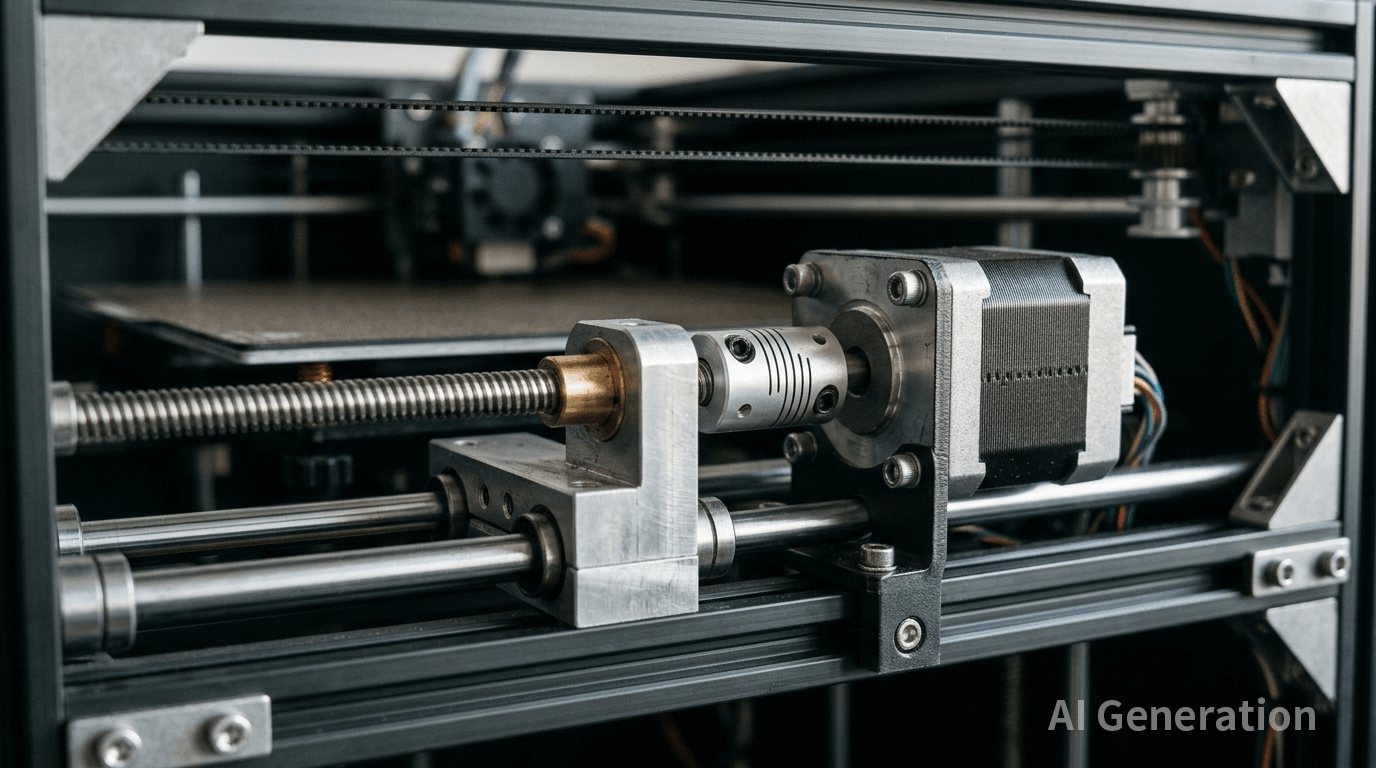
Most 3D printers, particularly those based on FDM (Fused Deposition Modeling), achieve motion through precisely controlled incremental steps. This stepwise motion behavior is not merely a byproduct of the process but a direct consequence of the underlying drive technology. At the core of these motion systems are stepper motors, which convert digital control signals into repeatable mechanical positioning.
What Is a Stepper Motor?
A stepper motor is, fundamentally, an actuator that converts electrical pulses into angular displacement. A conventional DC motor rotates continuously when powered, with speed proportional to the applied voltage. A stepper motor behaves differently: each pulse sent by the controller produces a fixed angular movement, typically 1.8°. In practical terms, 200 pulses complete exactly one revolution, enabling precise position control without the need for an external encoder to provide feedback.
This characteristic makes stepper motors inherently suitable for applications requiring accurate positioning. In 3D printing, layer heights are often 0.1 mm or even 0.05 mm. The nozzle position and build platform height must be controlled with high precision. A stepper motor functions like a calibrated indexing mechanism—each commanded step corresponds to a defined movement.
The Role of Stepper Motors in a 3D Printer
In a typical FDM 3D printer, four to five stepper motors are used:
- One motor for the X-axis and one for the Y-axis, controlling horizontal motion of the print head
- One or two motors for the Z-axis, responsible for the vertical positioning of the build platform
- One motor in the extruder, feeding filament into the hot end at a controlled rate
- Their primary function is not high speed, but precise motion control. X/Y motors influence edge definition within each layer, the Z motor determines layer consistency, and the extruder motor regulates material flow relative to motion. Poor coordination among these axes can result in layer misalignment, delamination, or under-extrusion.
- In practice, system tuning is critical. For example, periodic surface artifacts such as ripples can be traced to insufficient driver current, causing missed steps under load. Increasing the current to an appropriate level restores consistent motion, highlighting that motor performance depends on the entire electromechanical system rather than the motor alone.
Operating Principle: Why Motion Occurs in Steps
A stepper motor consists of a rotor and a stator. The rotor is typically a permanent magnet or toothed ferromagnetic structure, while the stator contains multiple electromagnetic coils. By energizing these coils in sequence, the controller generates a stepwise change in the magnetic field that incrementally pulls the rotor into alignment.
In a common two-phase bipolar hybrid stepper motor with four leads, energizing the coils in the sequence A+ → B+ → A− → B− produces clockwise rotation; reversing the sequence yields counterclockwise motion. Each change in excitation state advances the rotor by one full step position (in full-step mode).
A key limitation is that stepper motors typically operate without feedback (open-loop control). The controller assumes each pulse results in one step. However, if the load is too high, the current is too low, or the speed is too high, the motor may fail to keep up, resulting in “missed steps.” When this occurs, the system loses positional accuracy without detecting the error, which can accumulate over the remainder of the print.
Advantages and Limitations of Stepper Motors in 3D Printers
Advantages:
- Open-loop position control simplifies system design and reduces cost
- High torque at low speeds, suitable for steady, controlled motion
- Holding torque when stationary helps maintain position during pauses
- High repeatability, typically within ±0.05°
Limitations:
- Torque drops significantly at higher speeds, limiting maximum travel velocity
- Discrete stepping introduces vibration and audible noise, especially in full-step mode
- Continuous current leads to heat generation during operation
- No inherent feedback; missed steps cannot be detected in real time
Key Factors Affecting Print Quality
Driver Current Setting
Motor torque is directly related to current. Insufficient current increases the risk of missed steps, while excessive current causes overheating and potential driver protection triggers. A typical setting is 70%–100% of the rated current, followed by fine-tuning based on actual performance.
Microstepping Configuration
Microstepping subdivides a full step into smaller increments (e.g., 16× microstepping converts 200 steps per revolution into 3200). This improves motion smoothness and reduces vibration, but also reduces available torque and increases control signal requirements. In most 3D printing applications, 16× or 32× microstepping provides a practical balance.
Mechanical Design
Mechanical components significantly influence final accuracy. Lead screw pitch, belt tension, and bearing or guide clearances all contribute to positioning error. Upgrading motors alone cannot compensate for deficiencies in the mechanical system.
Firmware Control
Motion control parameters in firmware—including acceleration and jerk—directly affect motor response. Aggressive settings may exceed motor capability, while conservative settings increase print time. Advanced firmware architectures, such as those using offloaded computation, enable more refined motion planning and improved overall performance.
Precision Motion, Perfect Prints: JLCMC Stepper Motors for 3D Printing
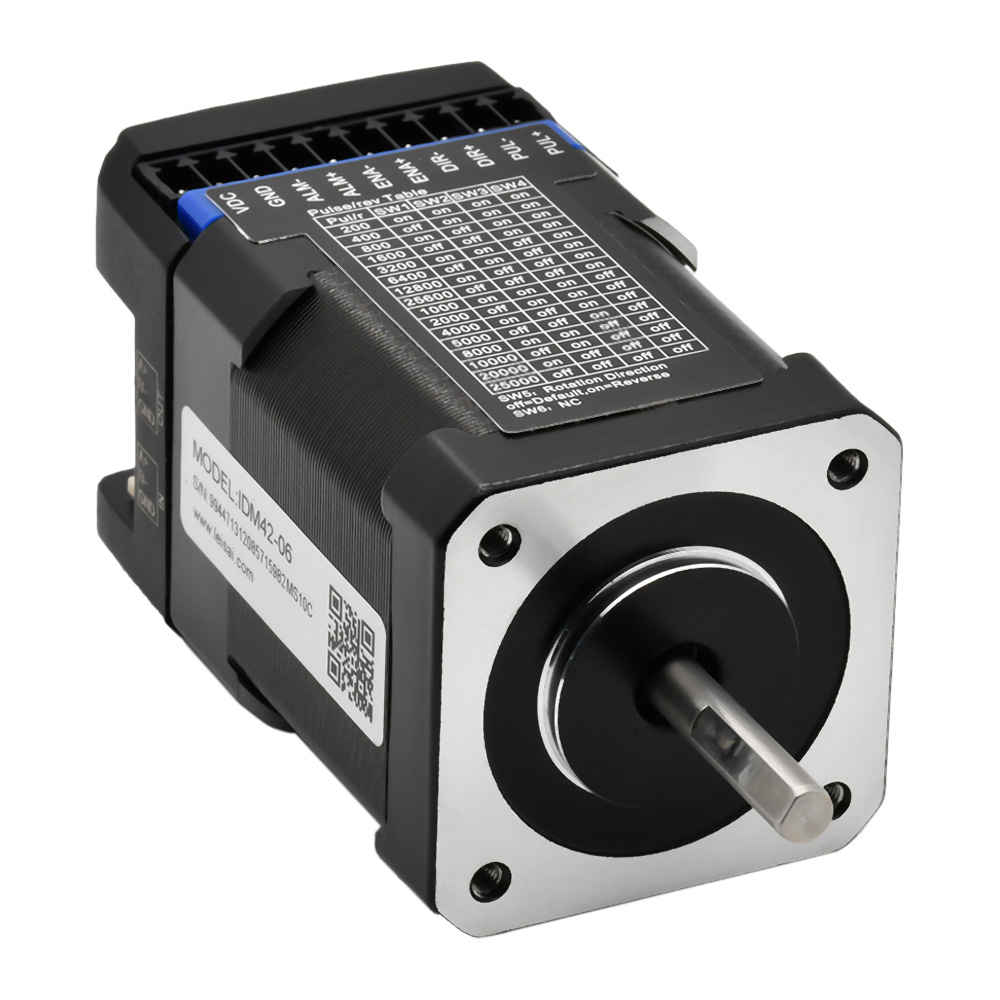
High-quality 3D printing depends on the seamless coordination of motors, drivers, and mechanical systems—not just a single component. JLCMC offers integrated motion solutions based on stepper motors (including NEMA 17 and closed-loop systems) to ensure reliable and stable performance for your 3D printers.
Key Advantages:
Stable torque output: Optimized for long-duration print jobs
Efficient thermal management: Reduces overheating risk during extended operation
Closed-loop control: Built-in encoders enable real-time monitoring and auto-correction
High precision: Minimizes missed steps, improving success rates for large or detailed prints
Upgrade your 3D printers with JLCMC's stepper motor to achieve greater reliability and precision now! Contact us or explore our product range to find the right fit for your application.
Frequently Asked Questions
How to Wire a Stepper Motor in a 3D Printer
Most common 3D printers typically use 4-wire bipolar stepper motors. In essence, the wiring of a 3D printer stepper motor follows just one core principle: first identify the coils, then correctly pair and connect them to the driver outputs.
Do not start by simply matching wires “by color” — that’s one of the most common mistakes beginners make.
How to Use a Stepper Motor in a 3D Printer
Using a stepper motor in a 3D printer essentially means converting motor rotation into calibrated linear motion via a STEP/DIR driver. Precision control is then achieved by tuning parameters such as steps/mm, motor current, and acceleration settings.
Should I Choose a Stepper Motor or a Servo Motor for My 3D Printer?
There is no absolute answer to which one is “better.” The key factor is whether your application actually requires upgrading to a servo system.
In general, stepper motors are the most cost-effective open-loop positioning solution for 3D printers. Servo motors, on the other hand, are closed-loop systems designed for high-speed, high-precision, and high-reliability industrial applications.
For typical 3D printing use cases, servo systems are often overkill, offering performance that exceeds what is actually needed and leading to unnecessary system complexity and cost.
Conclusion
In a 3D printer, the stepper motor operates as a quiet but essential component. It is not often discussed as prominently as nozzle temperature or slicing parameters, yet it underpins every layer’s precision, every retraction, and every hour of stable operation. Understanding how to configure current, microstepping, and mechanical integration is more valuable than focusing on individual hardware specifications alone.
Ultimately, print quality is the result of system-level optimization rather than any single component. The steady hum of a printer reflects a sequence of precisely timed pulses and countless incremental steps—each contributing to the final result.
Keep Learning
How to Choose a Shaft Coupling: Rigid vs Beam vs Jaw vs Universal Joint
Key Takeaways Shaft Coupling Basics: A shaft coupling transmits torque between driving and driven shafts while accommodating misalignment, vibration, and thermal expansion. The core choice is between rigid (zero flexibility, maximum torque density) and flexible (misalignment-tolerant, vibration-damping) designs. Four Primary Types: Rigid couplings offer zero backlash but require perfect alignment; helical beam couplings provide precision motion for light-duty drives; jaw couplings deliver versatile vi......
Roller Chain Size Chart: ANSI and BS Sizes in mm and Inches
Key Takeaways Identify the chain series first: ANSI and BS-series size codes belong to different dimensional families; changing the units does not change the chain type. Check four details together: Pitch, roller diameter, inner width and number of rows. Matching pitch alone is not enough to choose a replacement. Use the millimeter columns for comparison: Inch equivalents appear beside them, so there is no need to interpret two units in one cell. Count the gaps when measuring pitch: Six consecutive pi......
How to Choose Between Closed-Loop and Open-Loop Stepper Motors
People need the right motor for machine projects. Picking between a closed-loop and open-loop stepper motor shapes machine accuracy and total cost. You can build simple 3D printers with open-loop drives. You can run fast industrial equipment with closed-loop systems. This guide helps you pick the correct motor for your build. Key Takeaways Open-loop stepper systems operate without position feedback, while closed-loop systems use an encoder to monitor actual shaft position. Open-loop systems cannot det......
What Are Pillow Block Bearings? Definition, Working Principle & Applications
Key Takeaways A pillow block bearing is a self-contained bearing unit that combines a rolling-element bearing insert with a rigid housing, designed for shaft support on a flat mounting surface with the shaft axis parallel to the mounting plane. The housing provides structural alignment and load distribution, while the bearing insert handles radial and limited axial loads. Common locking mechanisms include set screws, eccentric collars, and adapter sleeves; each suits different shaft tolerances, vibrat......
Main Types of Servo Motors: AC, DC, and Everything in Between
1. Introduction By leveraging closed-loop feedback to precisely control position, velocity, and torque, servo motors serve as the backbone of modern automation. Yet, application success hinges on matching the right architecture to your load requirements—a task made challenging by the sheer variety of servo motor types available today. In this article, we map motor technology to application requirements through a practical taxonomy covering electrical topology, mechanical construction, performance spec......
Quiet Servo Motors: How to Select Low-Noise Servo Motors for Precision Automation
Noise has quietly become a specification. Medical device makers, semiconductor equipment builders, and packaging OEMs now arrive at the design review with a dB(A) target alongside torque and settling time — and the motion axis is usually the first thing they point at. This guide is written for engineers and buyers specifying industrial AC and brushless servo systems, covering small to medium power ranges commonly used in precision automation equipment. It is not about RC hobby servos: the plastic-gear......