How to Choose Gear with Teeth for Effective Power Transfer
6 min
- The Basics: How to Define Gear With Teeth
- The Universal Application of the Involute Profile
- Main Dimensions of Gear Profile
- Non-Involute and Special Type Gear Tooth Profiles
- Production Techniques and Their Influence on Teeth Gear
- Conclusion
- FAQs
The profile and arrangement of the teeth on a gear are critical for efficient and accurate power delivery. Although gears seem simple, their functionality substantially depends on the structure of tooth profiles. Even small deviations of tooth shape may influence noise generation, efficiency, load-carrying capacity, and service life.
In this article, we focus primarily on fundamental gear tooth design and explain why gear-tooth profile geometry is so important to mechanical systems. By learning how teeth gears engage with each other, designers and engineers can design smooth transitions, constant velocity ratios, and long life into applications ranging from precision instruments to heavy industrial machinery.

The Basics: How to Define Gear With Teeth
The Anatomy and Geometry of Gear Teeth
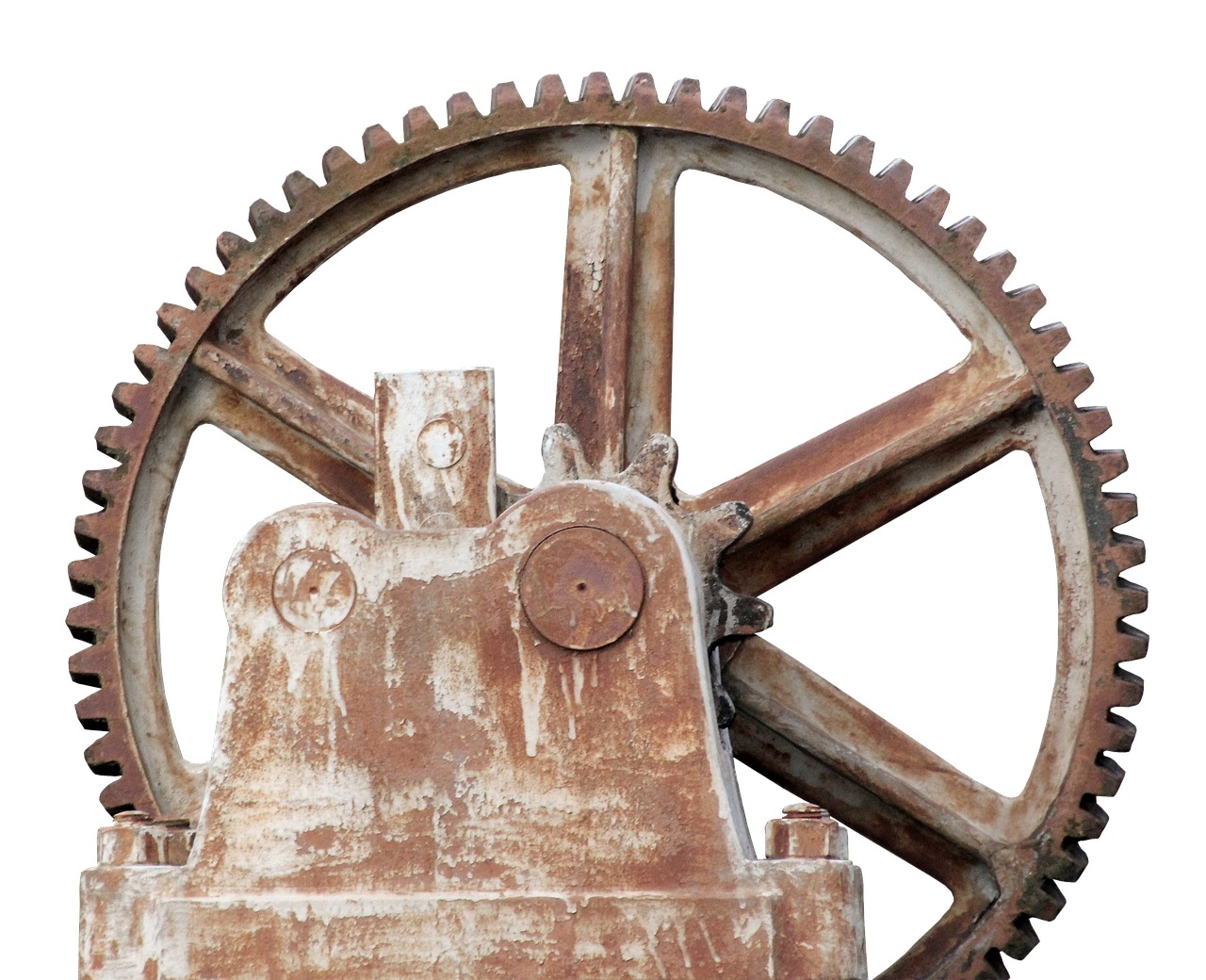
A gear is defined by the specific arrangement and geometry of its teeth, which are engineered to ensure seamless power transmission. Each tooth features multiple critical surfaces that determine how it engages with a mating gear.
The surface area above the pitch circle is known as the tooth face, while the area below it is the flank. The top land represents the flat or slightly rounded surface at the very tip of the tooth. Together, these geometric components dictate how the load is distributed during engagement. Precision in these surfaces is vital, as even micrometer-level accuracy ensures more predictable contact, reduced wear, and superior mechanical performance.
The Role of Para-Stiction and Smooth Non-Smooth Transition
When two spur gear teeth mesh with each other, their teeth touch and then disengage in a defined order. Proper gear tooth design allows mounting a gear to an axle without impact, though its significance is often neglected.
This controlled engagement provides a fixed velocity ratio between meshing gears while minimizing impact loading. Smooth meshing reduces vibration and noise in high-speed or precision applications. A bad profile or damaged tooth of a gear interferes with this operation and hinders efficient power transmission.
Tip-to-root clearance is considered using a reference pinion from a gear pair table, assuming standard tooth consistency unless otherwise specified. To reduce excessive bulge-to-base clearance, adjustments to tooth count may be required.
The Universal Application of the Involute Profile
The involute curve is the predominant tooth profile in contemporary engineering. Its popularity is due to a special geometric property: throughout the meshing process, it maintains a constant pressure angle.
This feature enables gears to transfer motion with minimal backlash, even if the shaft center lines are not perfectly aligned due to load deflection or manufacturing tolerances. Involute teeth gears are reliable and adaptable under various operating conditions.
Pressure Angle and Its Influence
The angle between the line of action and the tangent to the pitch circle is called the pressure angle. Typical standard values are 20 degrees, offering a balance between strength and smooth operation.
A larger pressure angle produces stronger teeth but increases radial force on bearings. A smaller pressure angle reduces bearing load but weakens the gear tooth. Selecting the correct pressure angle is critical to the performance of a gear with teeth and must align with load, speed, and durability requirements.
Main Dimensions of Gear Profile
Pitch Circle, Base Circle, and Addendum/Dedendum
The geometry of teeth on a gear is defined by several reference circles. The pitch circle represents the theoretical point of rolling contact between mating gears. The involute form is generated from the base circle, while the addendum and dedendum determine tooth height above and below the pitch circle.
These characteristics define tooth height, arc of action, and load-bearing capacity. Precise control of these parameters ensures proper meshing and even load distribution.
Clearance and Backlash
Clearance is the space between the tip of one tooth and the root of its mating tooth. This prevents jamming and allows for lubrication and thermal expansion.
Backlash is the play between mating teeth gears. It prevents binding and compensates for manufacturing tolerances. In precision applications, backlash is carefully adjusted to minimize play while maintaining smooth force transmission.
Non-Involute and Special Type Gear Tooth Profiles
Cycloidal Gear Tooth Profile
Before involute profiles became standard, cycloidal gears were widely used. Cycloidal teeth have different contact properties and can offer lower sliding friction under certain conditions.
However, cycloidal profiles are less universal and more sensitive to center distance variations. They are now mainly used in specialized applications such as clocks and low-power mechanisms.
Profile Modification and Tip Relief
During operation, gear teeth deform slightly under load. To compensate, manufacturers apply profile modifications such as tip relief. This involves removing a small amount of material near the tooth tip to reduce contact stress during engagement.
These modifications improve load distribution, reduce noise, and extend service life. Profile modification is a key optimization in high-performance tooth gear design.

Production Techniques and Their Influence on Teeth Gear
Manufacturing Processes: Hobbing vs. Shaping
There are two major methods for producing teeth on a gear: hobbing and shaping. Hobbing uses a rotating cutting tool to progressively form tooth gaps and is commonly used for external gears.
Shaping uses a reciprocating cutter and is suitable for internal gears or complex tooth forms. The chosen method affects surface finish, accuracy, and production cost, all of which influence final gear performance.
Quality Classification of Gear Toothing
Gear tooth quality is defined by international standards such as ISO and AGMA. These standards classify gears based on profile accuracy, pitch variation, and runout.
Higher grades provide smoother operation and are essential for high-speed or precision systems. Lower grades are acceptable for slow-moving or heavily loaded applications where cost efficiency is prioritized.
Conclusion
The exact gear tooth profile determines how a gear with teeth performs its function. From involute geometry to pressure angle selection and profile modification, every detail of gear tooth design affects efficiency, noise level, and service life.
Understanding how the teeth on a gear are designed and manufactured is essential for reliable power transmission. Whether for heavy machinery or precision equipment, optimal gear tooth design remains a fundamental aspect of mechanical engineering.
A great tooth profile design requires high-standard manufacturing to support it. With strict quality control at every stage, JLCMC helps you significantly reduce system energy consumption and mechanical noise. Purchase gears that meet your precise specifications today and accelerate your design-to-production cycle.
FAQs
What is the least number of teeth on a gear?
The minimum number of teeth varies according to pressure angle and tooth form. Below a certain limit, undercutting occurs, weakening the gear tooth and reducing its functional strength.
What are hunting teeth in a gear?
Hunting teeth refers to a gear set where the same teeth do not repeatedly mesh, allowing wear to be distributed evenly across all teeth.
What is the influence of wear on the involute profile?
Wear on the tooth surface increases backlash and noise. Severe wear can distort the involute profile, leading to efficiency loss and vibration.
Keep Learning
How to Choose a Shaft Coupling: Rigid vs Beam vs Jaw vs Universal Joint
Key Takeaways Shaft Coupling Basics: A shaft coupling transmits torque between driving and driven shafts while accommodating misalignment, vibration, and thermal expansion. The core choice is between rigid (zero flexibility, maximum torque density) and flexible (misalignment-tolerant, vibration-damping) designs. Four Primary Types: Rigid couplings offer zero backlash but require perfect alignment; helical beam couplings provide precision motion for light-duty drives; jaw couplings deliver versatile vi......
Roller Chain Size Chart: ANSI and BS Sizes in mm and Inches
Key Takeaways Identify the chain series first: ANSI and BS-series size codes belong to different dimensional families; changing the units does not change the chain type. Check four details together: Pitch, roller diameter, inner width and number of rows. Matching pitch alone is not enough to choose a replacement. Use the millimeter columns for comparison: Inch equivalents appear beside them, so there is no need to interpret two units in one cell. Count the gaps when measuring pitch: Six consecutive pi......
How to Choose Between Closed-Loop and Open-Loop Stepper Motors
People need the right motor for machine projects. Picking between a closed-loop and open-loop stepper motor shapes machine accuracy and total cost. You can build simple 3D printers with open-loop drives. You can run fast industrial equipment with closed-loop systems. This guide helps you pick the correct motor for your build. Key Takeaways Open-loop stepper systems operate without position feedback, while closed-loop systems use an encoder to monitor actual shaft position. Open-loop systems cannot det......
What Are Pillow Block Bearings? Definition, Working Principle & Applications
Key Takeaways A pillow block bearing is a self-contained bearing unit that combines a rolling-element bearing insert with a rigid housing, designed for shaft support on a flat mounting surface with the shaft axis parallel to the mounting plane. The housing provides structural alignment and load distribution, while the bearing insert handles radial and limited axial loads. Common locking mechanisms include set screws, eccentric collars, and adapter sleeves; each suits different shaft tolerances, vibrat......
Main Types of Servo Motors: AC, DC, and Everything in Between
1. Introduction By leveraging closed-loop feedback to precisely control position, velocity, and torque, servo motors serve as the backbone of modern automation. Yet, application success hinges on matching the right architecture to your load requirements—a task made challenging by the sheer variety of servo motor types available today. In this article, we map motor technology to application requirements through a practical taxonomy covering electrical topology, mechanical construction, performance spec......
Quiet Servo Motors: How to Select Low-Noise Servo Motors for Precision Automation
Noise has quietly become a specification. Medical device makers, semiconductor equipment builders, and packaging OEMs now arrive at the design review with a dB(A) target alongside torque and settling time — and the motion axis is usually the first thing they point at. This guide is written for engineers and buyers specifying industrial AC and brushless servo systems, covering small to medium power ranges commonly used in precision automation equipment. It is not about RC hobby servos: the plastic-gear......