Threadlocker Guide: Strength Grades, Application & Removal
10 min
- What Is a Threadlocker?
- How Does a Threadlocker Work?
- Threadlocker Strength Grades Explained
- Threadlocker vs. Mechanical Locking Devices
- How to Apply and Remove a Threadlocker
- Choosing the Right Grade: A Decision Table
- Where a Threadlocker Fits in Maintenance Work
- FAQ about Threadlocker Guide
- About This Threadlocker Guide
Key Takeaways
- A threadlocker is an adhesive applied to fastener threads that cures in the confined gap between mating threads and locks the joint against vibration loosening.
- Strength grades follow a common color convention: removable medium-strength grades for screws that need service access, high-strength permanent grades for joints that rarely open, plus wicking and low-strength variants.
- Application takes seconds — clean the threads, apply a few drops on the leading threads, assemble, and let it cure; removal methods differ by grade.
- A threadlocker fills the thread gap along the whole engagement; mechanical devices such as lock washers preload the joint. They address loosening differently and can be combined.
- Threadlocker choice is a chemical selection: verify grade, temperature range, and cure behavior against the supplier's datasheet and the actual operating conditions.
A machine runs fine for three weeks, then a fastener works its way loose. The torque check had been signed off at assembly, nothing was wrong with the thread, and yet the bolt backed out under vibration. That gap between "correctly tightened" and "still tight in three weeks" is what a threadlocker exists to close. Mechanical devices resist loosening with preload and friction; a threadlocker adds a chemical lock that fills the thread gap itself.
The grade you pick is decided less by brand than by one question: how often must this joint come apart? That answer narrows the field from purple and blue through red and green wicking before you open a datasheet — and the datasheet is what confirms it.
What Is a Threadlocker?
A threadlocker is an adhesive — supplied as a liquid, paste, or thread locking glue — often called a thread locking compound or thread locking fluid, and applied to the threads of a fastener before assembly. Once the fastener is engaged and the threads are confined, the material cures into a solid plastic that fills the microscopic gaps between mating threads.
The result is a joint held by two mechanisms at once: the mechanical clamp of the tightened thread, and a chemical bond that occupies every clearance path the vibration could use. Threadlockers are anaerobic adhesives — materials that cure in the absence of air when in contact with metal — though the exact cure behavior depends on the formulation, surface activity, and gap size. That is why application guidance from the supplier travels with the product, and why the same grade can behave differently on an inactive surface than on bare steel.
How Does a Threadlocker Work?
The working mechanism has three parts, and they explain the handling rules:
- Fill: the liquid wicks into the thread clearance between crest and root — the same spiral leak path that lets a bolt unwind and weep.
- Cure: confined between metal faces and starved of oxygen, the material polymerizes into a solid that keys into both thread surfaces.
- Lock: the cured solid resists relative motion of the threads, adding a shear strength that does not depend on the operator's torque feel.
Two practical consequences follow. First, surfaces matter: oil, plating passivation, or inert coatings change how well the material cures, and some inactive surfaces need an activator primer. Second, gap size matters: the thread must be within the formulation's designed clearance, which is why severely damaged or oversized threads are a repair job first — a threadlocker is not a thread filler for stripped holes.
Threadlocker Strength Grades Explained
Threadlockers are sorted into strength grades, and the industry color-codes them by removability. The grades below use that convention as a reference frame — grade names, colors, and exact strengths vary by supplier, and the product datasheet decides.
| Grade (common convention) | Removal | Typical service | Common uses |
|---|---|---|---|
| Low strength (often color-coded purple) | Hand tools | Small screws, low-torque fasteners | Set screws, calibration hardware, electronics |
| Medium strength, removable (often blue) | Hand tools with effort | Fasteners needing service access | Machine covers, pumps, motors, general assembly |
| High strength, permanent-leaning (often red) | Heat plus hand tools | Joints that rarely open | Structural fasteners, heavy equipment |
| Wicking / penetrating (often green) | Hand tools; heat only if engagement is unusually long | Pre-assembled joints, hairline access | Retrofitting threadlock to an already-tightened joint |
This table is a selection framework, not a specification. Green wicking grades are medium-to-high strength rather than permanently locked, so they are not the equivalent of red. The strength an adhesive delivers depends on the thread size, the material, the surface preparation, and the cure conditions, and two suppliers' "medium" grades can differ in measured breakaway torque. For anything that carries load or safety relevance, work from the supplier's datasheet numbers rather than the color.
Threadlocker vs. Mechanical Locking Devices
A threadlocker competes for the same job with a shelf of mechanical locking devices — lock washers, split and spring washers, and tooth lock washers among them. They attack loosening from opposite directions:
- Mechanical devices add preload and biting friction at the bearing surfaces. They are instant, reusable, and survive temperatures where adhesives degrade — but their grip concentrates at specific contact points.
- Threadlocker fills the entire thread engagement continuously, seals the joint against moisture and corrosion in the thread gap, and adds no change to the installed geometry. It is single-use by nature: releasing the joint destroys the cured bond, and the fastener needs fresh material on reassembly.
The two are not exclusive. A common practice on high-vibration equipment pairs a mechanical device with a medium-strength threadlocker, accepting the extra removal effort in exchange for two independent locks. When the joint must open regularly, the mechanical device alone is usually the better economics; when it must never loosen, the combination is the stronger answer.
How to Apply and Remove a Threadlocker
Application is quick, and most failures trace back to skipped preparation:
- Clean the threads: degrease both male and female threads; oil and cutting fluid are the main cure inhibitors.
- Apply to the leading threads — a few drops on the first two to three threads of the male fastener (or into the hole for blind holes, using the wicking grade on pre-assembled joints).
- Assemble and align — drive the fastener to final torque as usual; the material is still liquid at this stage.
- Let it cure — handling strength arrives relatively quickly and full cure typically within a day at room temperature; loaded joints should wait for full cure, and the exact schedule belongs to the product datasheet.
- Remove by grade — removable grades back out with hand tools; permanent-leaning grades generally need localized heat to soften the bond before the torque comes.
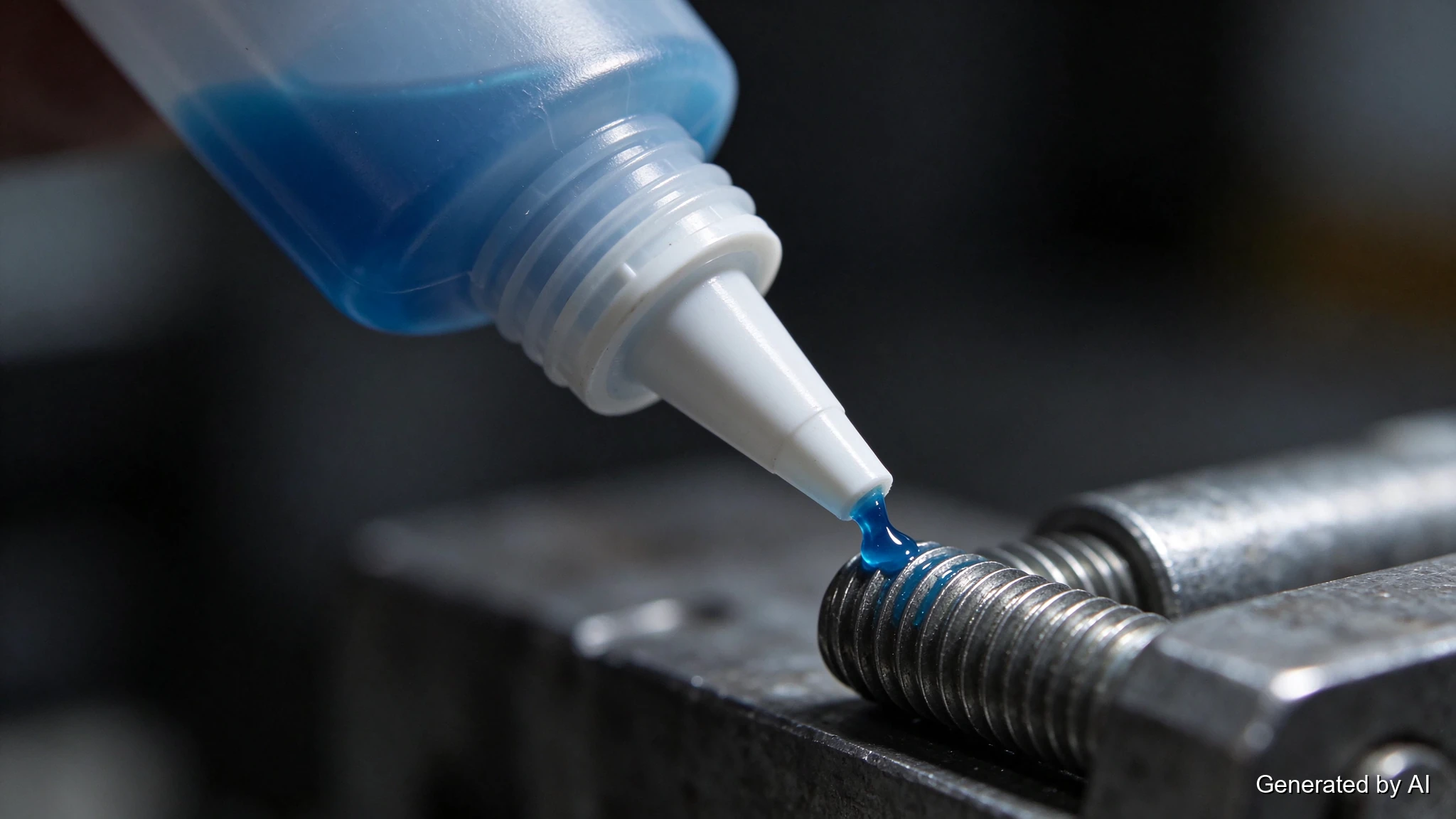
Two cautions belong next to this workflow. A severe joint that refuses both extraction and removal is a broken-fastener problem, not a lubrication problem: that path continues in our screw extractor guide, and a hole damaged during removal is rebuilt with the inserts covered in our threaded inserts for metal guide.
Choosing the Right Grade: A Decision Table
| Decision factor | Points toward |
|---|---|
| Fastener needs regular service access | Removable medium-strength grade |
| Joint is safety-relevant and rarely opened | A high strength threadlocker grade, with a removal plan in place |
| Small screws, low torque (electronics, instruments) | Low-strength grade to avoid thread damage on removal |
| Joint already assembled and must be locked in place | Wicking / penetrating grade |
| High temperature environment | Verify grade temperature ceiling against the datasheet first |
| Repeated disassembly expected | Mechanical device alone, or the lowest grade that holds |
The table narrows the field; it does not replace the datasheet. Temperature ceilings, cure speed on specific platings, and chemical compatibility with the surrounding media are supplier-specific numbers, and a grade that works on one joint can be wrong on the next.
Where a Threadlocker Fits in Maintenance Work
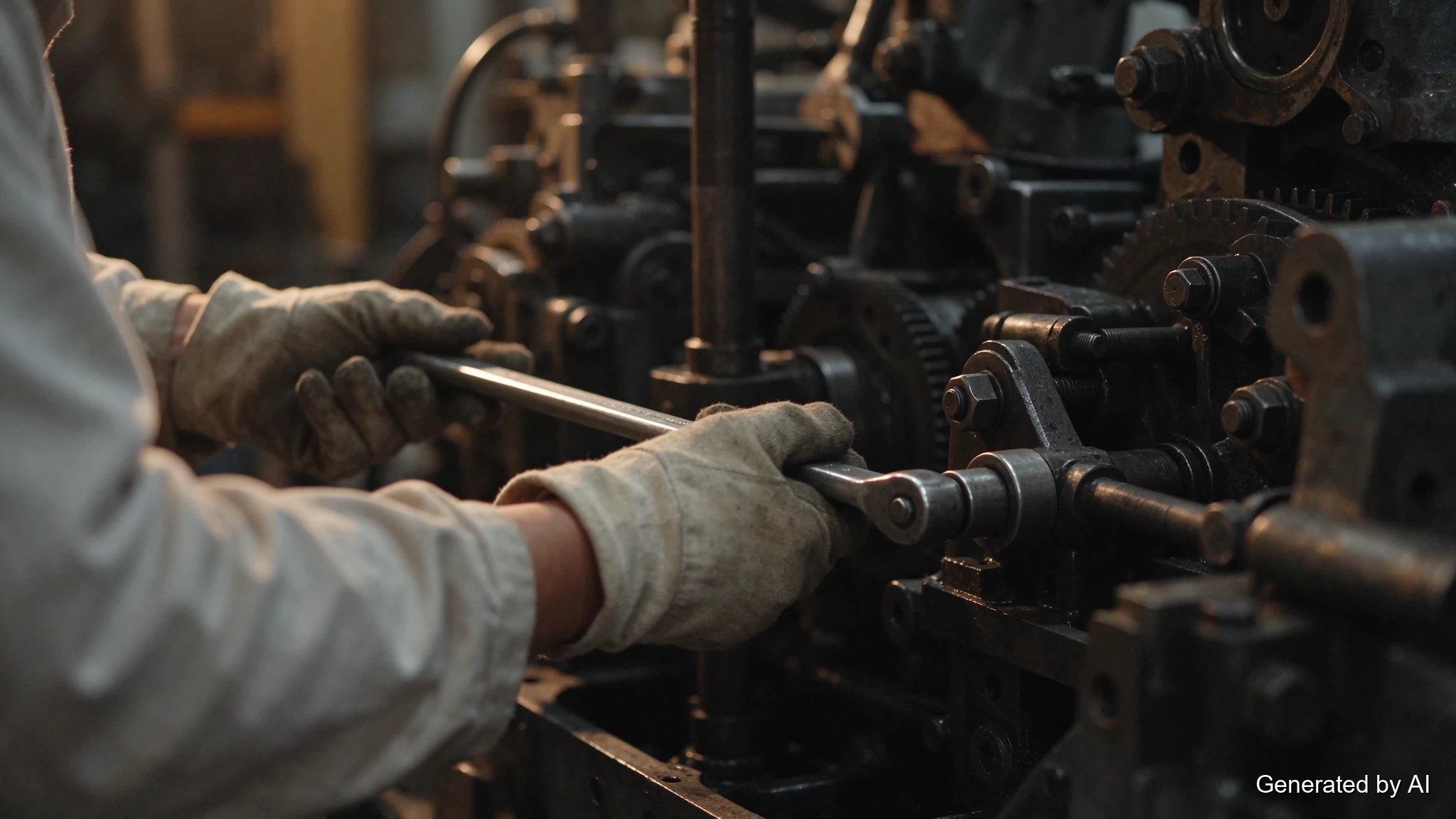
In maintenance routines the threadlocker appears wherever vibration has already proven itself: bolts on crushers and vibratory feeders, bearing housing cap screws, transport-exposed equipment, and reassembly after any repair on vibrating machinery. The wider repair ladder sits across the cluster: a fastener broken during removal goes to the screw extractor guide, a hole damaged beyond use is rebuilt with the inserts in the threaded inserts guide, and confirming the replacement fastener's size starts with the how-to-measure-thread-size guide.
FAQ about Threadlocker Guide
Q: What is a threadlocker used for?
A threadlocker locks a threaded fastener against loosening from vibration and thermal cycling. It cures in the thread gap to form a plastic solid that fills the clearance, adding a chemical lock alongside the mechanical clamp of the tightened thread.
Q: What is the difference between blue and red threadlocker?
The colors are an industry convention for strength: a blue threadlocker marks a removable, medium-strength grade for fasteners that need service access, and red marks a high-strength grade intended for joints that rarely open, where removal needs heat plus tools. A removable threadlocker in blue is the default for serviceable assemblies — the convention is a starting point, and the datasheet numbers decide.
Q: Can I reuse a bolt with threadlocker on it?
Not with the old residue as-is. The cured material should be cleaned off and the threads inspected, and fresh threadlocker applied on reassembly. A bolt that has been heated for permanent-grade removal should also be checked for strength before it goes back into a loaded joint.
Q: How do I remove a high-strength threadlocker?
Localized heating to soften the cured bond, followed by normal hand tools, is the common approach; the specific temperature and method come from the product datasheet. After removal, chase the threads while the residue is still soft and clean them before reassembly.
Q: Does a threadlocker replace a lock washer?
No — they address loosening differently. A lock washer adds mechanical preload and biting friction at the bearing surfaces; a threadlocker fills the thread gap continuously and also seals it. They can be combined on high-vibration joints, and regular-service joints often do better with the mechanical device alone.
Q: How long does threadlocker take to cure?
Handling strength develops within minutes to hours, and full cure completes in about a day at room temperature. The exact schedule depends on the formulation, the surface, and the temperature — the product datasheet carries the cure curve for the grade you are using.
About This Threadlocker Guide
A threadlocker closes the gap that torque alone leaves behind: where a correctly tightened bolt can still walk loose under vibration, the cured adhesive fills the thread clearance and locks every engagement path at once. Sort the joint by how often it must open, match the grade, apply on clean threads, and let the datasheet carry the numbers.
The hardware around the chemistry matters just as much: the washers and matched fasteners on the joint, the extraction tools for the fasteners that fail, and the inserts that rebuild the holes that cannot be saved — all part of the same maintenance workflow this guide sits in.
Popular Articles
Keep Learning
Threadlocker Guide: Strength Grades, Application & Removal
Key Takeaways A threadlocker is an adhesive applied to fastener threads that cures in the confined gap between mating threads and locks the joint against vibration loosening. Strength grades follow a common color convention: removable medium-strength grades for screws that need service access, high-strength permanent grades for joints that rarely open, plus wicking and low-strength variants. Application takes seconds — clean the threads, apply a few drops on the leading threads, assemble, and let it c......
Reducing Ball Screw Noise: Troubleshooting and Optimization
The noise generation of the ball screw is a difficult problem for the design of modern automation and motion-control systems. As machines grow faster and more exacting, they can be easily tripped up even by small amounts of unwanted sound. Noise disturbs the working environment. It can distract operators. It can also be an indicator of deeper mechanical problems that reduce the accuracy and the life of the components. Such questions are asked by many engineers and technicians: How to decrease noise in......
Why Do Your Drawer Slides Get Stuck, How to Fix It?
Drawer slides are everywhere in your workshop, kitchen, office, or bedroom. Ensuring their smoothness and durability is key to maintaining the convenience and comfort of your furniture. If you're reading this article, you've likely faced the frustration of drawer slides getting stuck. Let's explore why this happens and how JLCMC can help you prevent it and find effective solutions. Common Issues and Analysis Incorrect Drawer Slide Selection One of the most common causes of stuck drawer slides is choos......
Hoses and Clamps Multi-Scenario Leak Repair Guide
Fig. 1 A picture of Hose Clamps In high-performance environments, system failures aren’t always triggered by failing sensors or seized motors. More often than not, it’s the hose and clamps—small, everyday components—that quietly undercut performance. Industry data suggests that nearly 15% of hydraulic system leaks can be traced back to poor-quality fittings, components, and hose and clamp connections. Why these happenings? It starts with something as simple as a poor fit or mismatched hose clip. Left ......
What Happens When a Timing Belt Breaks?
Fig. 1 A picture of a Timing Belt You're cruising comfortably down the highway when suddenly the engine sputters, stutters, and quits. No warning. No check engine light. Just an eerie silence. If the timing belt broke or the cam belt snapped, you've just experienced one of the most damaging failures an engine can suffer. Whether it's in a vehicle or industrial machine, a timing belt is the quiet hero that synchronizes your engine's internal components. It keeps the crankshaft and camshaft in lockstep ......
5 Ball Valve Mistakes That Can Wreck Your Machine Systems—and How to Avoid Them
Alt: A picture of Ball Valve applications In industrial and commercial systems, the smallest hardware often dictates the biggest outcomes. The ball valve—while compact—plays a pivotal role in regulating flow, managing pressure, and maintaining operational integrity. Yet, despite their small size, ball valve failures remain one of the leading causes of machine downtime. In many industrial systems, valve-related issues disrupt uptime more often than motors or controls. Not software. Not sensors. Just va......