The Ultimate Guide to Thumb Screws in Mechatronics: Why This Tiny Fastener Deserves Your Respect
10 min
- 1. What Is a Thumb Screw?
- 2. Why Thumb Screws Matter in Mechatronics Design
- 3. Anatomy of a High-Quality Thumb Screw
- 4. Important Thumb Screw Standards
- 5. Common Thumb Screw Applications in Mechatronics
- 6. Popular Thumb Screw Types and Sizes
- 7. Thumb Screw Torque and Thread Engagement
- 8. How to Select the Right Thumb Screw
- 9. Sourcing Reliable Thumb Screws
- 10. Final Thoughts: The Value of Good Fastener Design
- FAQ: Thumb Screws in Mechatronics and Industrial Equipment
In the world of mechatronics, engineers spend plenty of time discussing servo systems, motion controllers, PLC architectures, and precision sensors. Yet one of the most practical components in any electromechanical assembly is often overlooked: the thumb screw.
It is not programmable. It does not generate data. It will never appear in a product keynote presentation. But when a technician needs fast access to a control enclosure, an operator must adjust a vision alignment bracket, or a maintenance engineer needs tool-free serviceability in the field, the thumb screw quietly becomes indispensable.
The humble thumb screw is one of the most effective fasteners for improving maintainability, reducing assembly time, and enabling tool-free operation in modern automation systems. In many applications, replacing a standard machine screw with a properly selected thumb screw can significantly improve workflow efficiency without compromising reliability.
This guide explores how thumb screws work, the major standards and materials used in industrial applications, common thumb screw types and sizes, and how to select the right option for mechatronics, automation, robotics, CNC equipment, and electronic enclosures.
For engineers sourcing reliable industrial components, platforms like JLCMC provide a broad range of thumb screw and fastening solutions suitable for professional electromechanical applications.

1. What Is a Thumb Screw?
A thumb screw is a threaded fastener specifically designed for manual tightening and loosening without tools.
Unlike conventional screws that require hex keys or screwdrivers, a thumb screw features an enlarged head with textured grip surfaces—typically knurling—that allow users to apply torque directly by hand.
Common thumb screw characteristics include:
· Knurled or textured head surfaces
· Oversized head geometry for grip
· Tool-free installation and removal
· Reusable fastening for frequent access applications
· Metric or imperial thread compatibility
In mechatronics systems, thumb screws are widely used because they simplify maintenance and reduce downtime. Applications frequently include:
· Robotics enclosures
· Sensor mounting brackets
· Vision system alignment stages
· CNC machine guards
· Optical equipment
· Battery compartments
· Industrial automation fixtures
The biggest advantage of a thumb screw is operational efficiency. Engineers and technicians can quickly remove or reposition components without searching for tools, improving serviceability and reducing maintenance complexity.
2. Why Thumb Screws Matter in Mechatronics Design
Modern mechatronics systems prioritize not only performance, but also maintainability and ergonomic usability.
A well-designed machine should allow operators and technicians to:
· Access critical components quickly
· Perform adjustments efficiently
· Reduce assembly and disassembly time
· Minimize tool dependency
· Improve field-service experience
Thumb screws directly support these goals.
Compared with standard machine screws, thumb screws offer:
| Feature | Standard Screw | Thumb Screw |
| Tool Required | Yes | No |
| Fast Access | Limited | Excellent |
| Frequent Adjustment | Poor | Ideal |
| Ergonomic Operation | Moderate | High |
| Maintenance Efficiency | Lower | Higher |
For systems that require repeated access, thumb screws are often the most practical fastening solution available.
3. Anatomy of a High-Quality Thumb Screw
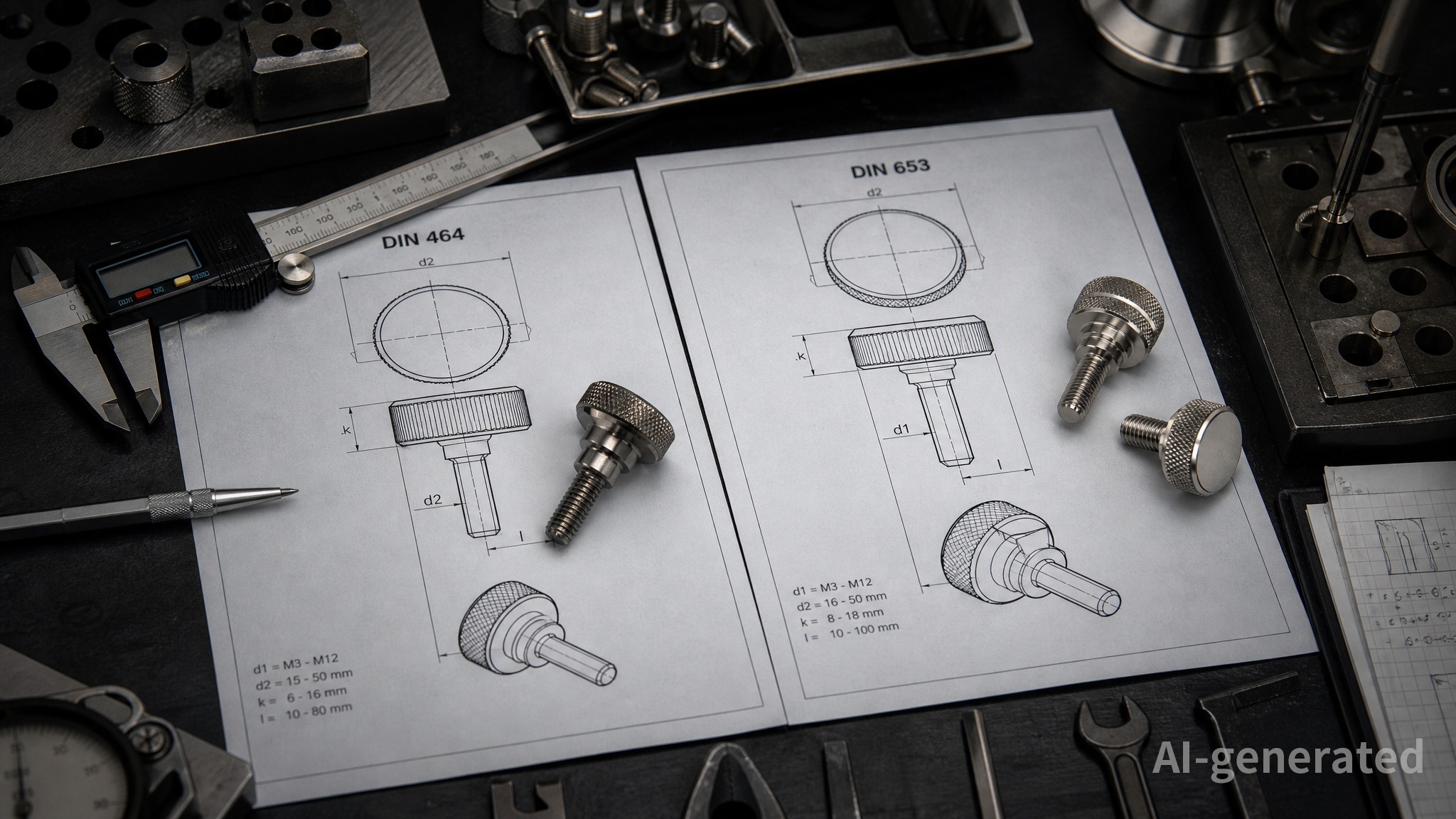
Not all thumb screws perform equally. Several engineering details determine usability, torque capability, and long-term reliability.
3.1 Knurling Quality
Knurling is the textured grip pattern machined or rolled into the head surface.
Common knurling patterns include:
· Straight knurl
· Diagonal knurl
· Diamond knurl
Diamond knurling typically provides the best multidirectional grip and is preferred for industrial thumb screw applications.
Deep, consistent knurling improves:
· Finger grip
· Torque transfer
· Operation with gloves
· Resistance to slipping
Poor-quality knurling often results in insufficient tightening force and inconsistent user experience.
3.2 Head Geometry
Thumb screw head design affects both ergonomics and installation clearance.
Knurled Cylindrical Head
The most common industrial design. Offers balanced grip and compact dimensions.
Low-Profile Head
Designed for tight-clearance installations where protrusion must be minimized.
Spade Head
Provides increased leverage for higher manual torque applications.
Star Knob
Common in adjustment mechanisms requiring frequent repositioning.
Selecting the correct head geometry is especially important in compact automation systems and enclosed electronic assemblies.
3.3 Material Selection
Material choice determines corrosion resistance, electrical properties, mechanical strength, and environmental compatibility.
Stainless Steel Thumb Screws
Best for:
· Industrial automation
· Medical equipment
· Washdown environments
· Corrosion resistance
Advantages:
· High strength
· Excellent corrosion resistance
· Long service life
Brass Thumb Screws
Best for:
· Non-magnetic applications
· Precision instrumentation
· Decorative industrial assemblies
Advantages:
· Corrosion resistance
· Non-sparking
· Non-magnetic properties
Nylon Thumb Screws
Best for:
· Electrical insulation
· Optical assemblies
· Lightweight systems
Advantages:
· Electrically non-conductive
· Non-marring surfaces
· Chemical resistance
Composite Thumb Screws
Hybrid designs combine metal threads with plastic knobs for improved ergonomics and insulation.
For consistent quality and dimensional reliability, engineers should source thumb screw components from established industrial suppliers such as JLCMC Fasteners & Mechanical Components.
4. Important Thumb Screw Standards
Specifying standardized thumb screws improves sourcing consistency, interchangeability, and manufacturing reliability.
4.1 DIN 464 Thumb Screws
DIN 464 defines high-profile knurled thumb screws with a shoulder between the head and threaded section.
Typical applications:
Common thread sizes:
· M3
· M4
· M5
· M6
· M8
· M10
DIN 464 thumb screws are among the most widely used metric thumb screw standards in industrial automation.
4.2 DIN 653 Thumb Screws
DIN 653 specifies low-profile thumb screws with reduced head height.
Best for:
· Tight-clearance installations
· Flush-mounted assemblies
· Compact electronic enclosures
4.3 ASME B18.6.8
For imperial systems, ASME B18.6.8 standardizes thumb screw dimensions and thread specifications.
Common imperial sizes include:
· #4-40
· #6-32
· #8-32
· 1/4"-20
· 5/16"-18
Including the appropriate standard directly in CAD drawings and BOMs simplifies procurement and avoids specification ambiguity.
5. Common Thumb Screw Applications in Mechatronics

5.1 Electrical Enclosures and Control Panels
Industrial control systems frequently require rapid access during troubleshooting and maintenance.
Thumb screws help:
· Reduce downtime
· Improve technician efficiency
· Eliminate unnecessary tools
They are especially common in:
· PLC cabinets
· Server racks
· Automation panels
· DIN rail enclosures
5.2 Optical and Vision Systems
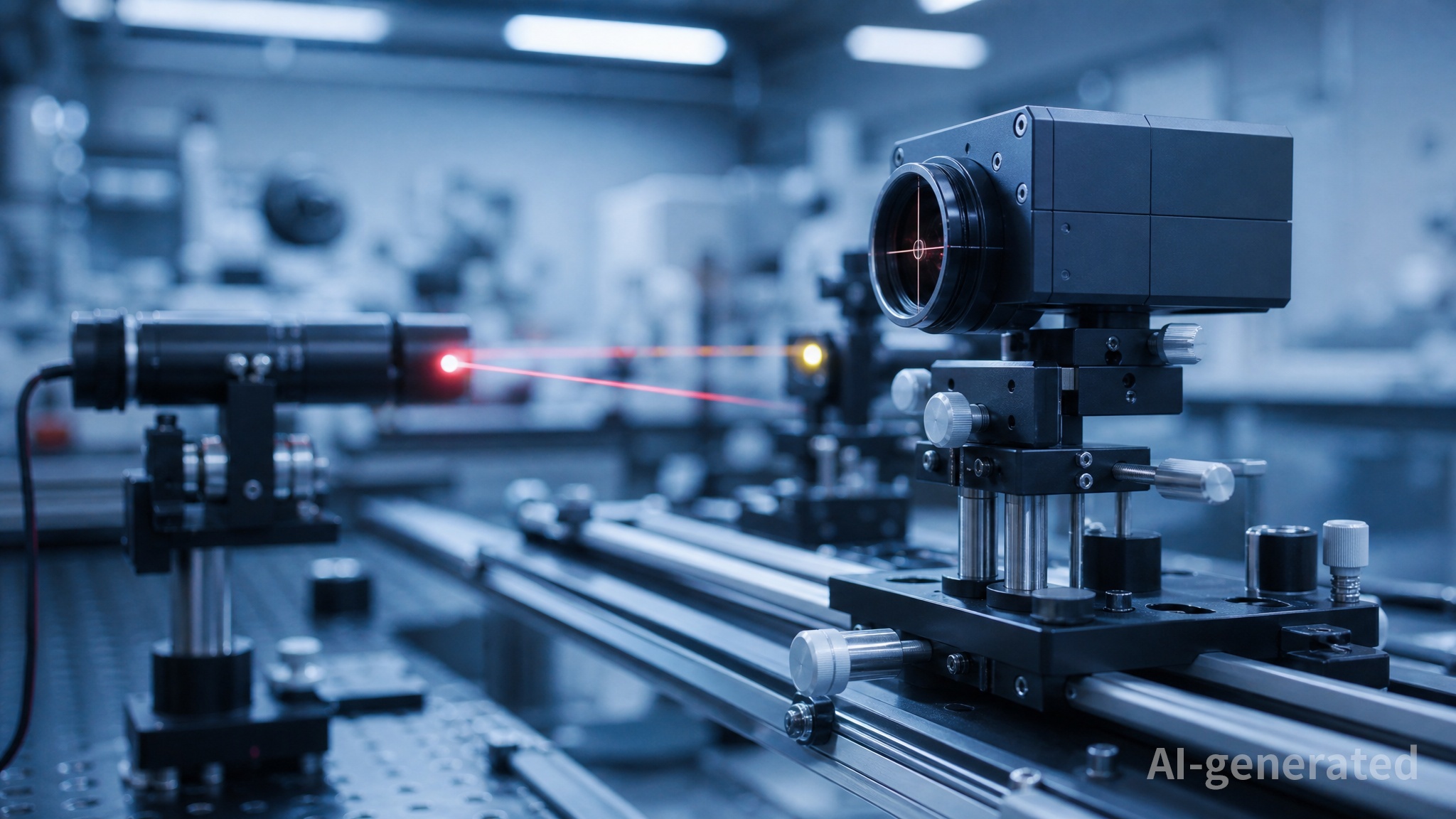
Machine vision and laser alignment systems often require precision adjustment.
Nylon-tipped thumb screws are ideal because they:
· Prevent surface damage
· Provide stable positioning
· Allow repeatable adjustment
Common uses include:
· Camera mounts
· Lens holders
· Laser positioning systems
· Optical rails
5.3 3D Printers and CNC Equipment

Thumb screws are heavily used in desktop fabrication equipment.
Typical applications:
· Bed leveling systems
· Extruder tension adjustment
· Safety guards
· Fixture positioning
Their tool-free functionality significantly improves usability during rapid prototyping and maintenance.
5.4 Medical and Laboratory Equipment
Medical and laboratory environments demand:
· Corrosion resistance
· Frequent cleaning compatibility
· Reliable repeatability
Stainless steel thumb screws are commonly specified for:
· Adjustable clamps
· Instrument enclosures
· Optical tables
· Precision lab fixtures
6. Popular Thumb Screw Types and Sizes
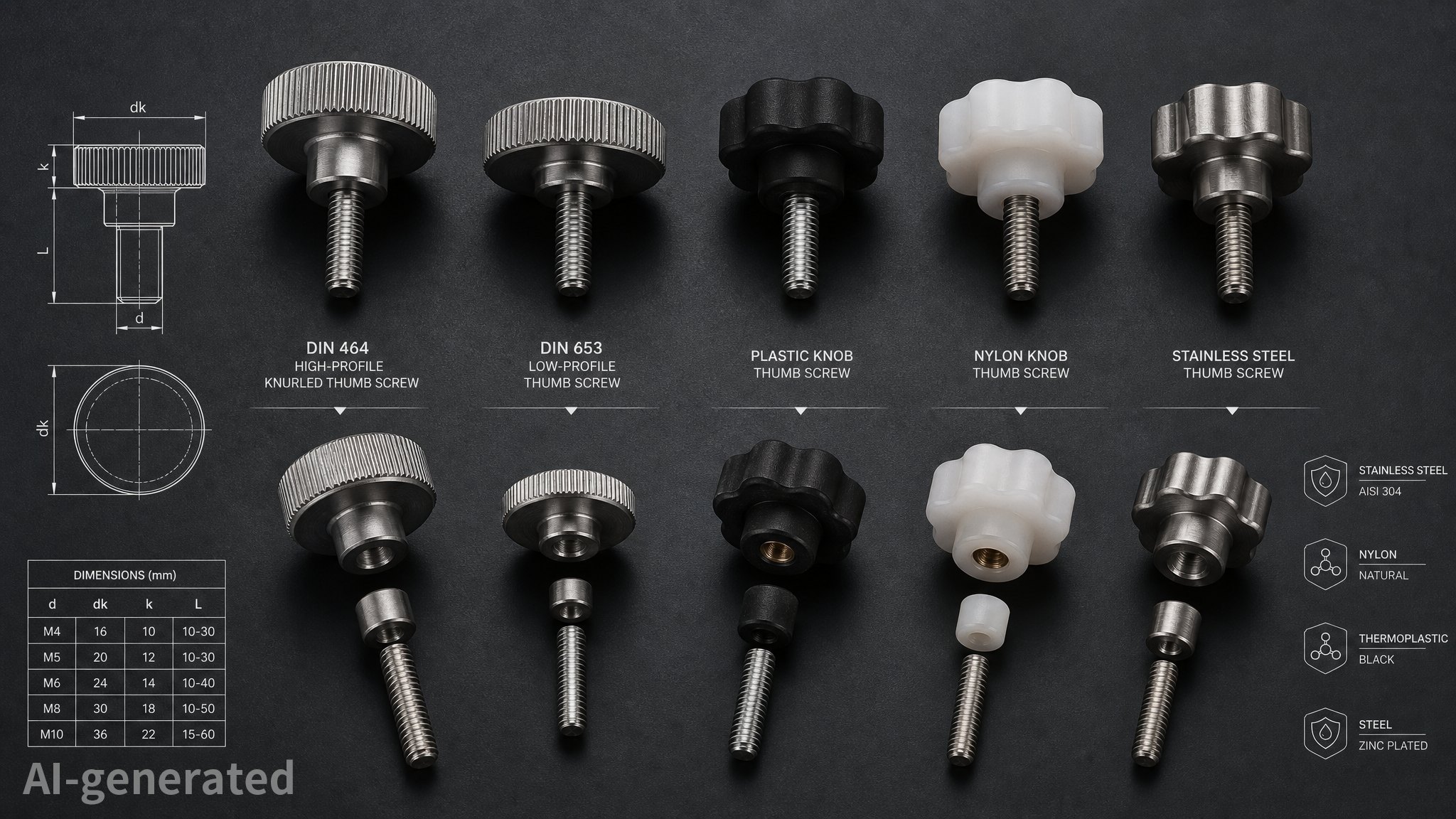
The following thumb screw configurations are commonly used across robotics, automation, and precision engineering.
DIN 464 High-Profile Knurled Thumb Screws
Popular sizes:
· M4×12
· M5×16
· M6×20
· M8×25
Best for:
· Equipment panels
· Fixture plates
· General industrial fastening
DIN 653 Low-Profile Thumb Screws
Best for:
· Compact assemblies
· Internal chassis fastening
· Tight spaces
Plastic Knob Thumb Screws
Typical thread range:
· M3–M10
Applications:
· Adjustable stops
· Operator controls
· Positioning mechanisms
Spade Head Thumb Screws
Best for:
· High manual torque
· Industrial clamping
· Fixture adjustment
Keeping these standard thumb screw sizes in inventory can significantly accelerate prototyping and machine assembly workflows.
7. Thumb Screw Torque and Thread Engagement
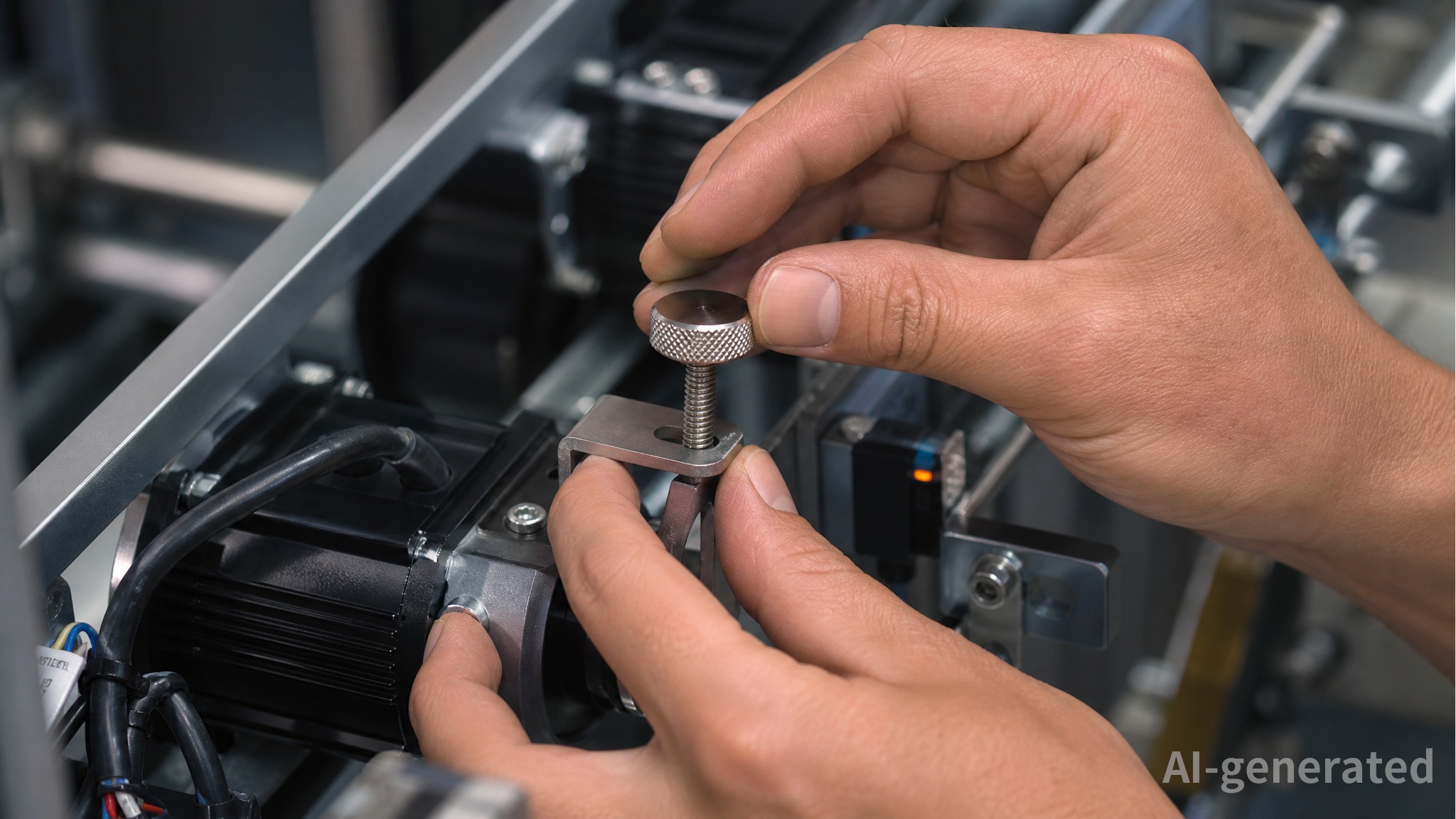
Thumb screws are designed for controlled manual tightening rather than maximum clamping force.
Typical hand-tightening torque:
· Standard knurled heads: 2–5 Nm
· Large knobs or spade heads: up to 8 Nm
Because of this, thumb screws are best suited for:
· Access panels
· Adjustment mechanisms
· Light-to-medium clamping applications
They are generally not recommended for:
· High-load structural joints
· Heavy vibration environments without locking features
Preventing Loosening
In vibration-prone systems, consider:
· Nylon locking patches
· Spring washers
· Nylon-tipped contact surfaces
· Thread-locking compounds
These additions improve retention without sacrificing tool-free usability.
8. How to Select the Right Thumb Screw
A practical thumb screw selection workflow includes:
1. Determine Access Frequency
Frequent access justifies higher ergonomic quality.
2. Define Load Requirements
Higher loads require larger thread sizes.
3. Evaluate Environmental Conditions
Choose materials based on corrosion, insulation, or chemical exposure requirements.
4. Verify Clearance
Use low-profile thumb screws where space is limited.
5. Consider User Ergonomics
Gloved operation may require deeper knurling or larger heads.
6. Standardize Across Assemblies
Using the same thumb screw size across multiple machine sections simplifies inventory management and maintenance.
9. Sourcing Reliable Thumb Screws
When sourcing thumb screws, engineers should evaluate:
· Dimensional accuracy
· Material consistency
· Surface finish quality
· Standard compliance
· Supply stability
Low-quality thumb screws often introduce problems such as:
· Poor thread fit
· Weak grip texture
· Burrs and inconsistent plating
· Premature corrosion
For industrial automation and mechatronics projects, sourcing from specialized mechanical component suppliers helps ensure consistency across prototypes and production builds.
JLCMC Mechanical Components Platform offers a broad selection of industrial fastening solutions including:
· DIN 464 thumb screws
· DIN 653 thumb screws
· Stainless steel thumb screws
· Plastic knob thumb screws
· Precision fastening hardware
The ability to filter by thread size, material, head type, and dimensional specifications simplifies procurement and improves BOM consistency for engineering teams.
10. Final Thoughts: The Value of Good Fastener Design
Thumb screws may be small components, but they have an outsized impact on usability, maintenance efficiency, and real-world operational performance.
Every properly selected thumb screw represents thoughtful engineering:
· Faster service access
· Better technician experience
· Reduced assembly friction
· Improved maintainability
In modern mechatronics, good design is not only about advanced electronics or sophisticated motion control. It is also about making systems easier to build, operate, and maintain.
The right thumb screw helps achieve exactly that.
FAQ: Thumb Screws in Mechatronics and Industrial Equipment
What is the difference between a thumb screw and a regular screw?
A thumb screw is specifically designed for hand tightening and removal without tools. It features a larger textured head for manual grip, while regular screws typically require screwdrivers or hex keys.
What are thumb screws commonly used for?
Thumb screws are commonly used in:
· Electronics enclosures
· Robotics systems
· CNC machines
· Optical equipment
· Industrial control panels
· Laboratory instruments
· Adjustable fixtures
They are ideal for applications requiring frequent access or adjustment.
Are thumb screws strong enough for industrial equipment?
Yes, thumb screws are suitable for many industrial applications involving light-to-medium clamping force. However, they are not intended to replace high-torque structural fasteners in heavy-load assemblies.
What material is best for thumb screws?
The best material depends on the application:
· Stainless steel: corrosion resistance and durability
· Brass: non-magnetic environments
· Nylon: electrical insulation and delicate surfaces
· Composite: ergonomic adjustment mechanisms
What is the difference between DIN 464 and DIN 653 thumb screws?
DIN 464 thumb screws have a taller, high-profile head with a shoulder, while DIN 653 thumb screws use a lower-profile design suited for compact spaces.
Can thumb screws loosen under vibration?
Yes, vibration can loosen thumb screws in some environments. Engineers often use:
· Nylon locking patches
· Spring washers
· Thread-locking compounds
· Nylon-tipped designs
to improve vibration resistance.
What are the most common thumb screw sizes?
Popular metric sizes include:
· M3
· M4
· M5
· M6
· M8
Common imperial sizes include:
· #6-32
· #8-32
· 1/4"-20
Where can I source industrial-grade thumb screws?
Industrial thumb screws can be sourced from specialized mechanical component suppliers such as JLCMC, which provides standardized fastening solutions for mechatronics, automation, and industrial equipment applications.
Popular Articles
Keep Learning
Threaded Standoff vs Spacer: What Is the Difference?
Key Takeaways Threaded standoffs provide both spacing and threaded attachment points, making them ideal for modular assemblies and PCBs. Spacers are unthreaded sleeves that work with through-bolts to maintain gaps in clamped assemblies, offering a simpler and more economical solution. The right choice depends on the load path, assembly sequence, material, and service environment - not just appearance or catalog naming. A threaded standoff and a spacer can look almost identical on a workbench. Both cre......
How to Choose a Threaded Standoff for PCB and Mechatronic Assemblies
Key Takeaways Select the right configuration: Choose male-female, female-female, or male-male thread configurations based on the two mating interfaces and the intended assembly sequence. Treat height as a tolerance stack: Standoff body length must satisfy clearance, electrical, thermal, and connector requirements across the full tolerance range, not just the nominal dimension. Verify thread engagement: Check male thread length against tapped-hole depth and upper screw length against usable female thre......
Threaded Standoff Guide: Types, Sizes, Materials and Applications
Key Takeaways Thread configuration first: Choose female-female, male-female or male-male based on how both sides of the assembly attach — thread config is the most practical way to classify a threaded standoff. Body length is the critical dimension: Standoff length refers to the distance between supporting faces, not total physical length. Reading the wrong length causes incorrect mounting height or screw bottoming. Material affects more than strength: Brass, stainless steel, carbon steel, aluminum an......
Ball Nose End Mill Stepover: Scallop Height and Effective Diameter
Key Takeaways Geometric Control: Stepover directly controls geometric scallop height, but it does not automatically guarantee a measured Ra value. Cusp Height Formula: For a ball radius $R$ and pass spacing $s$ on a flat surface, the ideal cusp height is $h = R - \sqrt{R^2 - \frac{s^2}{4}}$. Tool Radius Advantage: A larger ball can use wider spacing for the same ideal cusp, provided it can reach the required geometry without gouging. Effective Diameter: The active cutting diameter near the tool tip ca......
Manual SMT Stencil Printer Sizing: Print Area, PCB Support and Frame Fit
Key Takeaways Different dimensions: Worktable size, effective print area, board envelope, and stencil frame size are different dimensions. Check the full pattern: Check the whole aperture pattern in its intended orientation, including clearance for the printing stroke. Thickness is not enough: A compatible board thickness does not prove that a populated underside or a support fixture will fit. Support and contact: Stable support and close stencil-to-board contact are necessary for a repeatable printin......
Blind Rivet Guide: Types, Sizes, Uses, Installation and Removal
A blind rivet may be small, but choosing one correctly involves more than matching a rivet to the nearest drill bit. The diameter, grip range, hole size, body material, mandrel material, head style and installation tool all influence the finished joint. A rivet that looks perfectly acceptable before installation can still spin, loosen, pull through the sheet or form incorrectly on the blind side if one of these factors is overlooked. Blind rivets are widely used in sheet-metal fabrication, electrical ......