Socket Head Cap Screws for Mechatronics: Selection Guide, Sizes, Strength Grades, and Applications
22 min
- 1. What Is a Socket Head Cap Screw?
- 2. Why Socket Head Cap Screws Matter in Mechatronic Assemblies
- 3. Common Types and Standards of Socket Head Cap Screws
- 4. Popular Socket Head Cap Screw Sizes and Strength Grades
- 5. Material and Surface Treatment Selection
- 6. Common Applications in Real Mechatronic Projects
- 7. Practical Selection Checklist
- 8. Installation Tips and Common Mistakes
- 9. Product Selection and Related Component Planning
- 10. FAQ: Socket Head Cap Screws
- Final Takeaway
In mechatronic assemblies, socket head cap screws are small parts with a surprisingly large influence. They do not move like linear guides, transmit torque like couplings, or detect objects like sensors. Yet they quietly decide whether machine plates stay aligned, motor brackets remain stable, sensor positions stay repeatable, and aluminum extrusion frames keep their rigidity after months of operation.
For engineers, machine builders, automation integrators, maintenance teams, and sourcing specialists, socket head cap screws are among the most frequently used fasteners in mechanical and electromechanical systems. They appear in linear motion assemblies, actuator modules, robotic equipment, sensor brackets, machine frames, bearing supports, inspection fixtures, and compact equipment housings.
Choosing the right socket head cap screw is not only about matching a thread size. It also involves load conditions, material compatibility, thread engagement, vibration resistance, installation space, corrosion resistance, strength grade, and long-term maintenance convenience.
This guide explains how to select socket head cap screws for real mechatronic projects, whether you are designing a new automation system, improving an existing machine, replacing worn fasteners, or preparing a component sourcing list.
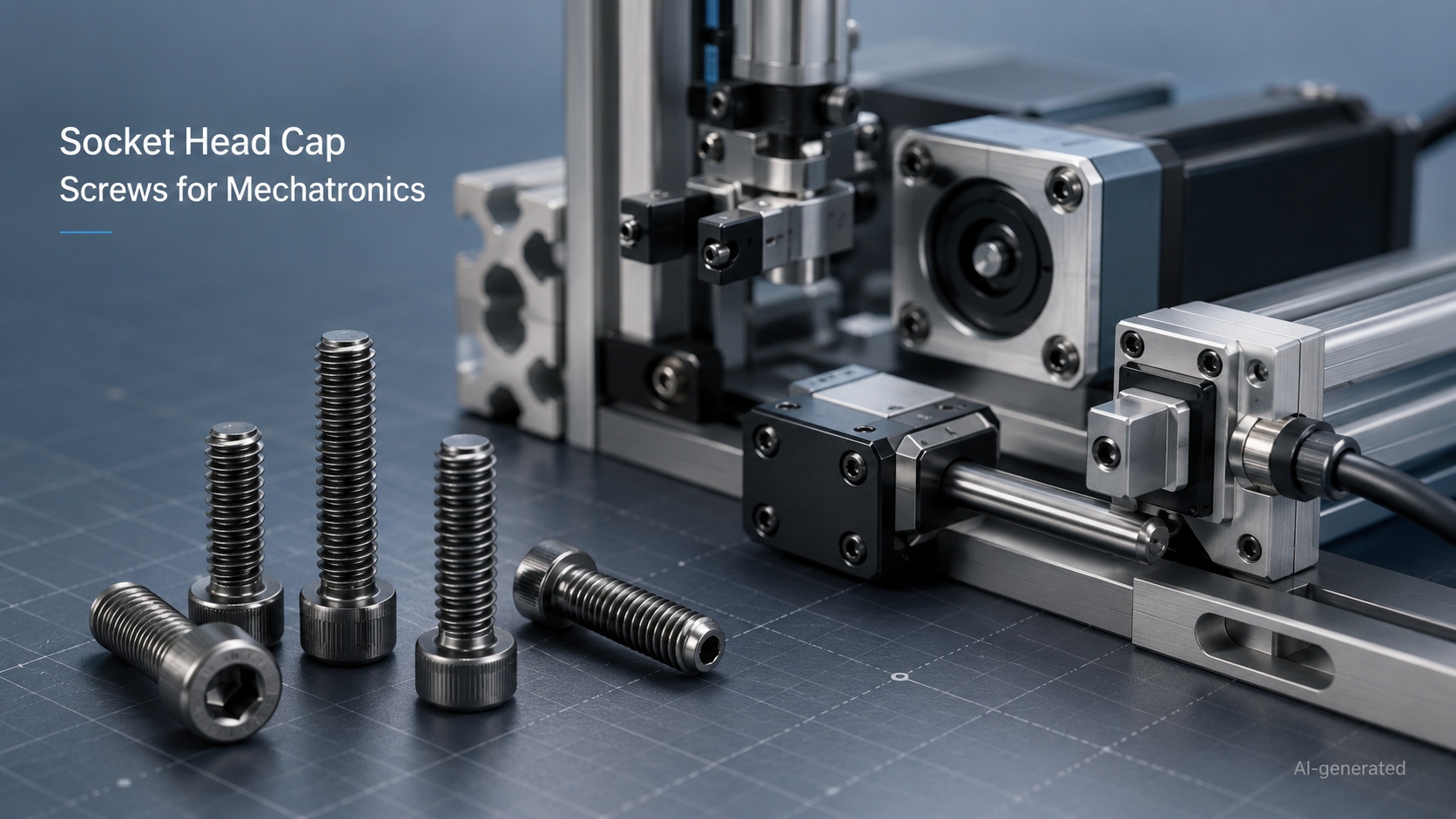
1. What Is a Socket Head Cap Screw?
A socket head cap screw is a threaded fastener with a cylindrical head and an internal hex socket drive. It is tightened using a hex key, also commonly called an Allen key.
The most recognizable feature is the internal hex drive. Instead of requiring side clearance for an external wrench, the screw can be tightened from the top or front. This makes it especially useful in compact mechanical assemblies where space is limited.
In industrial use, several related names may appear:
| Common Term | Meaning |
| Socket head cap screw | Standard cylindrical head screw with internal hex drive |
| Hex socket screw | General term for screws using a hex socket drive |
| Allen screw | Informal workshop term |
| DIN 912 screw | Common metric socket head cap screw standard |
| ISO 4762 screw | International standard related to socket head cap screws |
Compared with ordinary screws, socket head cap screws usually provide stronger fastening performance in compact spaces. Their cylindrical heads also fit neatly into counterbored holes, which helps create clean machine surfaces and reduces interference with moving parts.
In mechatronic systems, this matters a lot. A screw may need to sit close to a linear guide carriage, sensor bracket, timing belt mechanism, motor flange, actuator housing, or protective cover. If the screw head is too large or tool access is poor, the entire assembly becomes harder to design, install, and maintain.
That is why socket head cap screws are so common in automation equipment: they are compact, strong, easy to access, and friendly to machine design.
2. Why Socket Head Cap Screws Matter in Mechatronic Assemblies
A mechatronic system is not just a collection of metal parts. It combines mechanical structure, motion control, sensors, actuators, electronics, and sometimes pneumatic or robotic modules. In such systems, fastening quality directly affects machine performance.
This fastener type helps solve several real engineering and sourcing concerns:
| Concern | How Socket Head Cap Screws Help |
| Limited installation space | Internal hex drive allows top-side tightening |
| Structural rigidity | Provides strong clamping force for plates and brackets |
| Motion accuracy | Helps secure linear guides, bearing blocks, and motor plates |
| Vibration resistance | Can be combined with thread lockers or washers |
| Maintenance convenience | Easy to install and remove with standard hex keys |
| Clean machine layout | Cylindrical head fits well in counterbored holes |
For example, a motor mounting plate may look stable during assembly, but once the machine starts running, repeated acceleration and deceleration can create vibration. If the screws are too small, too short, or not properly tightened, the plate may shift slightly. That small shift can lead to belt misalignment, coupling stress, positioning error, or unwanted noise.
The same issue can appear in sensor brackets. A proximity sensor or photoelectric sensor may only need to move a little before detection becomes unreliable. In automated equipment, one loose bracket can lead to false triggers, missed signals, or repeated debugging work.
Linear motion systems are even more sensitive. A linear guide rail must be mounted securely and evenly. Uneven tightening or poor fastening can affect rail straightness, motion smoothness, and repeatability.
So, in a mechatronic project, a socket head cap screw is not just “hardware.” It is part of the machine’s structure, accuracy, reliability, and maintenance strategy.
Small part, big responsibility. Engineering likes to hide drama in tiny components.
3. Common Types and Standards of Socket Head Cap Screws
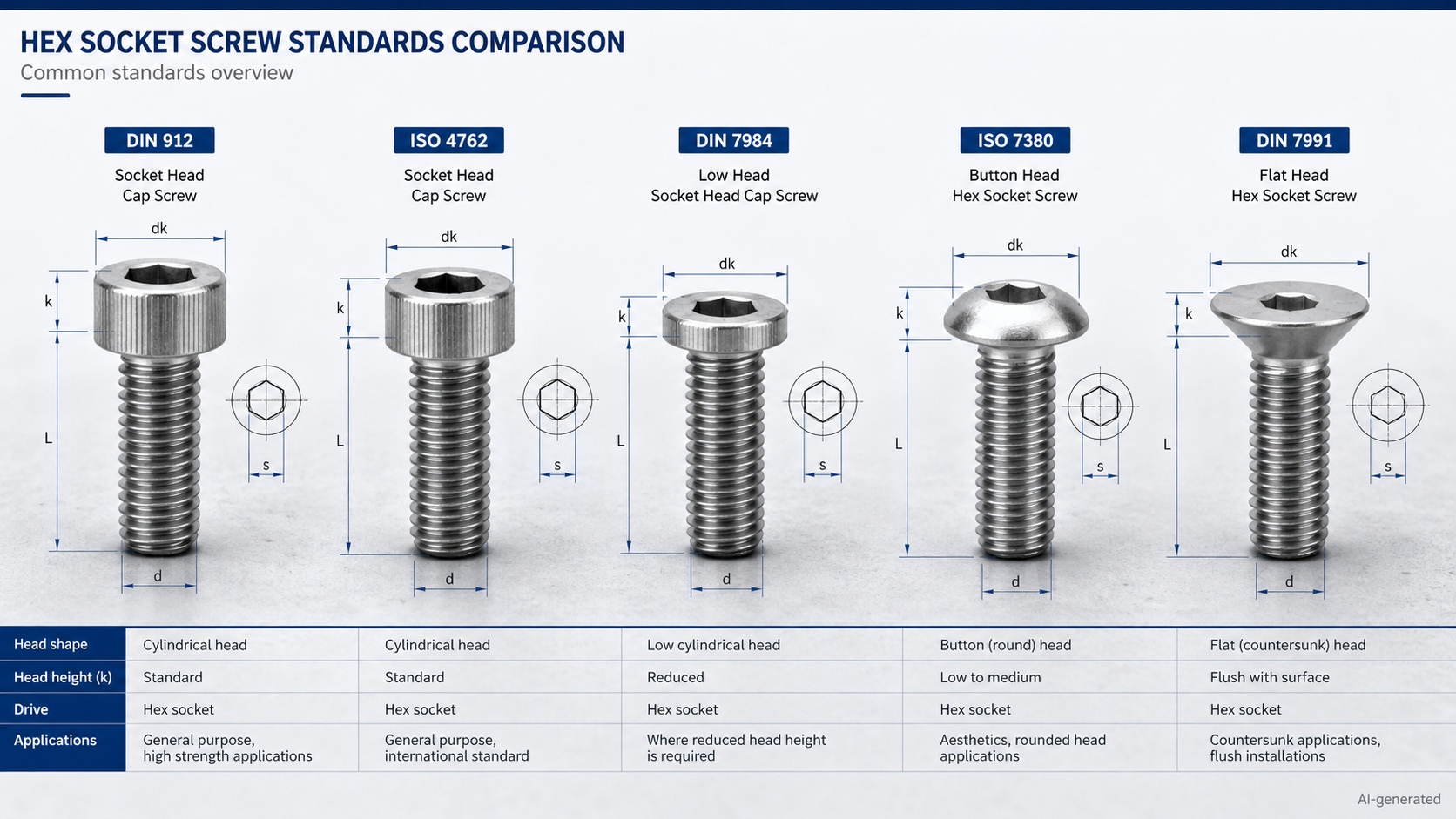
Different applications require different socket head screw designs. A standard socket head cap screw may be suitable for most structural fastening, while a thin head, button head, resin, or self-tapping version may be better for special conditions.
Common Hex Socket Screw Standards
| Standard | Common Product Type | Head Style | Typical Use in Mechatronics | Selection Notes |
| DIN 912 | Socket head cap screw | Cylindrical head | Machine plates, linear guides, motor mounts, brackets | A widely used standard for high-strength metric socket head screws |
| ISO 4762 | Hexagon socket head cap screw | Cylindrical head | Industrial machinery, automation equipment, precision assemblies | International standard closely related to DIN 912 applications |
| DIN 7984 | Low head socket head cap screw | Thin cylindrical head | Compact covers, sliding mechanisms, limited-clearance areas | Useful where standard head height is too tall, but torque capacity should be checked |
| ISO 7380 | Button head hex socket screw | Rounded low-profile head | Covers, panels, guards, appearance-sensitive assemblies | Good for smoother surfaces, but not always ideal for high clamping force |
| DIN 7991 | Flat head hex socket screw | Countersunk head | Flush mounting surfaces, covers, sliding areas | Requires accurate countersinking and should be used carefully in precision alignment areas |
This comparison is useful because many users search broadly for “hex socket screws,” while the actual requirement may point to a standard socket head cap screw, a low head type, a button head screw, or a countersunk version. These products all use an internal hex drive, but their head shapes, load capacity, installation space, and application suitability can be very different.
For many machine-building applications, standard DIN 912 or ISO 4762 socket head cap screws are the first choice. They offer a strong balance of fastening performance, availability, and compatibility with common industrial components.
Thin head socket head cap screws, such as DIN 7984 types, are useful when vertical clearance is limited. For example, a standard screw head may interfere with a sliding component, cover plate, moving carriage, or compact fixture. In these cases, a thin head design can help reduce head height while keeping the hex socket drive.
However, thin head screws may have reduced socket depth and lower torque capacity compared with standard socket head cap screws. They are helpful, but they should not be used everywhere simply because they look cleaner.
Resin socket head cap screws solve a different kind of problem. They are useful when electrical insulation, lightweight design, non-metallic fastening, or corrosion resistance is required. They are often used in electronic fixtures, sensor-related assemblies, test equipment, and insulated mounting areas.
Self-tapping socket head cap screws are another practical choice when fastening into softer materials or prepared holes without pre-tapped internal threads. They can reduce assembly steps in certain covers, housings, and lightweight structures.
The best type depends on the application. A strong machine frame, a compact sensor bracket, and an insulated electronics fixture should not automatically use the same screw.
4. Popular Socket Head Cap Screw Sizes and Strength Grades
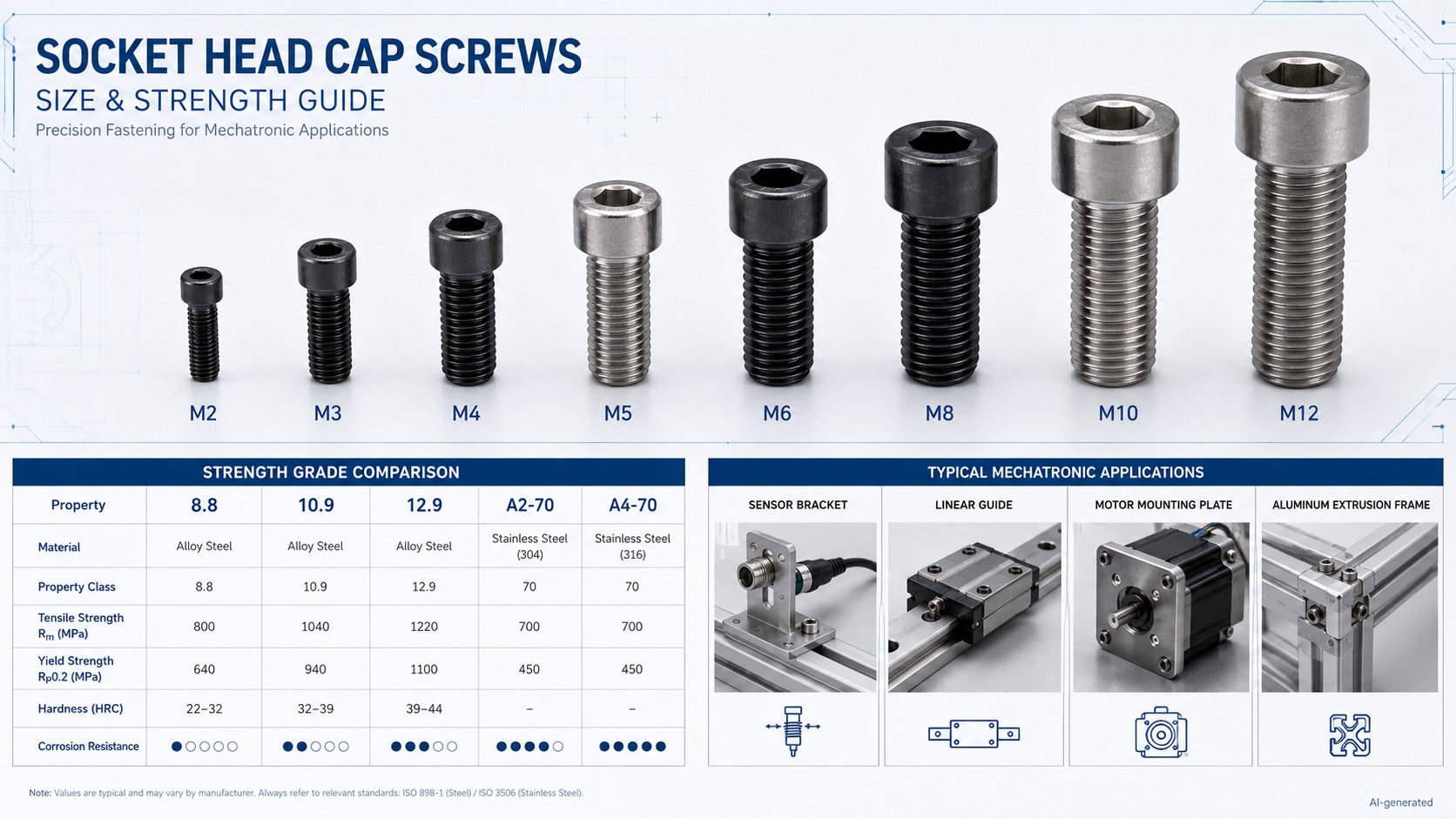
Metric socket head cap screws are widely used in automation equipment and precision machinery. Common thread sizes include M2, M2.5, M3, M4, M5, M6, M8, M10, and M12.
However, thread size alone is not enough for engineering selection. A screw’s strength grade is just as important, especially in machine frames, linear motion assemblies, motor mounts, and vibration-prone equipment.
For steel versions, common metric property classes include 8.8, 10.9, and 12.9. In simple terms, higher property classes generally provide higher tensile strength and stronger clamping capability, but the mating material, tightening torque, surface treatment, and working environment must also be considered.
| Thread Size | Common Applications in Mechatronics | Common Strength Grade Options | Selection Notes |
| M2 / M2.5 | Small sensors, miniature brackets, electronic modules, light covers | 8.8, 10.9, 12.9 for alloy steel; A2-70 for stainless steel | Small screws are sensitive to over-tightening; torque control is important |
| M3 | Sensor brackets, small linear stages, compact fixtures, PCB supports | 8.8, 10.9, 12.9 | Common for compact assemblies; 10.9 or 12.9 may be used for stronger clamping |
| M4 | Light motor brackets, small plates, covers, adjustable mounts | 8.8, 10.9, 12.9 | A practical size for light-duty mechanical structures and brackets |
| M5 | Aluminum extrusion accessories, linear guides, machine brackets | 8.8, 10.9, 12.9 | Frequently used in automation frames and medium-duty assemblies |
| M6 | Motor plates, actuator supports, bearing blocks, medium structures | 8.8, 10.9, 12.9 | 10.9 and 12.9 are common where higher clamping force is needed |
| M8 | Larger frames, heavy brackets, machine bases, linear motion modules | 8.8, 10.9, 12.9 | Often selected for structural fastening and higher-load equipment |
| M10 / M12 | Heavy-duty fixtures, large machine frames, structural equipment | 10.9, 12.9; 8.8 for general structures | Common in stronger machine bases and load-bearing assemblies |
How to Think About Strength Grades
Strength grade should not be selected by size alone. A small M3 screw in a sensor bracket and an M8 screw in a machine base have very different responsibilities. The correct strength grade depends on the actual load, vibration, tightening torque, mating material, and safety margin.
For general-purpose machine covers, light brackets, or non-critical fastening, 8.8 may be sufficient when used with suitable design margins. For motor mounting plates, linear guide supports, actuator brackets, or structural machine parts, 10.9 or 12.9 may be more appropriate. In high-strength alloy steel fasteners, 12.9 is commonly used in industrial applications, but it should still be matched with proper tightening conditions and mating thread strength.
For stainless steel screws, the common marking system is different. Instead of 8.8, 10.9, or 12.9, stainless fasteners are often identified by grades such as A2-70 or A4-70. Resin screws also do not follow steel strength grade rules, because their selection is usually based on insulation, weight, chemical resistance, or non-metallic requirements rather than high tensile strength.
For many users, screw size is often decided by the matching component. A linear guide rail may already define the required mounting screw. An aluminum extrusion slot may require a specific screw and T-nut combination. A sensor bracket may use M3, M4, or M5 depending on its size and adjustment structure.
The key is to choose the screw that matches the whole assembly, not just the hole diameter. A screw that is too small may loosen or fail under vibration. A screw that is too large may take up too much space, require larger holes, add unnecessary weight, or interfere with nearby parts.
The largest screw is not always the smartest screw. Sometimes the best screw is simply the one that fits the load, the space, the strength requirement, and the maintenance plan without causing new problems.
5. Material and Surface Treatment Selection
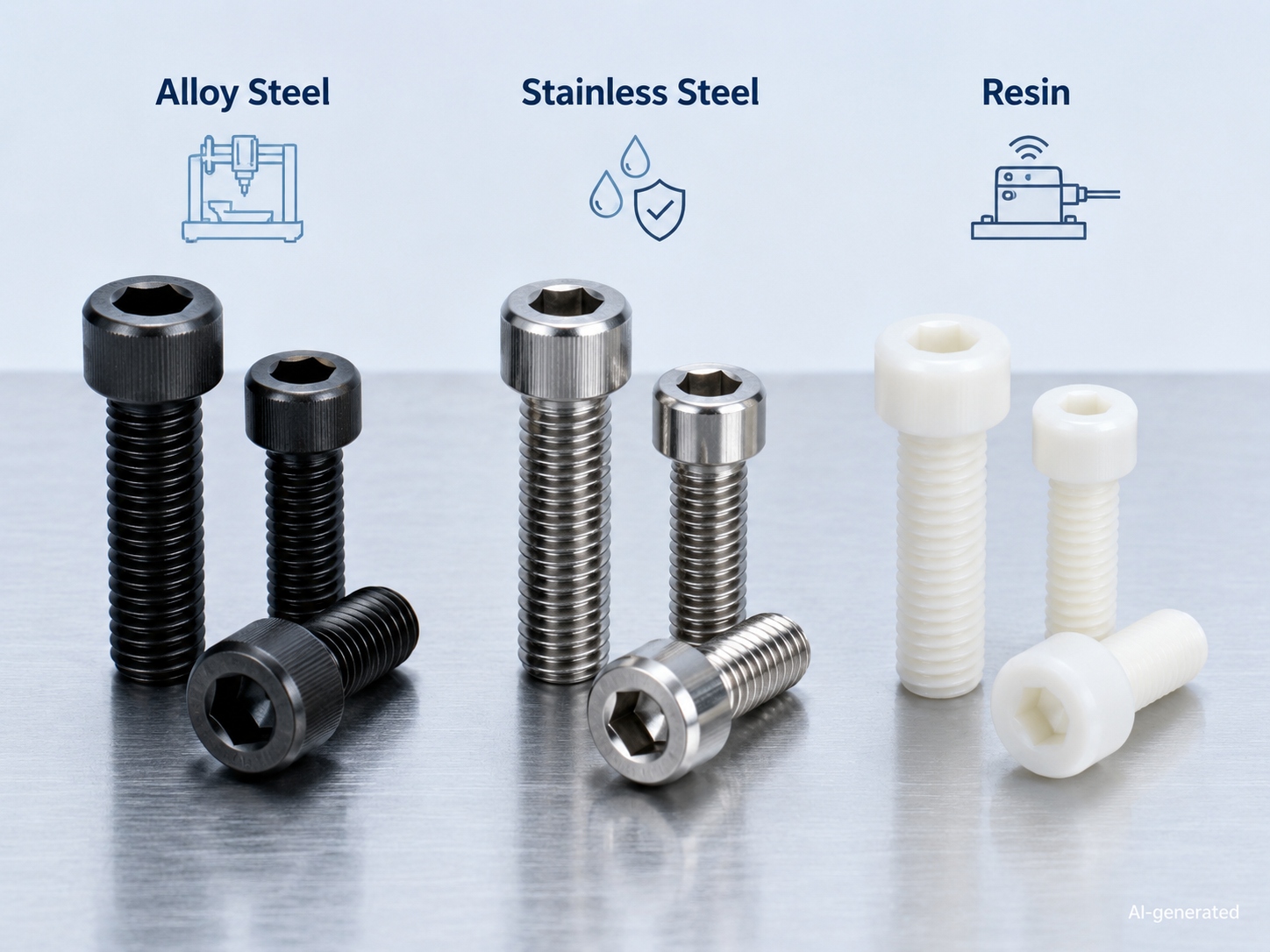
Material selection affects strength, corrosion resistance, insulation, weight, and service life. In mechatronic applications, the most common choices are alloy steel, stainless steel, and resin.
| Material | Main Advantage | Typical Application |
| Alloy steel | High strength and strong clamping performance | Machine structures, linear guides, motor brackets |
| Stainless steel | Corrosion resistance | Humid environments, clean equipment, outdoor devices |
| Resin / plastic | Electrical insulation, lightweight, non-metallic fastening | Electronic fixtures, sensor mounts, insulated assemblies |
| Surface-treated steel | Improved corrosion resistance or appearance | General automation equipment and fixtures |
Alloy Steel
Alloy steel socket head cap screws are commonly used where strength is important. They are suitable for machine frames, linear motion assemblies, tooling fixtures, bearing supports, motor mounting plates, and actuator structures.
For high-load or dynamic applications, alloy steel is often preferred because it can provide strong clamping performance. Surface treatments such as black oxide, zinc plating, or nickel plating may be used depending on the environment and appearance requirements.
Stainless Steel
Stainless steel versions are selected when corrosion resistance is important. They are commonly used in clean equipment, laboratory devices, packaging machinery, outdoor devices, and equipment exposed to humidity.
However, stainless steel should not be selected only because it sounds more premium. In some high-strength applications, alloy steel may still be more suitable. The correct choice depends on whether strength, corrosion resistance, or environmental compatibility is the main priority.
Resin Socket Head Cap Screws
Resin screws are useful for special applications where metal screws may not be ideal. They can provide electrical insulation, lightweight fastening, non-magnetic properties, and corrosion resistance.
In mechatronics, resin socket head cap screws may be used in sensor fixtures, electronic test equipment, insulation boards, inspection fixtures, or lightweight assemblies. They are not intended to replace metal screws in high-load structural joints, but they are very useful when the application requires non-metallic fastening.
In short: alloy steel is the strong worker, stainless steel is the corrosion-resistant professional, and resin is the specialist who shows up when metal is not invited.
6. Common Applications in Real Mechatronic Projects
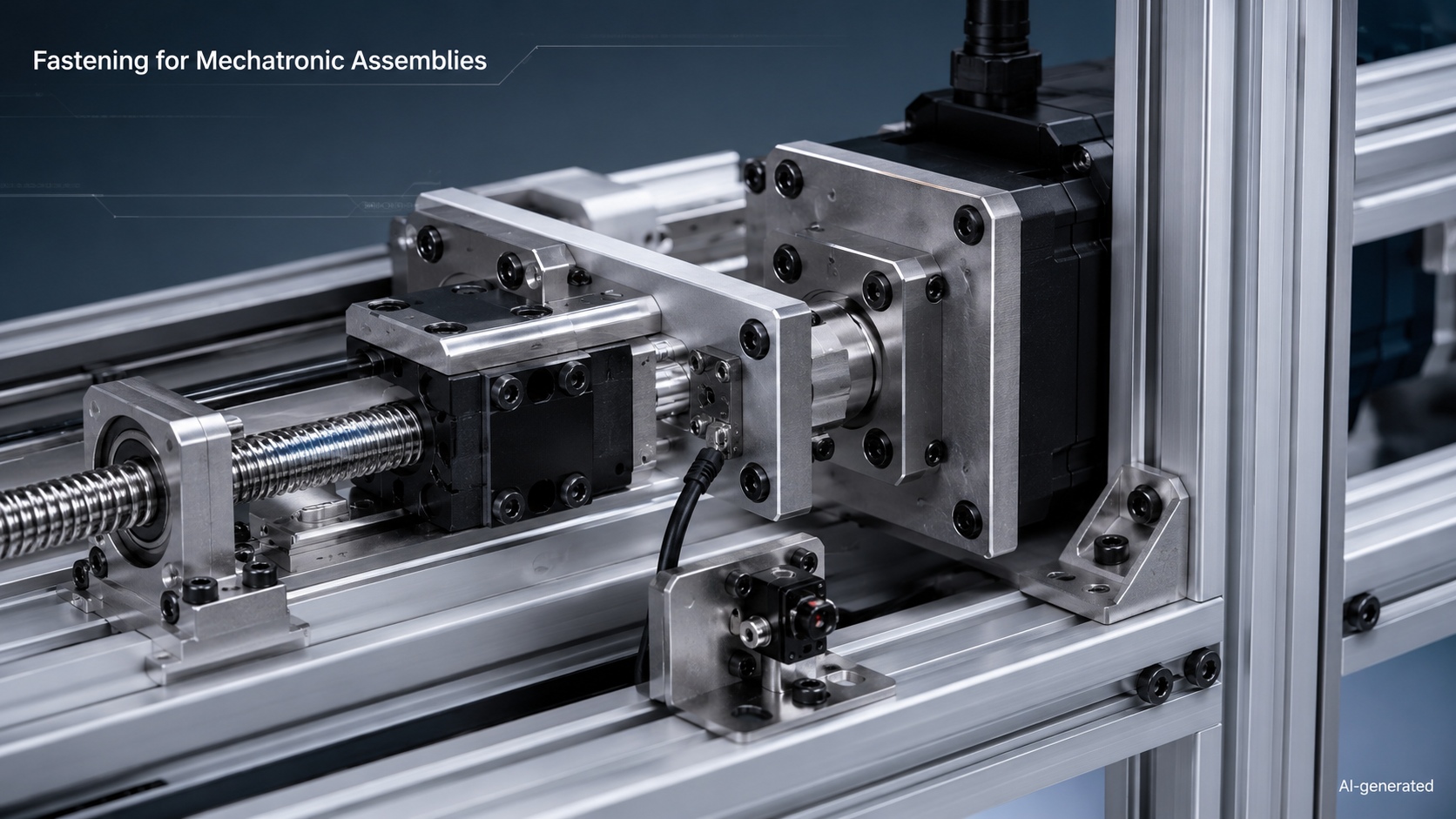
These fasteners are often selected together with other mechanical and electromechanical components. They usually appear as part of a complete assembly rather than as isolated fasteners.
Linear Motion Systems
In linear motion systems, these cap screws are commonly used to mount linear guides, cross roller guides, slide tables, ball screw supports, and shaft supports. These applications require stable fastening because even a small alignment issue can affect motion smoothness and repeatability.
When installing linear guides, users should pay attention to mounting surface flatness, screw size, tightening sequence, and proper torque. The screws should clamp the guide rail securely, but they should not be used as the main locating feature. For precision alignment, reference edges, dowel pins, or machined shoulders are better choices.
Aluminum Extrusion Frames
Aluminum extrusion frames commonly use M5, M6, or M8 socket head cap screws with T-nuts, corner brackets, and connecting plates. These structures are used in automation frames, machine guards, workstations, test benches, and modular production equipment.
For extrusion assemblies, users should confirm slot size, screw length, nut compatibility, and installation access. It is also important to consider whether the frame may need future adjustment. A screw that is easy to reach during first assembly may become difficult to access after panels, sensors, and cables are installed.
Motor and Actuator Mounting
Stepper motors, servo motors, single-axis robots, and actuator plates often rely on socket head cap screws. These applications may experience vibration, torque reaction, and repeated acceleration.
If the fastening joint is not stable, the system may develop positioning error, belt wear, coupling stress, or noise. For dynamic assemblies, proper tightening torque and anti-loosening methods are especially important.
Sensor Brackets
Sensor brackets for proximity sensors, photoelectric sensors, and safety light curtains often use M3, M4, M5, or M6 socket head fasteners. Since sensor position directly affects detection accuracy, bracket fastening must be stable but also easy to adjust during machine setup.
A sensor that shifts by one millimeter may not look dramatic, but the controller may strongly disagree.
Fixtures and Inspection Equipment
Socket head cap screws are also widely used in jigs, inspection fixtures, test equipment, and modular tooling. These applications often require repeated assembly, adjustment, and maintenance. Therefore, users should consider tool access, thread durability, and whether inserts are needed for softer materials.
7. Practical Selection Checklist
Before choosing a socket head cap screw, use the following checklist.
| Selection Question | Why It Matters |
| What component is being fastened? | Different parts have different load and accuracy needs |
| Is the load light, medium, or heavy? | Determines screw diameter and strength requirement |
| What strength grade is required? | Helps match screw performance to load and safety requirements |
| Is there vibration or repeated motion? | May require thread locker or anti-loosening design |
| Is head clearance limited? | May require thin head or low head screws |
| Is corrosion resistance needed? | May require stainless steel or treated steel |
| Is electrical insulation required? | Resin screws may be suitable |
| Is the mating material aluminum, steel, or plastic? | Affects thread engagement and tightening torque |
| Will the screw be removed often? | Thread inserts or wear-resistant design may be needed |
| Can the screw be reached after assembly? | Maintenance access should be planned early |
| Does the component require precise positioning? | Use dowel pins or reference surfaces, not screw clearance |
A reliable fastening design usually starts with the application, not the catalog page. First understand the load, space, material, and maintenance needs. Then choose the screw.
For example, if the screw is used to mount a sensor bracket, adjustability and vibration resistance may matter more than high strength. If it is used for a motor plate, dynamic load and anti-loosening performance become more important. If it is used in an aluminum extrusion frame, slot compatibility and screw length are key. If it is used in an electronic test fixture, insulation may be the deciding factor.
This application-first approach helps avoid both under-selection and over-selection. Under-selection can lead to loosening, deformation, or failure. Over-selection can increase cost, reduce compactness, and create unnecessary design constraints.
In other words, the goal is not to choose the “strongest” screw. The goal is to choose the most suitable screw for the actual assembly.
8. Installation Tips and Common Mistakes
Proper installation is just as important as proper selection. Even the right screw can cause problems if it is installed poorly.
Installation Tips
Use the correct hex key size.
Clean the screw and mating thread before installation.
Follow suitable torque recommendations for critical assemblies.
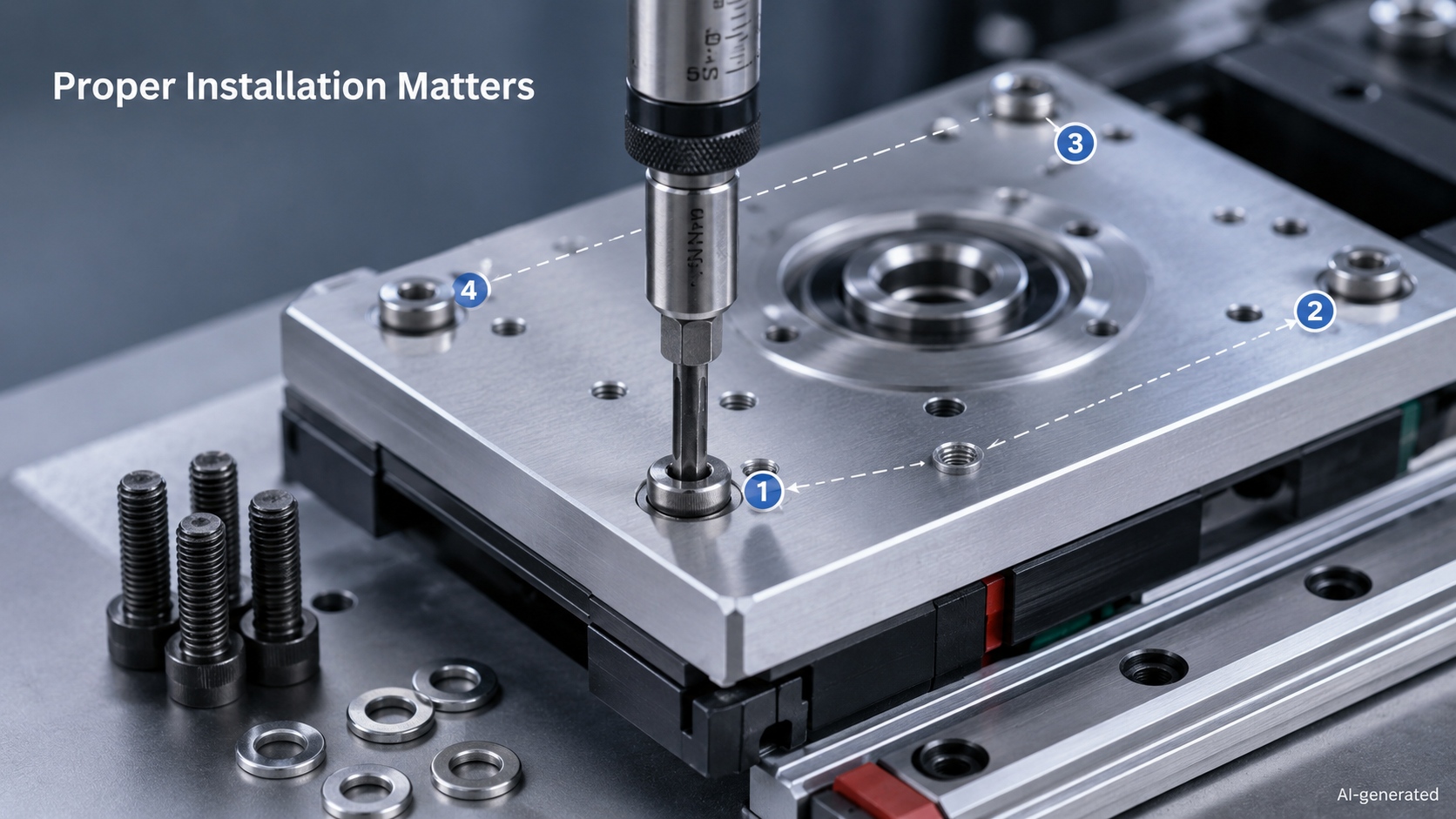
Tighten gradually and evenly when mounting rails or precision plates.
Use thread-locking methods when vibration is expected.
Check key fasteners after initial machine operation.
For precision components such as linear guides, bearing blocks, or motor plates, gradual tightening is especially important. Tightening one screw fully before the others may introduce stress or distortion. A better method is to tighten screws step by step and follow a proper sequence.
For vibration-prone equipment, users should consider thread-locking adhesive, lock washers, spring washers, or other anti-loosening measures. The right method depends on the load, material, service temperature, and maintenance requirements.
Common Mistakes to Avoid
| Mistake | Possible Problem |
| Using screws as positioning pins | Poor repeatability and alignment error |
| Choosing screws that are too short | Insufficient thread engagement |
| Selecting the wrong strength grade | Insufficient clamping force or unnecessary cost |
| Over-tightening small screws | Stripped threads or broken screws |
| Using thin head screws in high-load joints | Reduced socket depth and torque capacity |
| Ignoring vibration | Loosening during operation |
| Forgetting maintenance access | Difficult repair and longer downtime |
| Selecting only by price | Higher risk of machine failure or rework |
One of the most common design mistakes is using screws to locate precision parts. Screws are designed to clamp. They are not precision locating components. Thread clearance and hole clearance can allow small movement, which may affect alignment.
For accurate positioning, use dowel pins, locating shoulders, machined pockets, or reference edges. The screw should provide clamping force, while the locating feature controls position.
This rule is simple, but it saves a surprising amount of engineering pain.
9. Product Selection and Related Component Planning
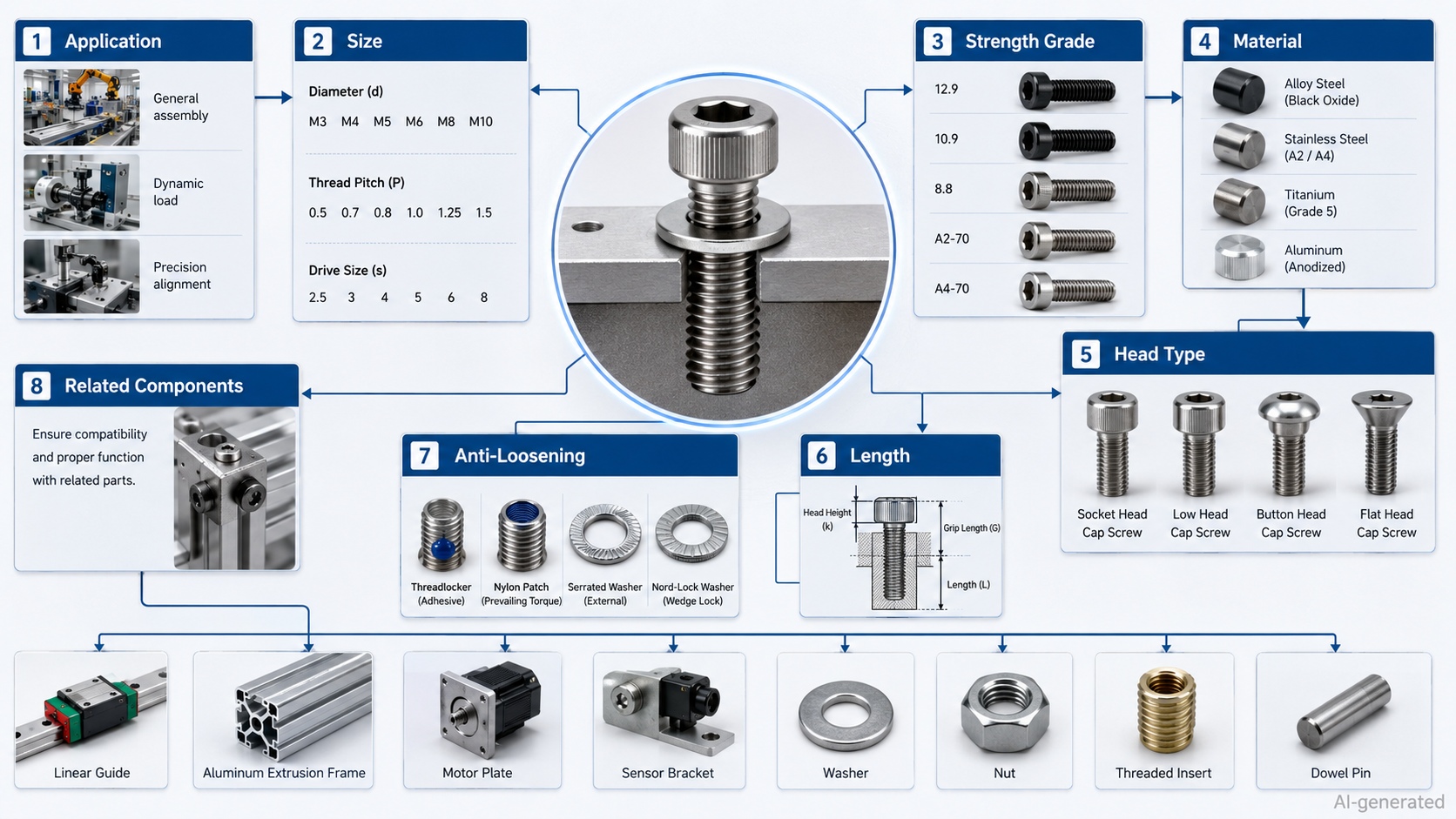
In real projects, these screws are rarely selected alone. In real projects, they are often chosen together with linear motion parts, aluminum extrusion accessories, motor brackets, sensor brackets, threaded inserts, washers, nuts, shaft supports, positioning pins, and other mechanical components.
For users comparing component options, product categories such as standard socket head cap screws, DIN 912 hex socket screws, DIN 7984 thin head socket head cap screws, resin socket head cap screws, and self-tapping socket head cap screws can support different design requirements.
For users who need to source fasteners together with related mechatronic components, platforms such as JLCMC can provide a convenient selection path covering socket head cap screws, linear guides, aluminum extrusion accessories, sensor brackets, threaded inserts, washers, nuts, and positioning components. The key is to connect the fastener choice with the complete assembly rather than treating screws as separate low-priority parts.
| Application Need | Suitable Product Direction |
| General machine fastening | Standard socket head cap screws |
| Compact installation space | Thin head socket head cap screws |
| Insulated mounting | Resin socket head cap screws |
| Softer material fastening | Self-tapping socket head cap screws |
| Linear motion assembly | Linear guides and ball screw supports |
| Frame construction | Aluminum extrusion accessories |
| Sensor positioning | Sensor brackets and mounting accessories |
| Repeatable alignment | Dowel pins and positioning components |
A good selection path may look like this:
First, define the assembly function.
Then, confirm the mating component and mounting hole.
Next, choose the screw size, material, head type, strength grade, and length.
Finally, check whether washers, nuts, inserts, thread lockers, or positioning pins are also needed.
This approach helps engineers and buyers build a more complete bill of materials. It also reduces the risk of choosing a screw that looks correct on paper but creates installation or reliability problems later.
10. FAQ: Socket Head Cap Screws
What are socket head cap screws used for?
Socket head cap screws are used to fasten machine plates, brackets, linear guides, motor mounts, bearing supports, sensor brackets, aluminum extrusion frames, fixtures, and covers. In mechatronics, they are popular because they provide strong clamping force in compact spaces.
What is the difference between a socket head cap screw and a hex socket screw?
A socket head cap screw usually refers to a cylindrical head screw with an internal hex socket. “Hex socket screw” is a broader term that may include socket head cap screws, button head screws, flat head socket screws, and other socket-driven fasteners.
What sizes are most common in mechatronic assemblies?
Common metric sizes include M3, M4, M5, M6, and M8. M2 and M2.5 are often used for small sensors and electronic modules, while M10 and M12 are used in heavier machine frames and fixtures.
What strength grades are common for socket head cap screws?
For alloy steel socket head cap screws, common metric property classes include 8.8, 10.9, and 12.9. For stainless steel screws, common grades include A2-70 and A4-70. Resin screws do not follow the same steel strength grade system.
When should I use a 12.9 socket head cap screw?
A 12.9 socket head cap screw may be suitable for high-strength fastening, machine structures, motor mounting plates, actuator supports, and other applications requiring higher clamping force. However, the mating thread strength, tightening torque, and working conditions must also be checked.
When should I use a thin head version?
Use a thin head socket head cap screw when the assembly has limited head clearance. It is useful for compact machine covers, sliding mechanisms, and areas near moving parts. However, it may have lower torque capacity than a standard socket head cap screw.
When should I use stainless steel socket head cap screws?
Stainless steel screws are suitable for humid, clean, outdoor, or corrosion-sensitive environments. They are often used in laboratory equipment, packaging machinery, inspection systems, and equipment exposed to moisture.
When should I use resin socket head cap screws?
Resin socket head cap screws are useful when electrical insulation, lightweight fastening, corrosion resistance, or non-metallic properties are required. They are often used in electronic fixtures, sensor assemblies, and insulated mechanical structures.
Can socket head cap screws be used with aluminum extrusion?
Yes. Socket head cap screws are commonly used with T-nuts, corner brackets, connecting plates, and accessories in aluminum extrusion frames. The screw size should match the extrusion slot and nut type.
How do I prevent socket head cap screws from loosening?
Use proper tightening torque, sufficient thread engagement, clean threads, and suitable anti-loosening methods. In vibration-prone assemblies, thread-locking adhesive, lock washers, or mechanical locking designs may be considered.
Are socket head cap screws suitable for precision positioning?
They are suitable for clamping precision components, but they should not be used as the main positioning feature. For accurate positioning, use dowel pins, reference edges, locating shoulders, or machined surfaces.
How should I choose the right socket head cap screw?
Start with the application. Consider load, size, strength grade, material, space, vibration, corrosion resistance, insulation needs, thread engagement, and maintenance access. The best screw is the one that matches the whole assembly, not just the hole diameter.
Final Takeaway
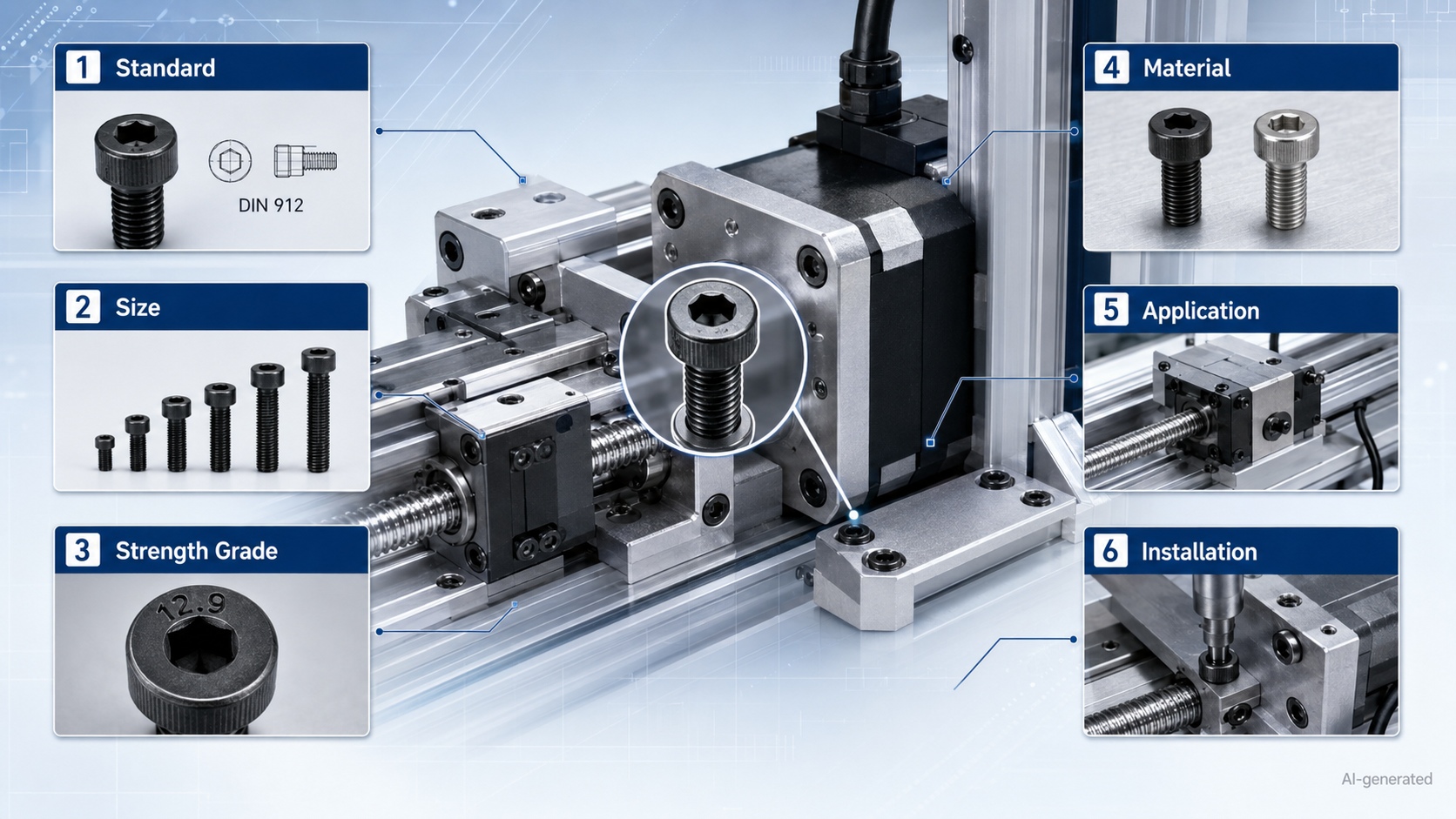
Socket head cap screws may be small, but they play a major role in mechatronic equipment. They help keep linear guides aligned, motor plates stable, sensor brackets fixed, aluminum extrusion frames rigid, and machine structures serviceable.
For any engineer, machine builder, automation integrator, or buyer working on mechatronic assemblies, the right screw selection depends on the complete system: load, space, strength grade, material, vibration, environment, and maintenance requirements.
Standard types are suitable for many general applications. Thin head versions solve clearance problems. Stainless steel improves corrosion resistance. Resin screws support insulation and lightweight design. Self-tapping socket head cap screws can help in specific softer-material applications.
A well-selected screw does not ask for attention. It simply keeps the machine stable, accurate, and reliable. In mechatronics, that is exactly what a good fastener should do.
Popular Articles
Keep Learning
Threaded Standoff vs Spacer: What Is the Difference?
Key Takeaways Threaded standoffs provide both spacing and threaded attachment points, making them ideal for modular assemblies and PCBs. Spacers are unthreaded sleeves that work with through-bolts to maintain gaps in clamped assemblies, offering a simpler and more economical solution. The right choice depends on the load path, assembly sequence, material, and service environment - not just appearance or catalog naming. A threaded standoff and a spacer can look almost identical on a workbench. Both cre......
How to Choose a Threaded Standoff for PCB and Mechatronic Assemblies
Key Takeaways Select the right configuration: Choose male-female, female-female, or male-male thread configurations based on the two mating interfaces and the intended assembly sequence. Treat height as a tolerance stack: Standoff body length must satisfy clearance, electrical, thermal, and connector requirements across the full tolerance range, not just the nominal dimension. Verify thread engagement: Check male thread length against tapped-hole depth and upper screw length against usable female thre......
Threaded Standoff Guide: Types, Sizes, Materials and Applications
Key Takeaways Thread configuration first: Choose female-female, male-female or male-male based on how both sides of the assembly attach — thread config is the most practical way to classify a threaded standoff. Body length is the critical dimension: Standoff length refers to the distance between supporting faces, not total physical length. Reading the wrong length causes incorrect mounting height or screw bottoming. Material affects more than strength: Brass, stainless steel, carbon steel, aluminum an......
Ball Nose End Mill Stepover: Scallop Height and Effective Diameter
Key Takeaways Geometric Control: Stepover directly controls geometric scallop height, but it does not automatically guarantee a measured Ra value. Cusp Height Formula: For a ball radius $R$ and pass spacing $s$ on a flat surface, the ideal cusp height is $h = R - \sqrt{R^2 - \frac{s^2}{4}}$. Tool Radius Advantage: A larger ball can use wider spacing for the same ideal cusp, provided it can reach the required geometry without gouging. Effective Diameter: The active cutting diameter near the tool tip ca......
Manual SMT Stencil Printer Sizing: Print Area, PCB Support and Frame Fit
Key Takeaways Different dimensions: Worktable size, effective print area, board envelope, and stencil frame size are different dimensions. Check the full pattern: Check the whole aperture pattern in its intended orientation, including clearance for the printing stroke. Thickness is not enough: A compatible board thickness does not prove that a populated underside or a support fixture will fit. Support and contact: Stable support and close stencil-to-board contact are necessary for a repeatable printin......
Blind Rivet Guide: Types, Sizes, Uses, Installation and Removal
A blind rivet may be small, but choosing one correctly involves more than matching a rivet to the nearest drill bit. The diameter, grip range, hole size, body material, mandrel material, head style and installation tool all influence the finished joint. A rivet that looks perfectly acceptable before installation can still spin, loosen, pull through the sheet or form incorrectly on the blind side if one of these factors is overlooked. Blind rivets are widely used in sheet-metal fabrication, electrical ......