Mastering Ball Screw Efficiency Principles and Its Pros and Cons
7 min
- The Basic Principle of Ball Screw Efficiency
- Friction Loss and Energy Dissipation Analysis
- Design Factors Affecting the Efficiency of a Ball Screw
- Thermal Considerations and Efficiency
- Criteria to Select Ball Screw Efficiency
- Conclusion
- Frequently Asked Questions
Ball screw efficiency is one of the primary factors that drives engineers to choose ball screws rather than traditional lead screws. Ball screw efficiency is generally at least 90%. This is a lot more than what you'll see with a lead screw, where that usually hovers around 40% or lower. This superior efficiency minimizes energy dissipation, which directly reduces parasitic heat generation and lowers overall power consumption in high-duty cycle applications.
If you are interested in the performance differences between ball screws and lead screws, or need to evaluate them comprehensively in terms of load capacity, precision, and cost, we invite you to read JLCMC’s comparison article on ball screws vs lead screws.
The Basic Principle of Ball Screw Efficiency
Rolling Vs. Sliding Friction
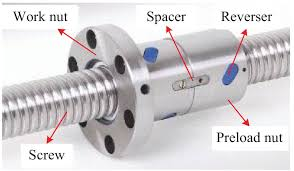
The remarkable efficiency of ball screws stems from the fundamental transition from sliding friction to rolling motion. Ball screws use rolling friction. Lead screws use sliding friction.
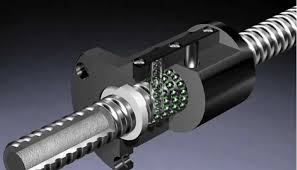
Steel balls rolling between the screw shaft and the nut are used in a ball screw. Rolling friction is very low. Energy loss is minimal. In a lead screw, the nut runs directly on the threads. Sliding friction is much higher. Much of the input power becomes heat waste.
This simple difference changes everything. Rolling motion allows smooth movement. It reduces wear. It provides higher speeds and improved repeatability as well. This is one of the reasons ball screws rule precision motion systems.
Quantifying Ball Screw Efficiency
Efficiency is work output ÷ work input. In the case of a ball screw, it is thrust force times travel distance. The work going in is the applied torque when you're rotating by half a turn.
Simply put, it can be considered the measure of how much of the power your motor is supplying actually becomes useful motion. A 90% efficient ball screw will lose only 10% of the power. A lead screw could waste more than half.
Nominal efficiencies are provided by manufacturers. These figures assume adequate lubrication and normal alignment. Actual efficiency may be slightly lower. Even so, ball screws are many times better.
Friction Loss and Energy Dissipation Analysis
There is still some loss in energy due to rolling. Friction does not disappear completely. It just becomes smaller.
The first source is ball-on-raceway contact. Balls deform slightly under load. This creates rolling resistance. The second one is ball recirculation. Balls must be returned through internal passages. This results in friction as well as impact losses. The third source of energy is seal slug. Seals block out dirt but increase rolling resistance.
Each loss may be small. Together, they determine total efficiency. Low-loss reduction: Reduce these losses by optimal geometry and material.
Effect of Lubrication on Ball Screw Efficiency
Lubrication plays a critical role. Friction can be minimized with an effective lubricant at the points of contact. It also prevents metal-to-metal contact.
Poor lubrication increases rolling resistance. It also increases heat. Over time, it starts to wear. It damages the surface. This reduces efficiency further.
For moderate speeds, grease has become widespread. For high-speed systems, oil is applied. The correct viscosity matters. Too thick increases drag. Being too thin reduces protection. Adequate lubrication helps to keep efficiency near its design value.
Design Factors Affecting the Efficiency of a Ball Screw
Lead Angle and Efficiency
Helix angle, also known as lead angle, has a significant impact on efficiency. More lead angle equals more linear motion per revolution.
Mechanical advantage varies with lead angle. Efficiency usually increases as well. This is because the same force requires less torque. But extremely high lead angles are at the expense of load capacity.
K/R low lead angles give greater thrust at lower efficiency. Designers have to trade off requirements for force and speed. There is no best answer.
Manufacturing Quality and Finish Surface
Manufacturing precision directly affects efficiency. When they grind balls, high-quality ball screws are ground as well. This creates smooth raceways.
Less micro drag makes the surface smooth. It enables balls to roll with absolute consistency. Rough surface finish has tiny points of resistance. These increase friction and noise.
Higher accuracy classes cost more. In addition, they provide higher efficiency and repeatability. This trade-off is usually acceptable for precision machines.
If you are looking for a transmission component that delivers both high-precision positioning and long-term stability, JLCMC's high-precision ball screw series is an ideal choice.
Thermal Considerations and Efficiency
Inefficient Operation and Heat Generation
Any lost energy becomes heat. And in round-the-clock operation, even modest inefficiencies add up.
Heat causes thermal expansion. This changes the preload and accuracy. It can also break down the lubricant more quickly. It shortens the life of components over time.
Low-efficiency systems run hotter. This is one of the greatest causes that makes lead screws difficult to use on high-speed machines. Ball screws reduce heat by using their energy to generate motion.
Thermal Management of High-Speed Applications
High-speed systems need extra care. Fastball screws generate some heat even in an efficient design.
One solution is forced cooling. Oil circulation helps remove heat. Another recommended approach is to choose a higher efficiency model. Larger lead angles are more conducive to lower torque requirements.
Duty cycle also matters. Intermittent operation allows for cooling time, while continuous operation requires thermal planning. Heat is a major factor that can compromise accuracy or lead to early failure. Real-world performance demonstrates that heat management is critical for maintaining accuracy.
Criteria to Select Ball Screw Efficiency
Use of Efficiency as a Key Selection Factor
Efficiency should be high on the list of concerns in most applications. Battery-powered equipment is one example. Energy waste directly reduces runtime.
Medical apparatus may further get the most out of high performance. Less heat is better for security and stability. Precision tools need consistent performance. High efficiency supports that goal.
Designers should consider efficiency data at relatively early design phases. It changes the size of the motor, power requirement, and cooling requirements.
Trade-Off Between Efficiency vs. Self-Lock Consider
While high efficiency is desirable, it necessitates the integration of fail-safe mechanisms. Highly efficient screws do not lock themselves. In the absence of power, the load can be back-driven by the operation of the screw.
Lead screws have a high friction tendency of self-locking. Ball screws usually do not. That is to say, brakes or motors should remain stationary.
Designers must plan for this. For a vertical system, safe systems are necessary. Efficiency is good, but nothing comes above control and safety.
Conclusion
Ball screw efficiency is one of the primary reasons that engineers specify ball screws instead of lead screws. The rolling friction would give an efficiency of 90% or even better. This minimizes the loss of power and heat buildup.
Efficiency depends on many factors. Lubrication quality matters greatly. Torque and speed are influenced by the lead angle. Manufacturing precision reduces microscopic drag. Thermal efficiency safeguards your performance over time.
With these factors in mind, designers can realize the expected efficiency. The efficiency of the ball screw is not an empty number. It is a cornerstone of contemporary mechanical design.
Frequently Asked Questions
Q1: Does higher efficiency end in longer ball screw life?
Yes. More efficiency equates to less heat and less wear. This typically prolongs service life when lubrication is maintained.
Q2: Practically speaking, how do we actually determine the efficiency of a ball screw?
Its value is obtained using output thrust work over input torque work. Standard formulas and test data are supplied by the manufacturers.
Q3: Can operational efficiency be measured in a live motor-driven system?
Yes, operational efficiency in a live motor-driven system can be measured by comparing the input power (electrical) to the output power (mechanical) while accounting for losses such as friction, heat, and electrical resistance.
Keep Learning
Ball Screw Types Explained: Features, Differences & Applications
You need accurate motion control for your industrial equipment. A ball screw changes rotary drive into linear movement with high efficiency. You will find many ball screw types across modern hardware shops today. Each design serves a specific role in your setup. This guide helps you pick the best model for your next project. Key Takeaways People select specific models based on simple mechanics. Production methods affect the accuracy level of the screw shaft. Nut designs control how steel balls circula......
Why Does Your Stepper Motor Always Make a Squealing Noise?
A squealing stepper motor is almost never a mechanical grinding issue. The noise is electrical: PWM chopping, magnetic resonance, or current misconfiguration exciting the stator laminations. This article provides a four-step workflow to isolate the root cause and fix it without losing torque or steps. Key Causes of Stepper Motor Squealing 1. PWM Chopping Frequency in the Audible Range Motor drivers control current by rapidly switching MOSFETs. If the chopping frequency sits below 20 kHz, each switchin......
Linear Guide Rails and Bearings: What's the Difference and Which Should You Use?
Pick any machine that moves in a straight line — a CNC router, a pick-and-place unit, a 3D printer gantry — and somewhere inside it you will find either a linear bearing riding on a round shaft or a linear guide rail carrying a carriage block. Although they are sometimes discussed interchangeably, round-shaft linear bearings and profiled linear guide rails are two different linear motion systems designed for different levels of precision, rigidity, and load capacity. Both deliver low-friction, guided,......
What Actually Goes Into a Linear Guide Rail System
A linear guide rail system is more than one rail. On its own, the rail cannot provide guided motion. What supports the load and maintains positioning accuracy is how the rail, carriage, rolling elements, and seals work together. This is a quick tour of those parts, and how they add up to a complete motion axis. For engineers speccing a new axis and buyers matching a system to a machine. If you just need the basics — what a linear guide is or the different types of linear rails — start with those two g......
What Are Linear Guides and Why Do They Matter in Factory Automation?
Every CNC machine, every pick-and-place robot, every wafer handler on a semiconductor line — they all share one fundamental need: moving something in a straight line, accurately and repeatedly. That's where linear guides come in. Despite being one of the most widely used components in factory automation, linear guides are often misunderstood — partly because the industry can't agree on what to call them. This article breaks down what linear guides actually are, what's inside them, the main types of li......
Exploring Mechanical Shaft Collars and Their Different Types
Though quite elementary in design, shaft collars serve an important mechanical purpose. In simple terms, a shaft collar is a round clamping device that can be used for axial positioning of components, acting as mechanical stops, or securing parts in place along a shaft. While they may look like simple components, shaft collars must be chosen wisely to ensure performance, accuracy, and longevity of the system. This article focuses on the common types of mechanical shaft collars in transmission systems,......