What Is a Lead Screw and How Does It Work in Motion Systems
7 min
- What Is a Lead Screw and How Does It Work?
- Types of Lead Screw and Its Features
- Lead Screws in the Field: Where Lead Screws Are Used
- Examples of Lead Screws in Everyday Devices and Tools
- Optimizing Performance and Longevity
- Bottom Line!
- Frequently Asked Questions
A lead screw is a classic and common mechanical element in motion systems. It is highly relevant for the transformation of rotary motion into linear motion. This basic capability makes it indispensable in machines requiring movements, lifting, or positioning under control.
This article will explore the definition, working principle, maintenance, and performance limitations of lead screws, guiding engineers, technicians, and even hobbyists on how to precisely and safely control mechanical motion.
If you're familiar with lead screws but have questions about their calculation or differences compared to ball screws, check out JLCMC's detailed explanation. We also offer high-precision trapezoidal lead screws, designed for applications requiring precise motion and stability. Made with premium materials and advanced manufacturing techniques, they ensure low wear and high performance in long-term use.
What Is a Lead Screw and How Does It Work?
Mechanical Function and Working Principle
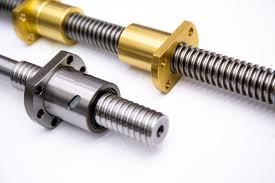
To understand lead screws, let's first look at their fundamental purpose. A lead screw is a mechanism that translates the rotational motion of a motor into linear motion. This is done by rotating a standard screw shaft on its thread against another similar nut.
The nut travels through the threads when the screw is turned. If the nut is prevented from turning, it will move in a straight line. When the screw doesn't spin, and the nut does, the screw travels instead. This conversion of motion is quite simple and dependable.
The threads are basically an incline around a cylinder. When the screw turns, the nut moves up or down this plane. Movement and load holding are controlled by friction between the threads. And this friction is why a lead screw can be self-locking in the first place.
Important Terms: Pitch, Lead, and Starts of the Thread
A few important terms when discussing the lead screw design.
The most common is the pitch, with respect to a single thread. It determines how much the nut moves every revolution. Increasing this gap will make the motion slower but with a higher force.
Lead is the amount of travel of the nut from one revolution to another. For single-start screws, pitch equals lead. In multiple-start screws, the lead is greater than the pitch.
The thread refers to the number of individual threads that run the length of the screw. Single-start threads give greater load holding. Multi-start threads significantly increase travel speed per revolution, though they often sacrifice self-locking stability.
These affect speed, power, and precision. The right combination is paramount for performance.
Types of Lead Screw and Its Features
Thread Styles: Acme, Trapezoidal, and Square Types
There are many types of threads used in lead screws. Each serves a different purpose.
Square threads are most efficient. They are characterized by low friction and high load-carrying capacity. But their production process is very complicated and costly. They are rarely used today.
Acme threads are very common. They are trapezoidal in shape and have a 29-degree angle. They offer a mix of strength, efficiency, and manufacturability. Acme threads are used in many lead screw examples.
Trapezoidal threads are very similar to Acme threads, but differ in metric standards. They are commonly used in European and Asian equipment.
The selection of thread profile influences efficiency, wear, and manageability.
Material Considerations: Metal vs Polymer Nuts
Material choice has a significant influence on lead screw performance.
Steel screws paired with bronze nuts are widely used. Bronze provides moderate wear resistance and high load-carrying capacity. This pairing performs well even in factory environments.
Polymer nuts are also popular. They minimize friction and can operate without lubrication. They are quieter and resistant to corrosion. However, they generally handle lighter loads.
Aluminum screws are selected for lightweight applications. Stainless steel is used for corrosive environments. Friction behavior, lifespan, and maintenance requirements are affected by material choice.
Lead Screws in the Field: Where Lead Screws Are Used
Precise 3D Positioning in Printers and Mills
3D printers are some of the most popular examples where lead screws are used. Lead screws control the vertical movement of the print bed or print head. They offer high accuracy and repeatable positioning.
Mechanical CNC machines also use lead screws, especially in low- to mid-range systems. They guide cutting and shaping tools with precision. Ball screws are more common in high-end CNC machines, but lead screws remain widely used due to their lower cost and simplicity.
These uses demonstrate how a lead screw delivers precision without complex systems.
Industrial Lifting and Actuation
Another common application for lead screws is lifting systems. These include screw jacks, linear actuators, and adjustable tables.
Their self-locking ability makes them ideal for holding loads without power. This improves safety. Lead screws are also used in controlled-pressure instruments and assembly fixtures in industrial presses.
In these cases, reliability matters more than speed. Lead screws perform well under constant and heavy loads.
Examples of Lead Screws in Everyday Devices and Tools
Household Items with Lead Screws
You probably use lead screws every day without realizing it. A traditional bench vise is one example. Turning the handle moves the jaws along a lead screw.
Car jacks commonly use lead screws to raise vehicles. Adjustable chairs, window openers, and manual clamps also rely on lead screws.
These examples show that strength, control, and longevity do not require complex designs.
Lead Screws Versus Ball Screws
Lead screws are often confused with ball screws. Knowing the difference is important.
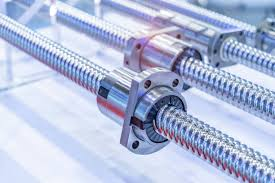
A lead screw relies on sliding friction between the screw and nut threads. A ball screw uses rolling balls between them. This makes ball screws much more efficient.
Lead screws are cheaper and simpler. They are often self-locking. Ball screws are faster and more accurate, but require braking systems.
Understanding what a lead screw is helps avoid selecting the wrong component.
Optimizing Performance and Longevity
Lubrication and Maintenance Best Practices
Lead screws with metal nuts require lubrication. Proper grease or oil reduces friction and prevents corrosion.
Polymer nuts may operate dry but still need periodic cleaning. Dirt increases wear and reduces accuracy.
Regular inspection helps identify thread damage early. Proper maintenance ensures smooth operation and long service life.
Addressing Common Failure Modes
Wear is the most common failure mode. It is caused by friction and contamination. Overloading can lead to thread distortion or nut breakage.
Misalignment also shortens lifespan. It causes uneven load distribution and jamming.
Preventive measures such as correct sizing, alignment, and lubrication are essential. These steps reduce downtime and replacement costs.
Bottom Line!
By understanding what a lead screw is, engineers and users can recognize its value. A lead screw is a simple and reliable way to convert rotary motion into linear motion. Its strength, self-locking ability, and low cost make it suitable for many applications.
From industrial machinery to household tools, lead screws are everywhere. Selecting the correct thread type, material, and maintenance approach ensures long life and dependable performance.
While not the most efficient option, lead screws remain a key component in mechanical design.
Frequently Asked Questions
Q1: What do you use a lead screw for?
A lead screw is used to convert rotary motion into linear motion. It is commonly applied in lifting, lowering, moving, and pressing systems.
Q2: What are some typical lead screw examples?
Bench vises, car jacks, 3D printers, CNC machines, and linear actuators are common examples of lead screws.
Q3: What is the difference between a lead screw and a ball screw?
A lead screw uses sliding friction and can be self-locking. A ball screw uses rolling elements, offers higher efficiency, and usually requires braking systems.
Keep Learning
Ball Screw Types Explained: Features, Differences & Applications
You need accurate motion control for your industrial equipment. A ball screw changes rotary drive into linear movement with high efficiency. You will find many ball screw types across modern hardware shops today. Each design serves a specific role in your setup. This guide helps you pick the best model for your next project. Key Takeaways People select specific models based on simple mechanics. Production methods affect the accuracy level of the screw shaft. Nut designs control how steel balls circula......
Why Does Your Stepper Motor Always Make a Squealing Noise?
A squealing stepper motor is almost never a mechanical grinding issue. The noise is electrical: PWM chopping, magnetic resonance, or current misconfiguration exciting the stator laminations. This article provides a four-step workflow to isolate the root cause and fix it without losing torque or steps. Key Causes of Stepper Motor Squealing 1. PWM Chopping Frequency in the Audible Range Motor drivers control current by rapidly switching MOSFETs. If the chopping frequency sits below 20 kHz, each switchin......
Linear Guide Rails and Bearings: What's the Difference and Which Should You Use?
Pick any machine that moves in a straight line — a CNC router, a pick-and-place unit, a 3D printer gantry — and somewhere inside it you will find either a linear bearing riding on a round shaft or a linear guide rail carrying a carriage block. Although they are sometimes discussed interchangeably, round-shaft linear bearings and profiled linear guide rails are two different linear motion systems designed for different levels of precision, rigidity, and load capacity. Both deliver low-friction, guided,......
What Actually Goes Into a Linear Guide Rail System
A linear guide rail system is more than one rail. On its own, the rail cannot provide guided motion. What supports the load and maintains positioning accuracy is how the rail, carriage, rolling elements, and seals work together. This is a quick tour of those parts, and how they add up to a complete motion axis. For engineers speccing a new axis and buyers matching a system to a machine. If you just need the basics — what a linear guide is or the different types of linear rails — start with those two g......
What Are Linear Guides and Why Do They Matter in Factory Automation?
Every CNC machine, every pick-and-place robot, every wafer handler on a semiconductor line — they all share one fundamental need: moving something in a straight line, accurately and repeatedly. That's where linear guides come in. Despite being one of the most widely used components in factory automation, linear guides are often misunderstood — partly because the industry can't agree on what to call them. This article breaks down what linear guides actually are, what's inside them, the main types of li......
Exploring Mechanical Shaft Collars and Their Different Types
Though quite elementary in design, shaft collars serve an important mechanical purpose. In simple terms, a shaft collar is a round clamping device that can be used for axial positioning of components, acting as mechanical stops, or securing parts in place along a shaft. While they may look like simple components, shaft collars must be chosen wisely to ensure performance, accuracy, and longevity of the system. This article focuses on the common types of mechanical shaft collars in transmission systems,......