5 Common Pressure Sensor Problems and How to Troubleshoot Them
6 min
- Introduction:
- Problem 1:Pressure Sensor Has No Output Signal
- Problem 2:Incorrect or Unstable Pressure Sensor Readings
- Problem3:Pressure Sensor Output Signal Compatibility Problems
- Problem 4:Pressure Sensor Failure Caused by Environmental Conditions
- Problem 5:Pressure Sensor Leakage or Mechanical Damage
- FAQ
- Conclusion
Introduction:
In previous articles, we explored “What Is a Pressure Sensor?”, “Pressure Sensors Explained: Working Principles, Types, and Applications,” and “How to Select the Right Pressure Sensor,” covering the fundamentals of pressure sensors, including their working principles, types, applications, and key selection considerations.
However, even a properly selected pressure sensor may encounter performance issues during operation due to factors such as wiring errors, improper installation, harsh environmental conditions, or incorrect system configurations.
This article examines five common pressure sensor problems and provides practical troubleshooting methods to help engineers quickly identify faults, minimize equipment downtime, and improve the reliability of industrial automation systems.

Problem 1:Pressure Sensor Has No Output Signal
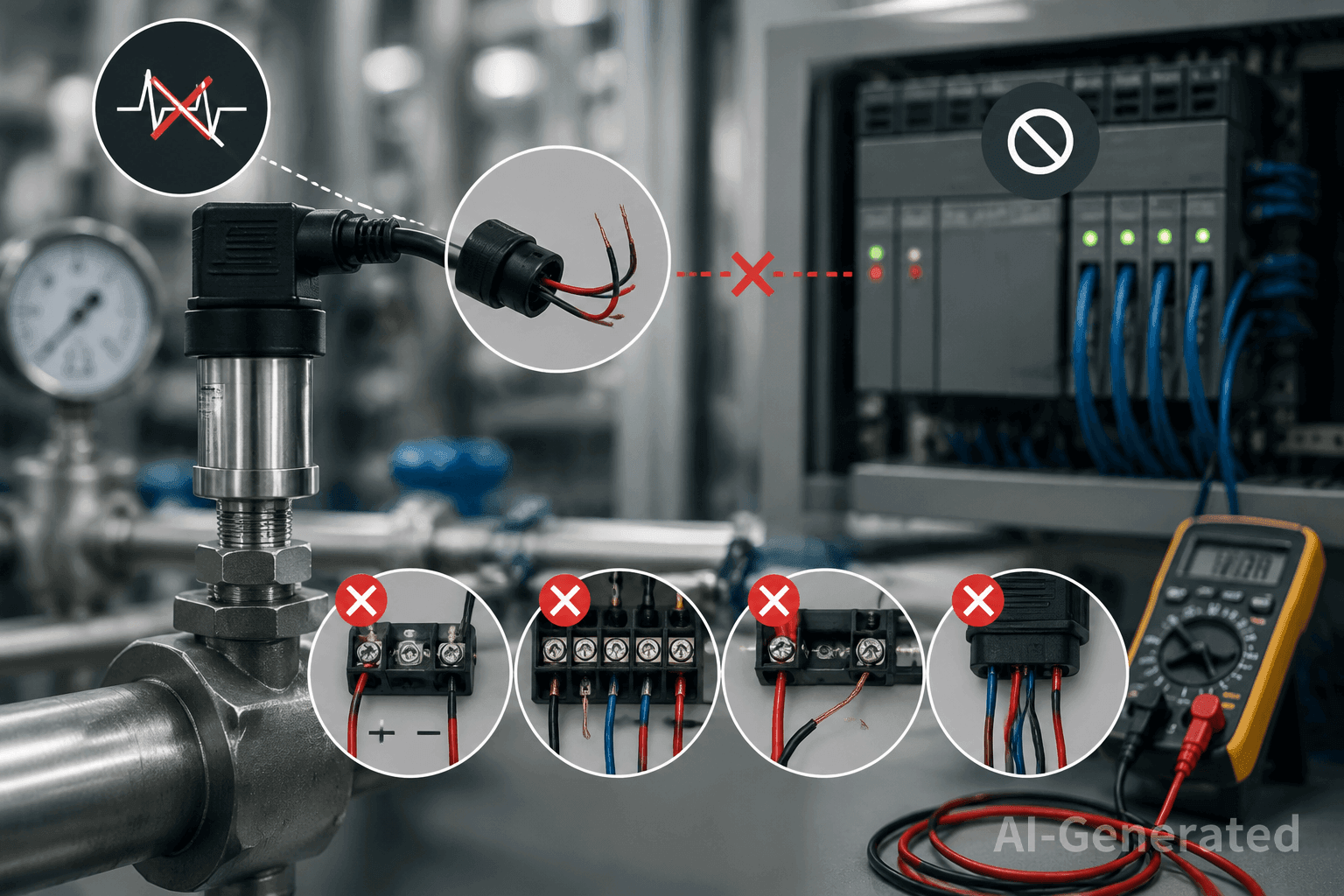
One of the most common pressure sensor problems in industrial automation systems is when the pressure sensor has no output signal. When this happens, the PLC or control system cannot receive pressure feedback, which may interrupt monitoring, control processes, or machine operation.
This type of pressure sensor failure is usually caused by electrical issues rather than mechanical damage. Incorrect wiring, unstable power supply, or improper configuration can prevent the sensor from generating a correct output signal.
Incorrect wiring is a common reason why a pressure sensor is not working, including:
- Incorrect power supply connection;
- Wrong signal wiring;
- Loose terminals;
- Incorrect wiring configuration.
In addition, pressure sensors require a stable power supply to maintain accurate signal transmission. Insufficient voltage, unstable power, or an incorrect supply specification may cause the sensor to stop responding or output abnormal signals.
Troubleshooting Methods:
When troubleshooting a pressure sensor with no output signal:
- Check whether the supply voltage matches the sensor specifications;
- Verify wiring connections according to the manufacturer’s manual;
- Use a multimeter to check power supply and output signals;
- Confirm PLC input module settings and signal configuration.
Problem 2:Incorrect or Unstable Pressure Sensor Readings
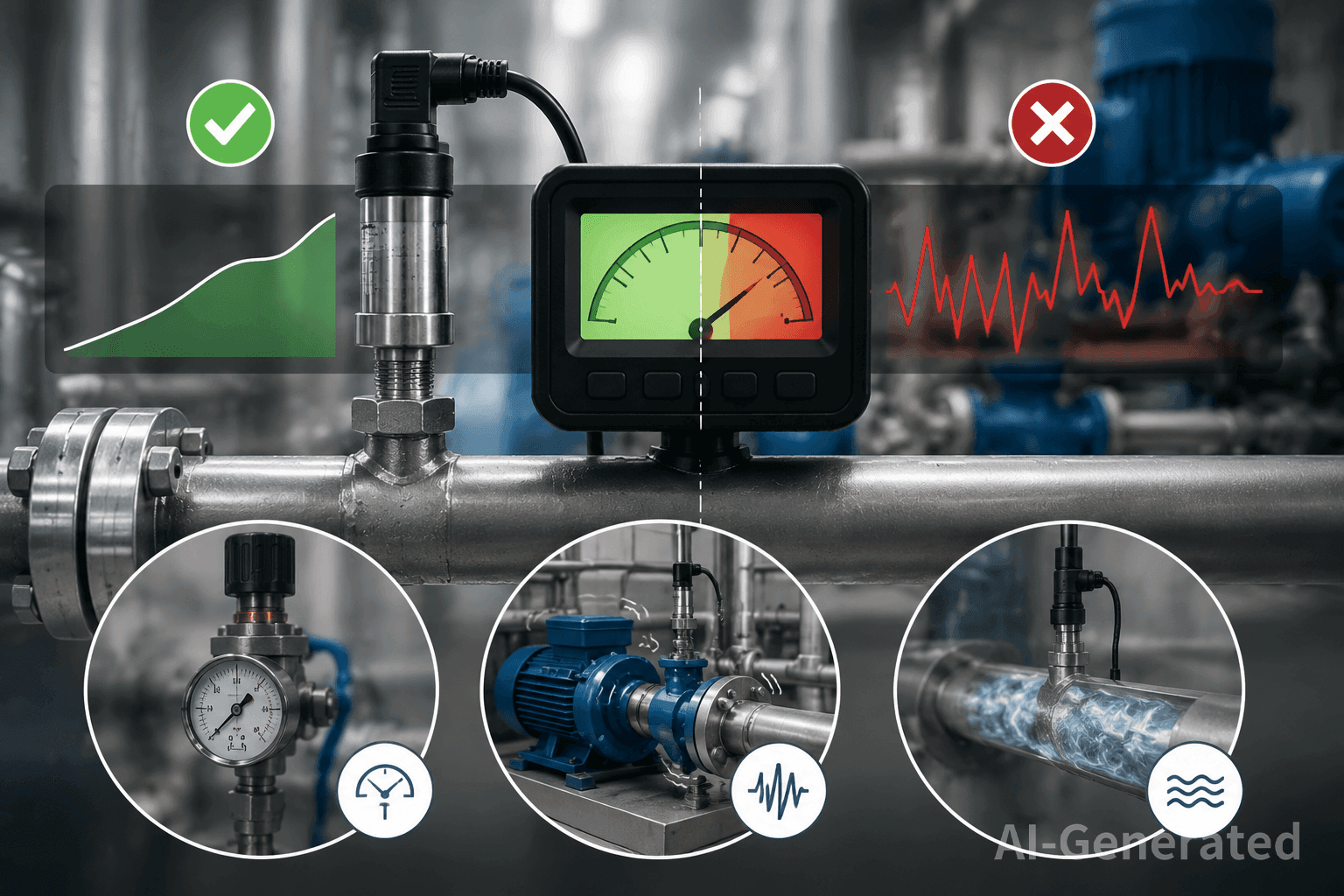
Incorrect measurement is another common industrial pressure sensor problem. Engineers may find that the displayed pressure value does not match the actual system pressure, or the sensor output signal fluctuates unexpectedly during operation.
One major cause is incorrect pressure range selection. Choosing a pressure sensor with an unsuitable measurement range can reduce accuracy or increase the risk of sensor damage.
For example, if a pneumatic system operates at 0–5 bar, selecting a 0–100 bar pressure sensor may reduce measurement resolution because pressure changes only occupy a small part of the sensor range. However, selecting a sensor with a range too close to the maximum operating pressure may cause overload when pressure spikes occur.
Another common reason for unstable pressure readings is pressure fluctuation or mechanical vibration. Equipment such as pumps, compressors, hydraulic systems, and high-speed pneumatic actuators may generate pressure pulsation, causing unstable sensor output.
Troubleshooting Methods:
To troubleshoot inaccurate pressure sensor readings:
- Verify that the sensor range matches the actual operating pressure;
- Check for pressure spikes, pulsation, or abnormal system fluctuations;
- Install pressure dampening components when necessary;
- Ensure the sensor is securely mounted and isolated from excessive vibration.
Problem3:Pressure Sensor Output Signal Compatibility Problems
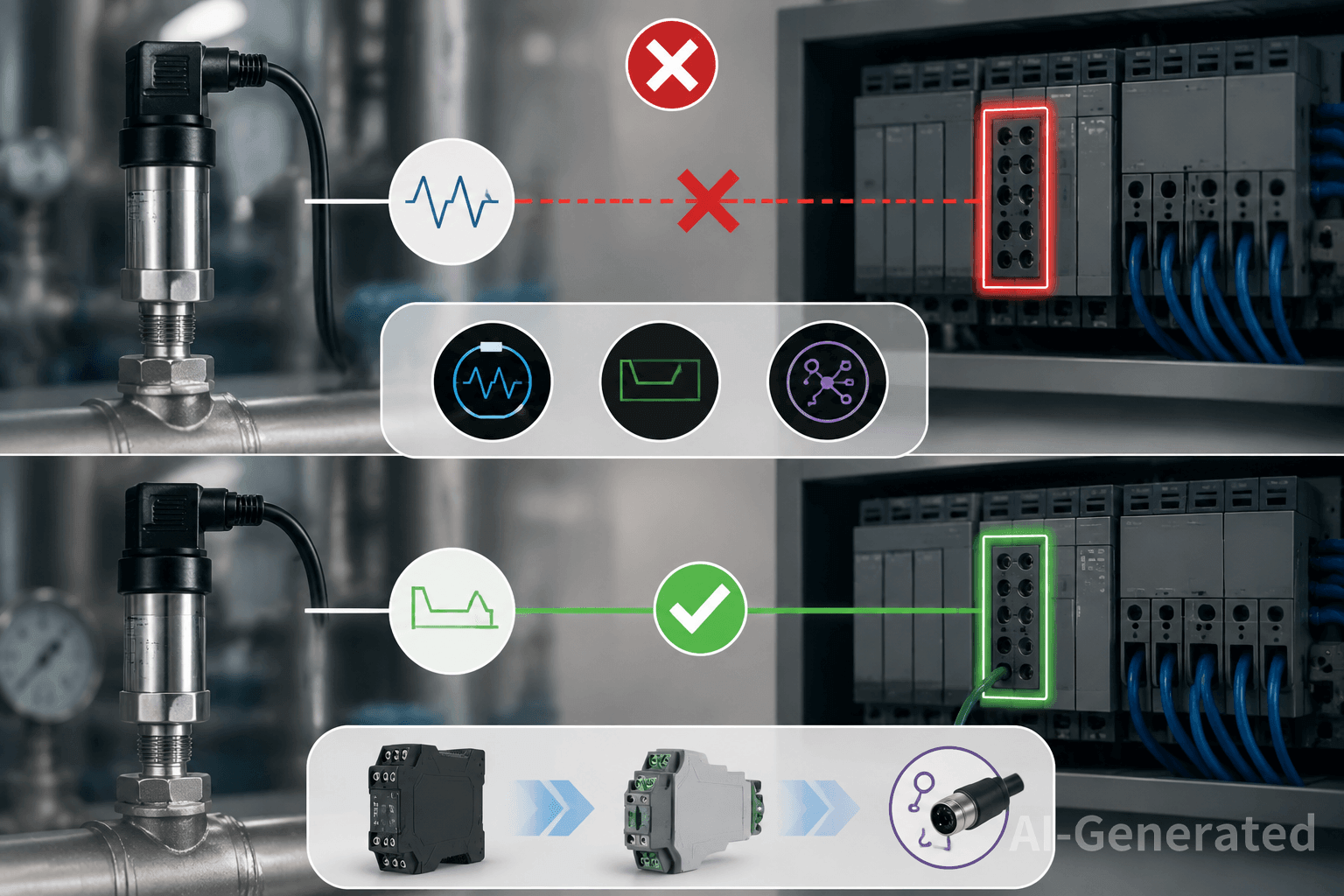
A pressure sensor must provide a compatible output signal to communicate properly with the PLC, controller, or industrial data acquisition system. Signal mismatch is a common pressure sensor output problem that can cause incorrect readings or communication failure.
dustrial pressure sensors commonly use the following signal interfaces:
Analog outputs:
- 4–20 mA current output;
- 0–10 V voltage output.
- Digital communication protocols:
- IO-Link digital communication.
If the pressure sensor output signal does not match the control system input, the PLC may not be able to process the received data correctly.
For example, installing a 0–10 V pressure sensor in a control system designed for 4–20 mA input will result in signal incompatibility. Additional signal conversion equipment would be required to establish communication.
Troubleshooting Methods:
For pressure sensor signal problems:
- Confirm the required output signal before sensor selection;
- Check PLC input module specifications;
- Verify signal wiring and parameter settings;
- Use suitable signal converters when required.
Problem 4:Pressure Sensor Failure Caused by Environmental Conditions
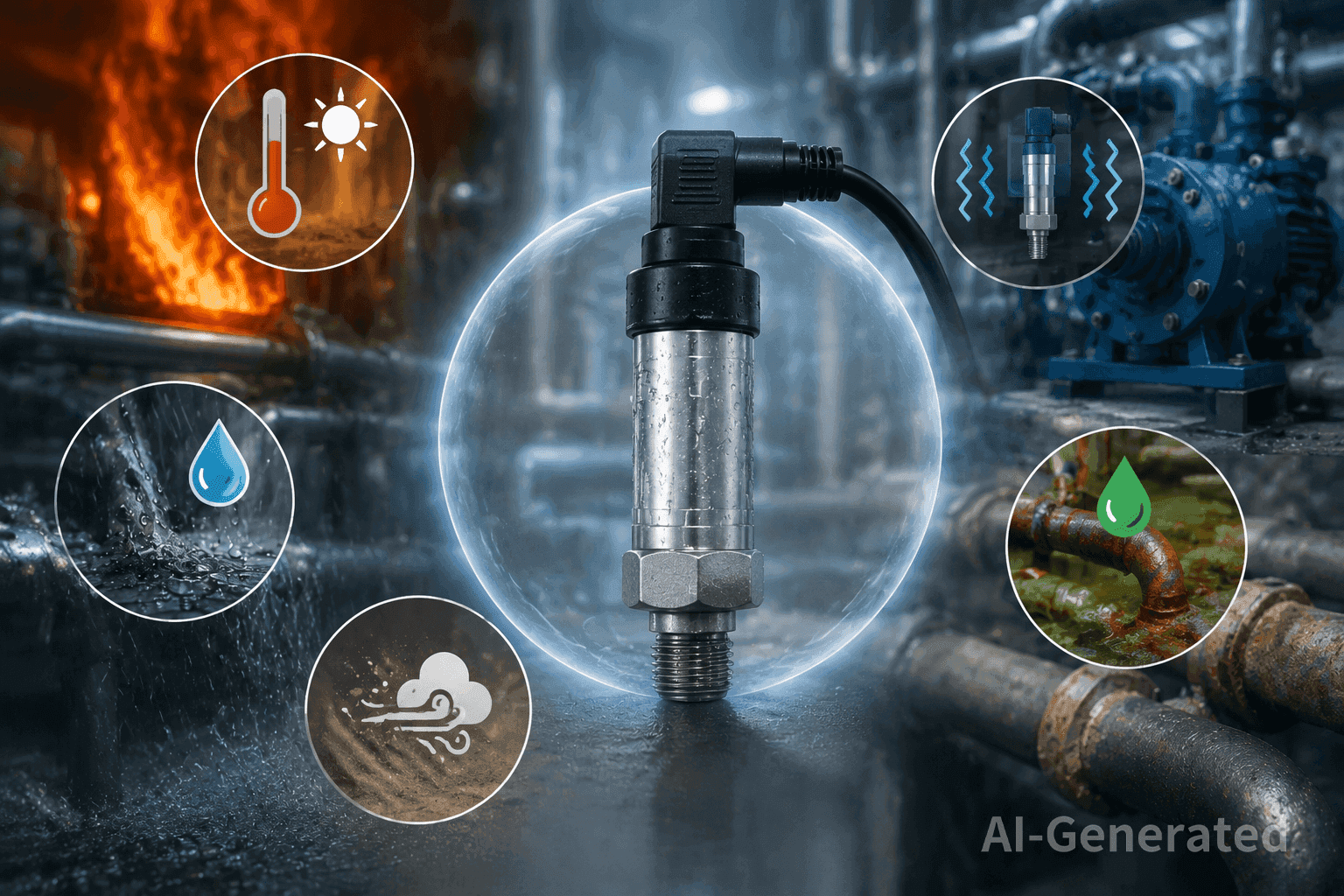
Environmental conditions play an important role in pressure sensor reliability. In industrial applications, factors such as high temperature, vibration, moisture, dust, and corrosive media can affect sensor performance and shorten service life.
High temperatures may cause electronic components to drift, resulting in inaccurate pressure measurements. Moisture and dust can damage electrical connections if the sensor does not have sufficient protection. Meanwhile, incompatible materials may lead to corrosion when measuring aggressive gases or liquids.
These environmental factors are common causes of pressure sensor failure and should be considered during sensor selection and installation.
Troubleshooting Methods:
To prevent environment-related pressure sensor problems:
- Check whether the operating temperature is within the sensor’s rated range;
- Select sensors with suitable IP protection levels;
- Verify material compatibility with the measured medium;
- Avoid installation locations with excessive vibration, moisture, or contamination.
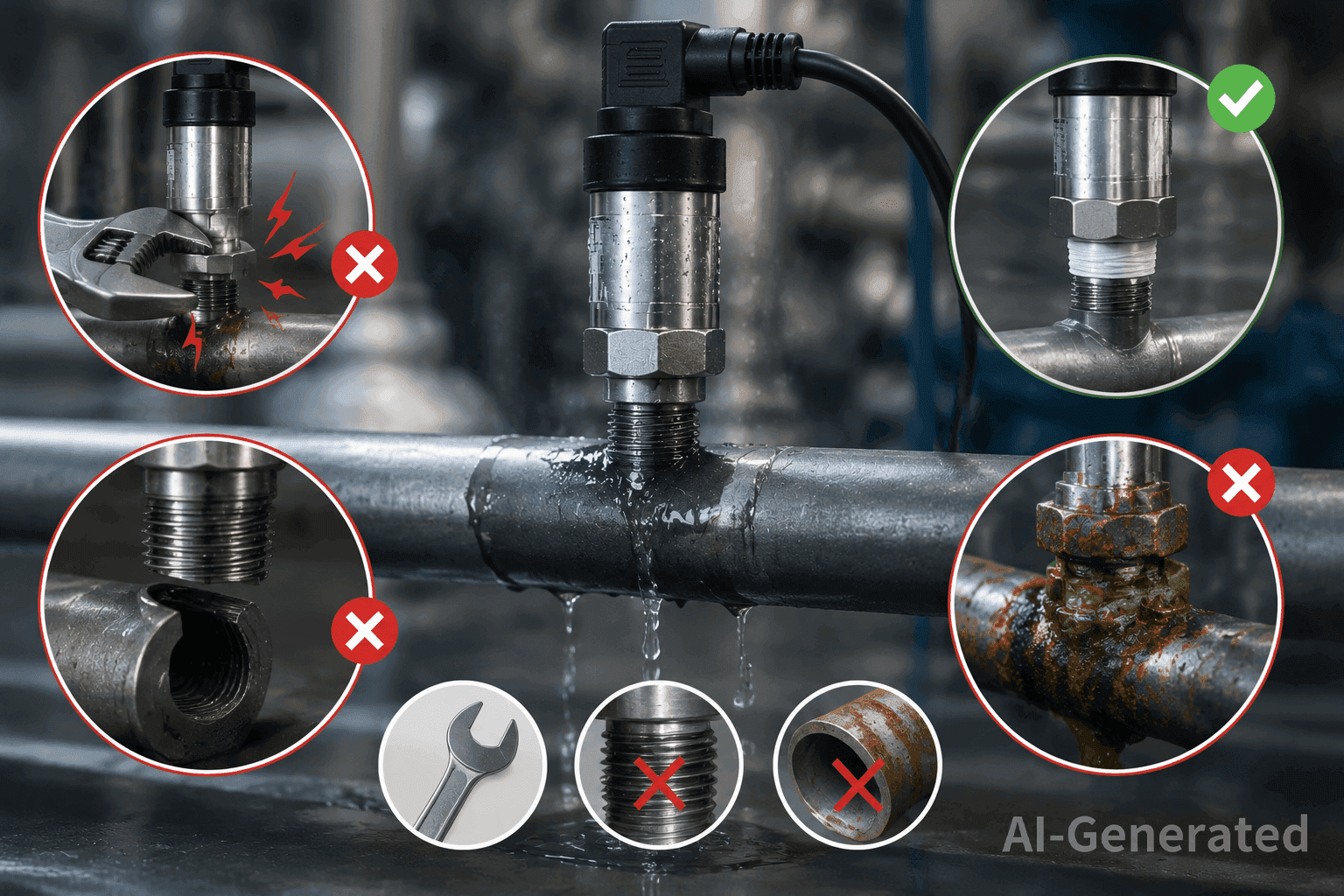
Problem 5:Pressure Sensor Leakage or Mechanical Damage
Pressure connection leakage and mechanical damage are common pressure sensor installation problems. These issues usually occur when the sensor is installed incorrectly or when the selected materials are unsuitable for the application.
Incorrect installation methods, such as excessive tightening force, incorrect thread selection, or improper sealing, may damage the pressure connection and cause leakage.
Material compatibility is also critical. If the sensor components cannot withstand the measured medium, corrosion may occur, leading to sealing failure, leakage, or permanent sensor damage.
Troubleshooting Methods:
To solve pressure sensor leakage or mechanical damage:
- Check thread specifications and installation torque;
- Inspect sealing components and connection points;
- Confirm compatibility between sensor materials and the measured medium;
- Replace damaged sensors or components when necessary.
FAQ
Why is my pressure sensor not showing any output signal?
The most common causes are incorrect wiring, insufficient power supply, or incorrect PLC configuration. Check the electrical connections, supply voltage, and signal output to identify the issue.
Why does my pressure sensor reading fluctuate?
Unstable readings may be caused by pressure pulsation, mechanical vibration, electrical interference, or an unsuitable pressure range. Checking system conditions and improving installation can usually solve the problem.
How can I extend the service life of a pressure sensor?
To improve sensor reliability:
- Select the correct pressure range;
- Ensure proper installation;
- Choose suitable materials for the measured medium;
- Protect the sensor from excessive temperature, vibration, and contamination.
Conclusion
Pressure sensor problems are often caused by incorrect installation, unsuitable operating conditions, or mismatched system requirements. By understanding common issues such as signal failure, inaccurate readings, communication errors, environmental damage, and leakage, engineers can quickly troubleshoot faults and maintain stable equipment operation.
Proper selection, installation, and maintenance are essential for ensuring long-term pressure sensor reliability in industrial automation systems.
Keep Learning
A Complete Guide to DIN Rail Terminal Blocks
Introduction In a control cabinet, field wiring from sensors, switches, valves, and other equipment must be connected to PLC I/O, power supplies, relays, and protection devices. Without a defined termination point, wiring becomes harder to trace, test, and maintain. DIN rail terminal blocks provide a structured interface between field wiring and internal cabinet circuits. Depending on the application, a terminal strip may include feed-through, PE, disconnect, fuse, distribution, or multi-level termina......
How to Choose Between Screw, Spring, and Push-In Terminal Blocks
Introduction The connection method is more than a choice between a screw, a spring, or a push-in mechanism. It determines how clamping force is generated, how the conductor is retained, how the connection responds to vibration and temperature changes, and how much time is required for installation and maintenance. Screw-clamp, spring-clamp, and push-in terminal blocks can all provide reliable electrical connections when correctly specified. The difference is how each design achieves that connection an......
How to Select a Terminal Block: A Complete Selection Guide
Introduction Choosing the right terminal block requires more than matching voltage and current ratings. Terminal block selection also depends on wire size, conductor type, connection method, mounting configuration, available space, operating environment, and safety requirements. In control panels and industrial equipment, the terminal block must provide a reliable electrical connection while supporting efficient wiring, testing, and maintenance. A practical selection sequence is: Application → Voltage......
What Is a Terminal Block? Types, Working Principles, and Applications
Introduction A terminal block is a modular electrical connector used to securely connect and organize multiple wires in electrical systems. It provides a reliable connection point for power distribution, signal transmission, and circuit management. Commonly used in industrial automation, control panels, and electrical equipment, terminal blocks help improve wiring organization, simplify maintenance, and enhance system reliability. In this guide, you will learn what a terminal block is, how it works, t......
5 Common Pressure Sensor Problems and How to Troubleshoot Them
Introduction: In previous articles, we explored “What Is a Pressure Sensor?”, “Pressure Sensors Explained: Working Principles, Types, and Applications,” and “How to Select the Right Pressure Sensor,” covering the fundamentals of pressure sensors, including their working principles, types, applications, and key selection considerations. However, even a properly selected pressure sensor may encounter performance issues during operation due to factors such as wiring errors, improper installation, harsh e......
How to Select the Right Pressure Sensor?
Introduction: In previous articles, we explored “What Is a Pressure Sensor?” and “Pressure Sensors Explained: Working Principles, Types, and Applications,” covering the fundamentals of pressure sensors, including how they work, different sensor types, and their applications across industrial automation systems. However, understanding how pressure sensors work is only the first step. In real industrial applications, selecting the right pressure sensor requires engineers to consider multiple factors, in......