How to Select the Right Pressure Sensor?
6 min
- Introduction:
- Key Parameters to Consider When Selecting a Pressure Sensor
- Common Pressure Sensor Selection Mistakes
- FAQ
- Conclusion
Introduction:
In previous articles, we explored “What Is a Pressure Sensor?” and “Pressure Sensors Explained: Working Principles, Types, and Applications,” covering the fundamentals of pressure sensors, including how they work, different sensor types, and their applications across industrial automation systems.
However, understanding how pressure sensors work is only the first step. In real industrial applications, selecting the right pressure sensor requires engineers to consider multiple factors, including pressure range, measurement type, output signal, accuracy, environmental conditions, and compatibility with the measured medium.
An unsuitable pressure sensor may lead to inaccurate measurements, unstable equipment operation, or premature sensor failure.
This article provides a practical guide on how to select the right pressure sensor for industrial applications. We will explain the key parameters to consider during the selection process, common mistakes to avoid, and practical tips for choosing the most suitable sensor for your system.
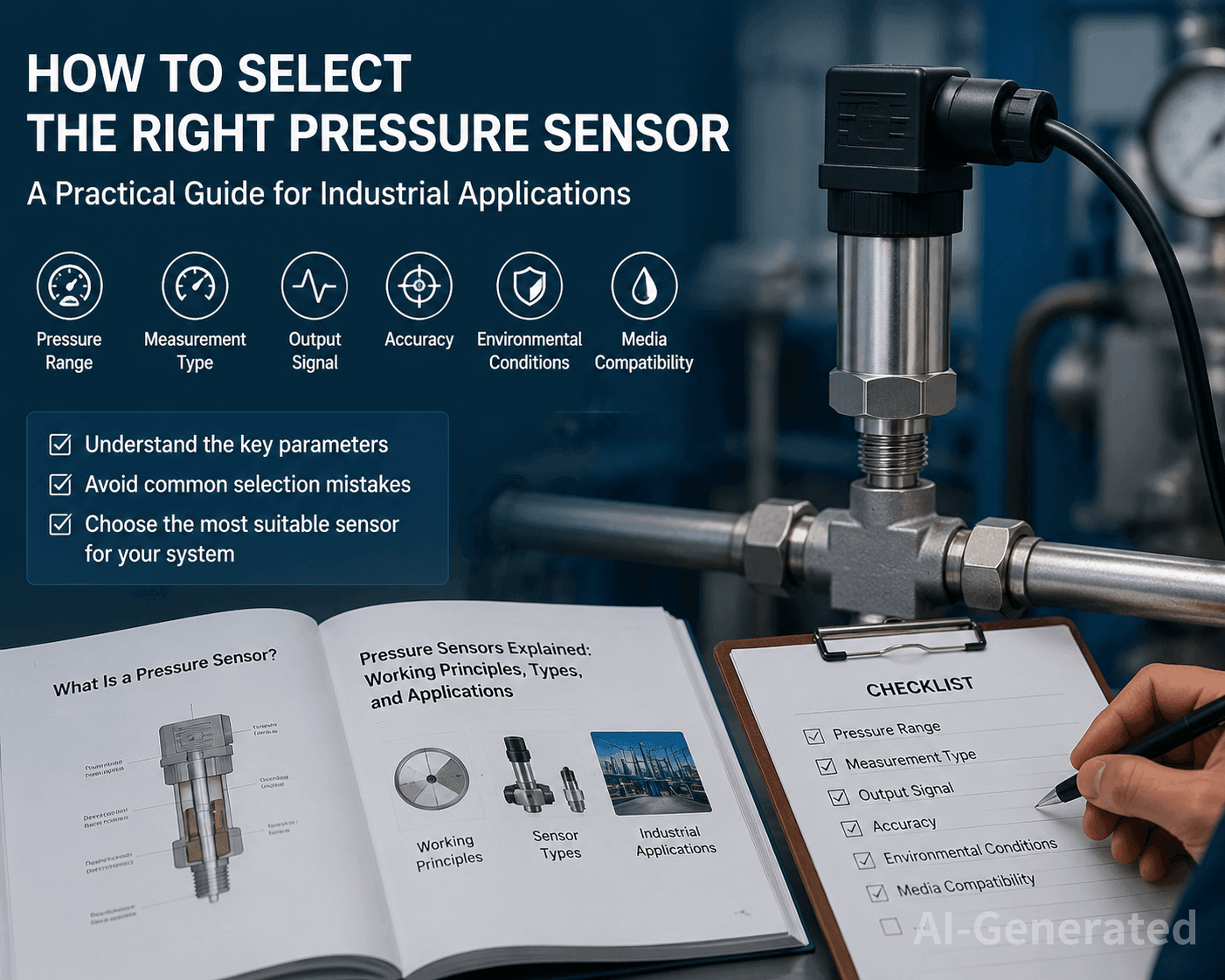
Key Parameters to Consider When Selecting a Pressure Sensor
Selecting the right pressure sensor requires a comprehensive evaluation of the application conditions. The following parameters are essential for achieving accurate measurement, reliable operation, and long service life.
Pressure Range
Pressure range is one of the most important selection factors. Engineers should consider:
- Normal operating pressure;
- Maximum system pressure;
- Pressure fluctuations or sudden spikes.
Selection guideline:
The sensor’s rated pressure range should be higher than the maximum expected system pressure.
For example, a pneumatic system operating at 0–8 bar typically requires a 10 bar pressure sensor to provide sufficient safety margin. An unsuitable range may cause overload, inaccurate readings, and reduced sensor lifespan.
Pressure Type
Pressure sensors are selected based on the reference pressure being measured:
| Type | Description | Applications |
| Gauge Pressure | Measures pressure relative to atmospheric pressure | Hydraulic and pneumatic systems |
| Absolute Pressure | Measures pressure relative to a vacuum reference | Vacuum equipment and gas systems |
| Differential Pressure | Measures the difference between two pressure points | Filters and flow monitoring |
Output Signal
The output signal determines how the sensor integrates with the control system.
Common options include:
- 4–20 mA: High noise resistance, suitable for industrial environments;
- 0–10 V: Simple voltage output for short-distance connections;
- IO-Link: Digital communication with diagnostic functions.
Always confirm compatibility with PLC modules, controllers, or data acquisition systems.
Accuracy
Accuracy defines measurement reliability. Common industrial accuracy levels include:
- ±0.5% FS: General automation applications;
- ±0.25% FS: Precision control systems;
- ±0.1% FS: High-accuracy measurement.
Most industrial automation applications can meet requirements with accuracy around ±0.5% FS, while higher accuracy may be required for calibration, testing, or process control applications.
Media Compatibility
The measured medium affects sensor material selection. Consider:
- Gas or liquid type;
- Corrosiveness;
- Temperature;
- Wetted materials.
Stainless steel components suit many industrial applications, while corrosive media may require special materials to prevent corrosion, leakage, or failure.
Electrical Connection and Installation
Proper installation ensures stable operation. Confirm:
- Thread size and mounting method;
- Electrical connector type;
- Available space;
- IP protection rating.
Common connections include G1/4, G1/8, and NPT threads. A suitable mechanical and electrical interface improves installation efficiency and long-term reliability.
Common Pressure Sensor Selection Mistakes
Even experienced engineers may encounter challenges when selecting pressure sensors. Choosing an unsuitable sensor can lead to inaccurate measurements, equipment failures, and increased maintenance costs. The following common mistakes should be avoided.
Mistake 1: Selecting an Incorrect Pressure Range
Problem:
The selected sensor range is too close to or lower than the system’s maximum operating pressure. Pressure fluctuations or sudden pressure spikes may exceed the sensor’s rated range.
Consequences:
- Overpressure damage to the sensing element;
- Reduced sensor lifespan;
- Unstable or inaccurate measurement results.
Solution:
Choose a pressure sensor with a rated pressure range higher than the maximum expected system pressure. A proper safety margin helps ensure reliable operation and long-term stability.
Mistake 2: Ignoring Output Signal Compatibility
Problem:
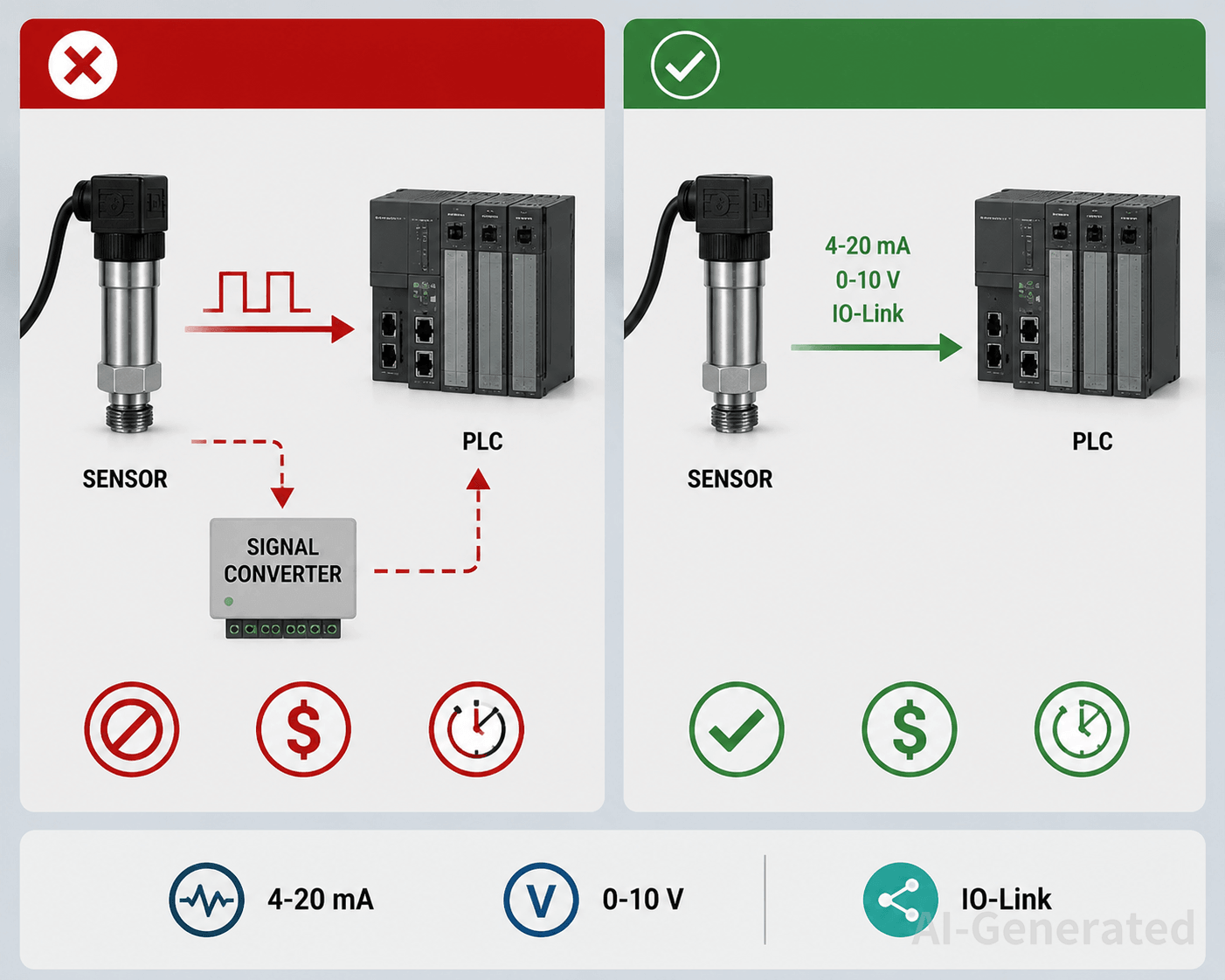
The sensor output signal does not match the control system, such as the PLC or data acquisition device.
Consequences:
- The sensor cannot communicate directly with the control system;
- Additional signal converters or interface modules may be required;
- Increased installation complexity and cost.
Solution:
Confirm the required output signal type, such as 4–20 mA, 0–10 V, or IO-Link, before selecting the pressure sensor.
Mistake 3: Overlooking Environmental Conditions
Problem:
The operating environment is not fully considered during selection. Factors such as temperature, vibration, moisture, dust, and chemical exposure can affect sensor performance.
Consequences:
- Measurement errors;
- Corrosion or physical damage;
- Reduced reliability and service life.
Solution:
Select sensors with suitable temperature ratings, IP protection levels, and housing materials according to the application environment. Proper environmental matching ensures stable and durable performance.
FAQ
Q1: What is the most important parameter when selecting a pressure sensor?
The pressure range is usually the first parameter to consider. The sensor must safely handle the maximum system pressure while maintaining measurement accuracy.
Q2: Should I choose a 4–20 mA or 0–10 V output signal?
It depends on the application.
- 4–20 mA is recommended for industrial environments with electrical noise or long transmission distances.
- 0–10 V is suitable for shorter connections and systems that support voltage input.
Q3: Can one pressure sensor measure both liquids and gases?
Yes, but the sensor material must be compatible with the measured medium. Always check the wetted materials before selection.
Q4: What accuracy level is suitable for industrial applications?
Most industrial automation applications use ±0.5% FS accuracy. Higher accuracy sensors are mainly required for precision testing or critical control systems.
Q5: How can I improve the service life of a pressure sensor?
To extend sensor lifespan:
- Avoid operating beyond the rated pressure range;
- Select suitable materials for the medium;
- Install the sensor correctly;
- Protect it from excessive vibration and temperature conditions.
Conclusion
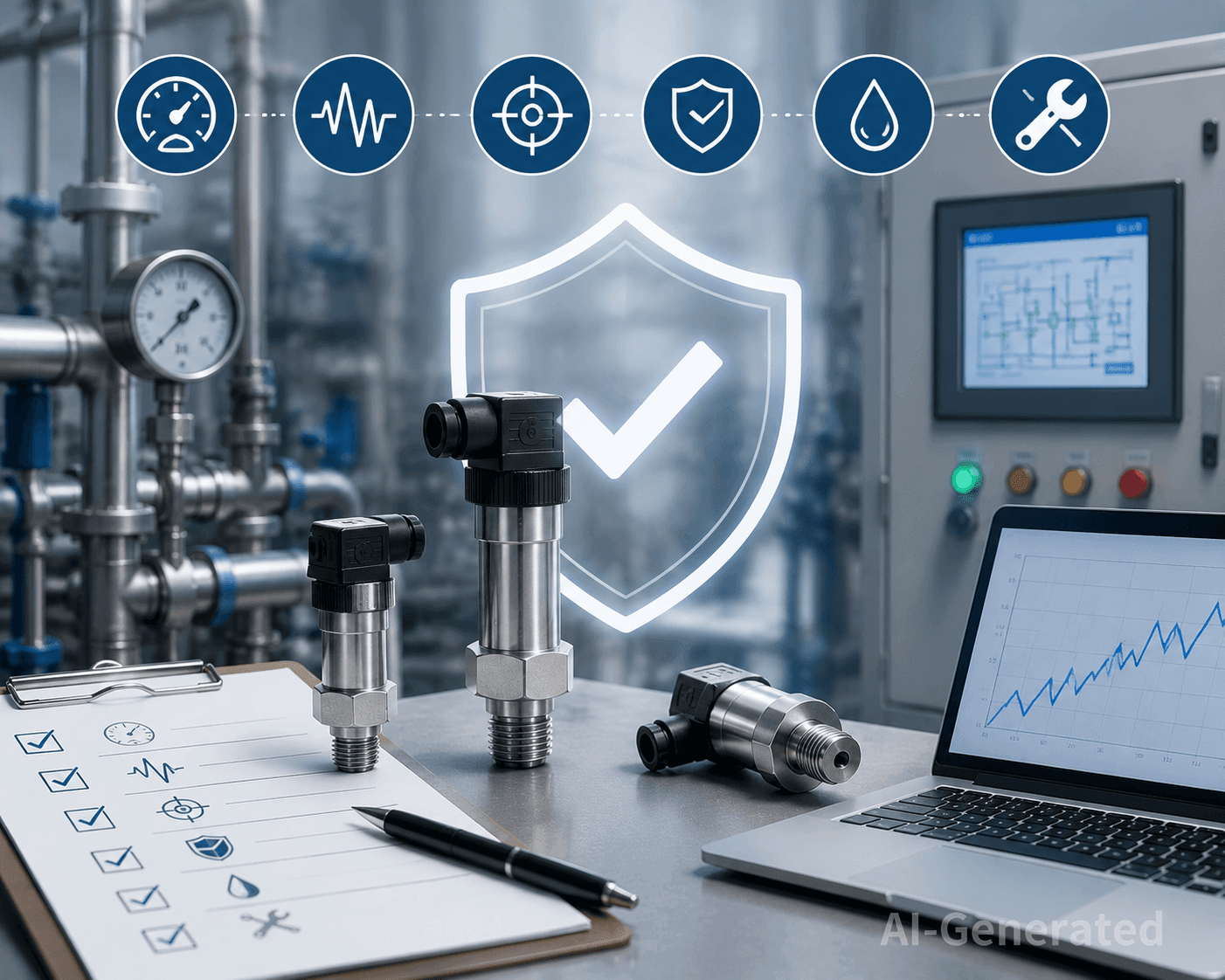
Selecting the right pressure sensor requires careful consideration of multiple factors. For industrial automation systems, the correct pressure sensor can improve measurement reliability, enhance equipment performance, and reduce maintenance costs.
By understanding the key selection parameters and avoiding common mistakes, engineers can choose pressure sensors that provide stable, accurate, and long-term performance for their specific applications.
Keep Learning
A Complete Guide to DIN Rail Terminal Blocks
Introduction In a control cabinet, field wiring from sensors, switches, valves, and other equipment must be connected to PLC I/O, power supplies, relays, and protection devices. Without a defined termination point, wiring becomes harder to trace, test, and maintain. DIN rail terminal blocks provide a structured interface between field wiring and internal cabinet circuits. Depending on the application, a terminal strip may include feed-through, PE, disconnect, fuse, distribution, or multi-level termina......
How to Choose Between Screw, Spring, and Push-In Terminal Blocks
Introduction The connection method is more than a choice between a screw, a spring, or a push-in mechanism. It determines how clamping force is generated, how the conductor is retained, how the connection responds to vibration and temperature changes, and how much time is required for installation and maintenance. Screw-clamp, spring-clamp, and push-in terminal blocks can all provide reliable electrical connections when correctly specified. The difference is how each design achieves that connection an......
How to Select a Terminal Block: A Complete Selection Guide
Introduction Choosing the right terminal block requires more than matching voltage and current ratings. Terminal block selection also depends on wire size, conductor type, connection method, mounting configuration, available space, operating environment, and safety requirements. In control panels and industrial equipment, the terminal block must provide a reliable electrical connection while supporting efficient wiring, testing, and maintenance. A practical selection sequence is: Application → Voltage......
What Is a Terminal Block? Types, Working Principles, and Applications
Introduction A terminal block is a modular electrical connector used to securely connect and organize multiple wires in electrical systems. It provides a reliable connection point for power distribution, signal transmission, and circuit management. Commonly used in industrial automation, control panels, and electrical equipment, terminal blocks help improve wiring organization, simplify maintenance, and enhance system reliability. In this guide, you will learn what a terminal block is, how it works, t......
5 Common Pressure Sensor Problems and How to Troubleshoot Them
Introduction: In previous articles, we explored “What Is a Pressure Sensor?”, “Pressure Sensors Explained: Working Principles, Types, and Applications,” and “How to Select the Right Pressure Sensor,” covering the fundamentals of pressure sensors, including their working principles, types, applications, and key selection considerations. However, even a properly selected pressure sensor may encounter performance issues during operation due to factors such as wiring errors, improper installation, harsh e......
How to Select the Right Pressure Sensor?
Introduction: In previous articles, we explored “What Is a Pressure Sensor?” and “Pressure Sensors Explained: Working Principles, Types, and Applications,” covering the fundamentals of pressure sensors, including how they work, different sensor types, and their applications across industrial automation systems. However, understanding how pressure sensors work is only the first step. In real industrial applications, selecting the right pressure sensor requires engineers to consider multiple factors, in......