Types of Hex Bolts and How to Choose Them
7 min
- Hex Bolt Types at a Glance
- Partially Threaded Hexagon Head Bolts
- Fully Threaded Hexagon Head Screws
- Fine-Thread Hex Bolts
- Hex Flange Bolts
- Related Fasteners That Are Not Automatically Hex Bolts
- Materials, Property Classes, and Finishes
- How to Choose a Hex Bolt
- Frequently Asked Questions
- How to Choose the Right Hex Bolt
Hex bolts have a six-sided head that fits a wrench or socket. People use them in many joints because the head gives the tool broad contact and easy access. The main differences come from thread length, thread pitch, head form, material, and finish.
The types of hex bolts also vary by standard and job. A partially threaded bolt suits one kind of joint, while a fully threaded hexagon-head screw suits another. You should look at the full joint before you choose a fastener.
Hex Bolt Types at a Glance
The main hex head bolt types include partial-thread bolts, full-thread hexagon-head screws, fine-thread forms, and flange bolts. Some other fasteners also use a hex head, but they do not always fall under the same bolt family.
These different types of hex bolts should not be chosen by head shape alone. Thread form and grip length also matter. The applicable standard gives the exact dimensions for the fastener.
| Type | Main Feature | Common Use |
| Partially threaded hex bolt | Smooth shank below the head | Joints with a clear grip section |
| Fully threaded hexagon-head screw | Thread along most or all of the shank | General clamp joints |
| Fine-thread hex bolt | Smaller thread pitch | Joints that need finer adjustment |
| Hex flange bolt | Built-in flange below the head | Wider load spread |
| Application-specific hex fastener | Special form for a set job | Depends on the design |
Partially Threaded Hexagon Head Bolts
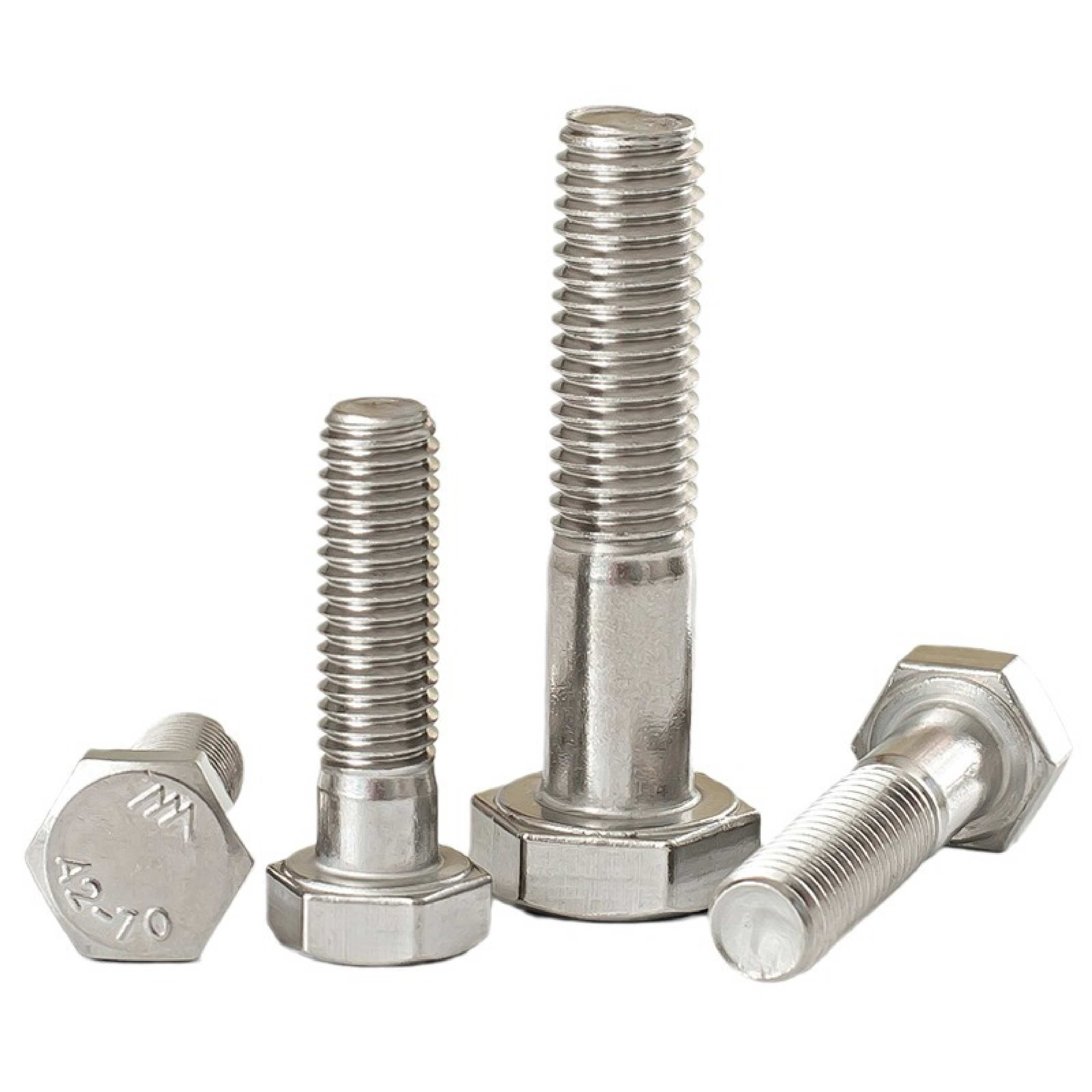
A partially threaded hex bolt has a smooth shank section below the head. The thread starts farther down the body. This smooth part often sits inside the joint where you want the shank to pass through the parts.
The grip length matters with this type. You should choose a bolt so the smooth shank sits through the joint where the design calls for it, including whether it lies in the shear plane. The threaded section then reaches the nut or threaded part with enough engagement.
People often choose a partial thread when the joint design calls for a smooth section across the joined parts. The choice also depends on the grip length, shear load, thread engagement, hole form, and the applicable standard. Do not judge load capacity by thread length alone, and do not assume a partial-thread bolt is always stronger than a fully threaded fastener. Do not assume a longer bolt always gives the right grip. Check both total length and thread length.
Fully Threaded Hexagon Head Screws
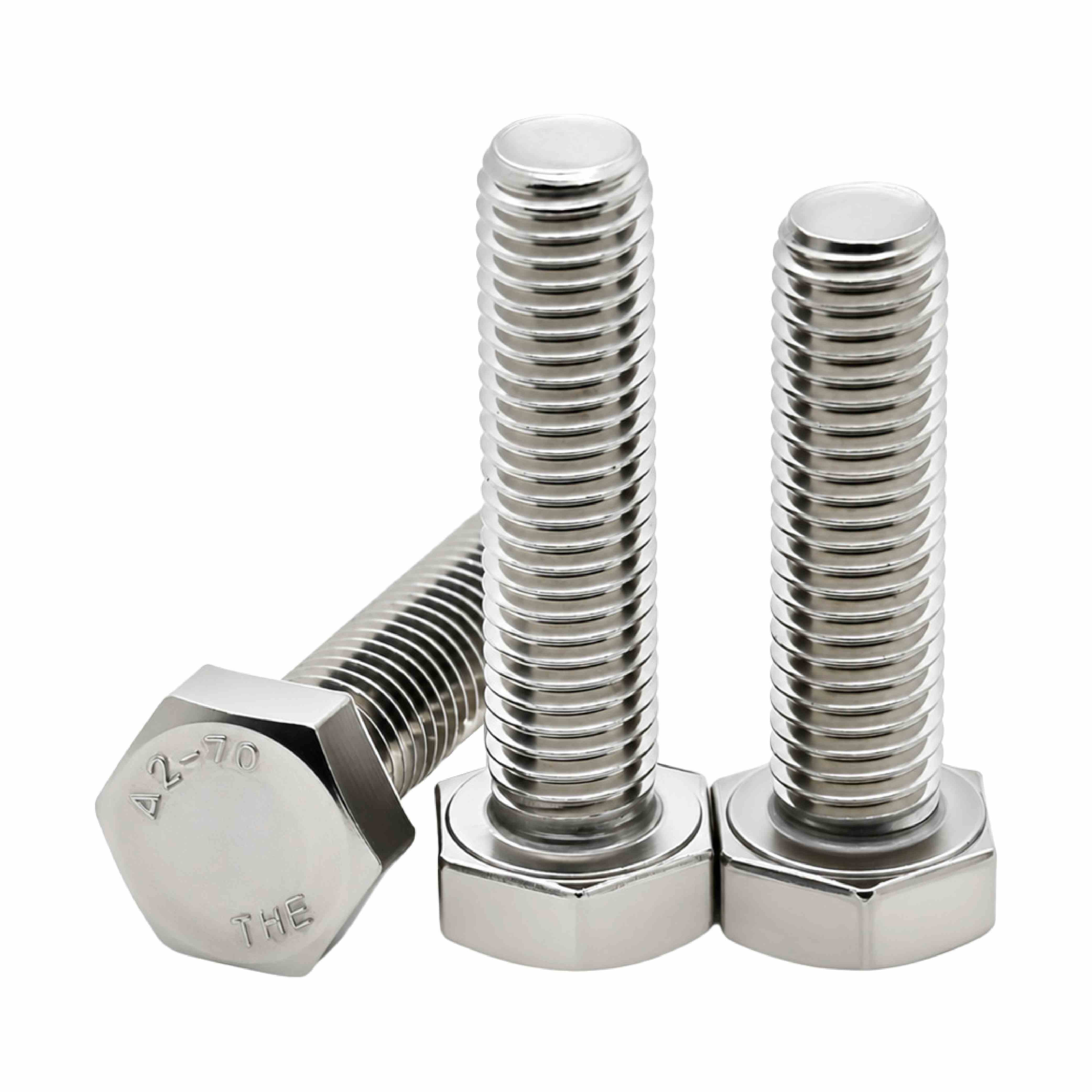
A fully threaded hexagon-head screw has thread along most or all of its shank. This form gives you more thread length for a nut or threaded hole. It also gives you more choice when the exact clamp depth varies.
Naming differs between standards and markets. Some suppliers call these fasteners hex bolts, while others use the term hexagon-head screws. There is no need to force one naming rule across every product range.
This difference matters when you compare hex bolt head types in a catalog. Two products might share the same six-sided head but follow different standards. Check the thread length and dimensions instead of relying on the name alone.
Fine-Thread Hex Bolts
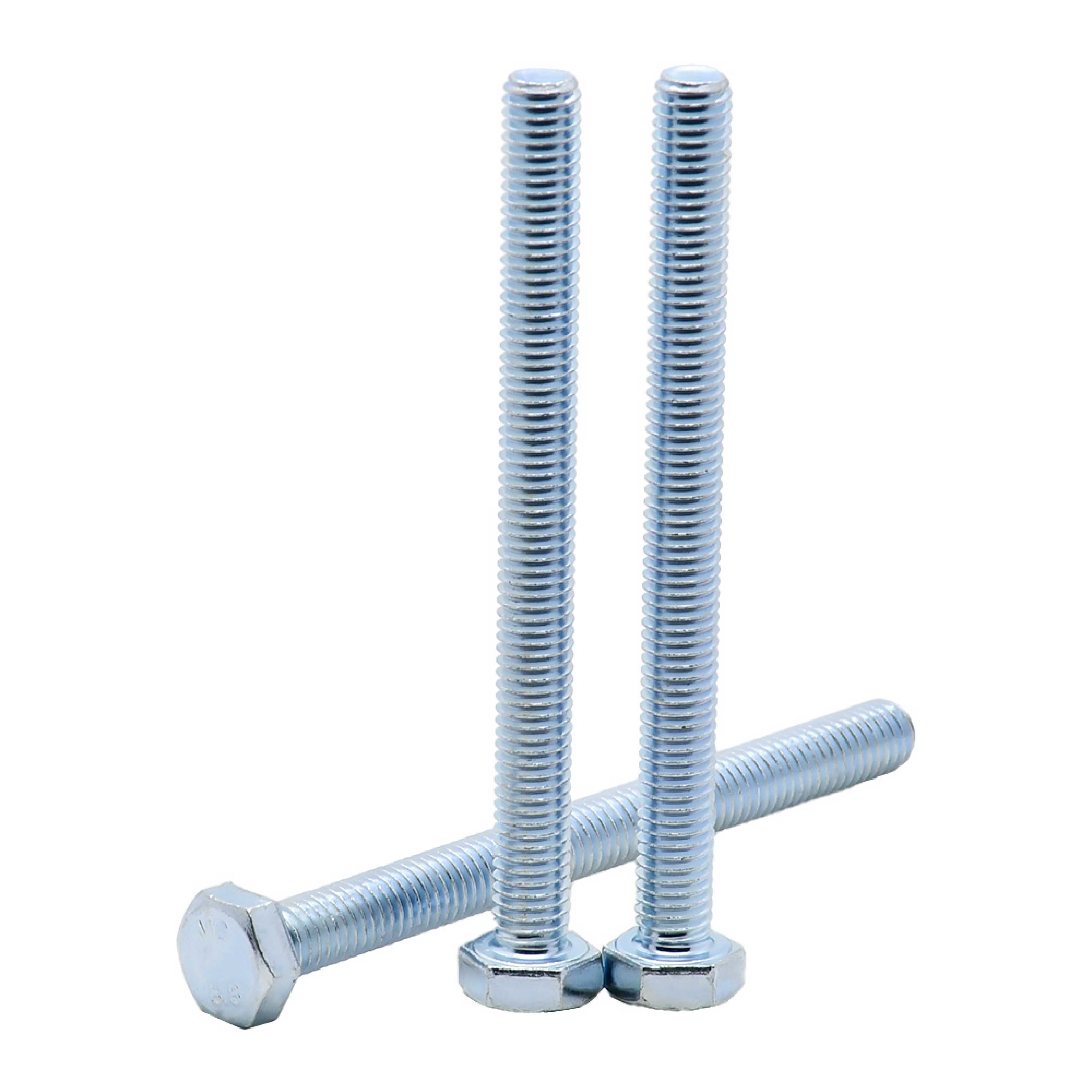
Fine-thread hex bolts have a smaller distance between thread peaks than coarse-thread versions. This gives more threads within the same length. The exact pitch depends on the fastener size and standard.
For a single-start thread, the smaller pitch produces less axial movement per turn. Fine threads may be useful where the joint design specifies fine threads, but thread selection should be based on the applicable standard, material, engagement length, and loading conditions rather than adjustment precision alone. Fine threads also need the correct matching nut or threaded hole. A coarse nut will not fit a fine-thread bolt of the same diameter.
Do not choose fine thread only because it looks more precise. The joint design and standard should decide the thread pitch.
Hex Flange Bolts
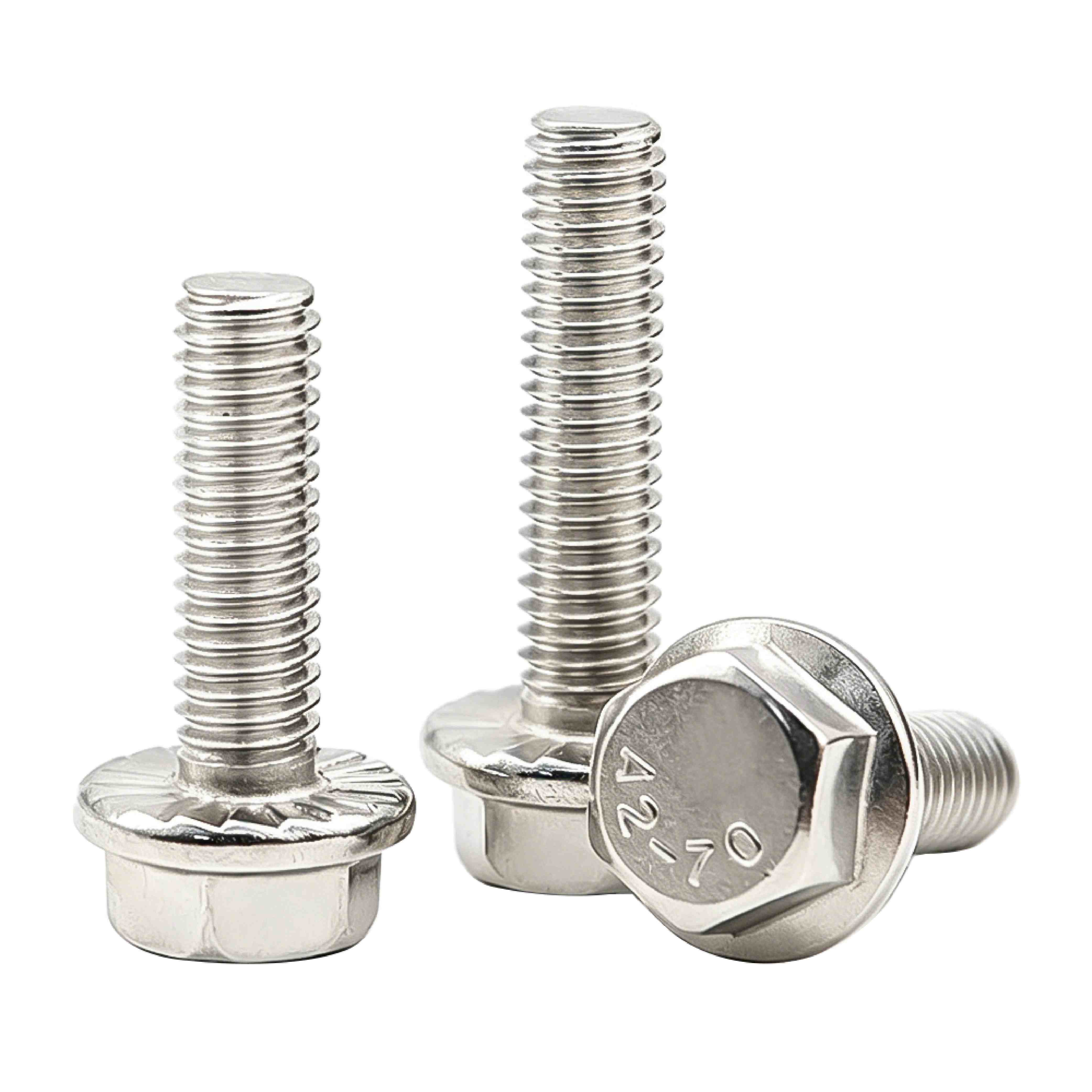
A hex flange bolt has a broad flange below the head. The flange gives a wider contact area against the surface. Some flange bolts also have serrations below the flange, while others have a smooth face.
The built-in flange may reduce the need for a separate washer in some joints. It does not remove every washer need. Whether a washer is still needed depends on the joint design, surface condition, coating protection requirements, and the applicable standard. Serrated flange bolts need separate evaluation because the serrations affect the mating surface and locking performance.
Among the types of hex bolts, flange bolts stand out because the head and load-spread surface form one piece. You still need to check the flange diameter and surface type before use.
Related Fasteners That Are Not Automatically Hex Bolts
Several fasteners have a hex shape but belong to other families. A structural bolt might have a hex head, but its dimensions and use follow a structural standard. You should not treat every large hex-head fastener as a general hex bolt.
Coach screws also use a hex head in some forms, but they have a screw thread for wood or similar material. Anchor bolts have a different role because they secure parts to concrete or another base.
Socket-head fasteners do not have an external hex head. They use an internal hex recess instead. A hex key turns the fastener from inside the head.
This is why hex bolt head types should be described with care. Head shape gives one clue, but fastener family and standard give the full answer.
Materials, Property Classes, and Finishes
Hex bolts come in several materials and strength classes. Carbon steel is common in many general joints. Stainless steel suits many wet or corrosive areas, but the exact grade still matters.
Property class tells you about mechanical strength for many metric fasteners. You should match the class to the joint requirement rather than choose a stronger class by default. Other parts in the joint also need compatible strength.
Surface finish also affects corrosion resistance and appearance. Zinc-based finishes are common on many steel fasteners. Other finishes serve different environments.
Do not assume every material or finish exists in every size. Check the supplier data for the exact fastener you need.
How to Choose a Hex Bolt
Start with joint design. Check the total thickness of the parts and decide whether you need a smooth grip section. This helps you choose between a partial-thread and full-thread form.
Next, check thread engagement. The nut or threaded hole needs enough thread contact for the joint design. Make sure the nut matches both the thread diameter and pitch.
Look at the washer needs too. Some joints need a washer to spread load or protect the surface. A flange head already gives a wider contact area, but the joint may still call for a separate washer.
Tool access matters as well. A wrench or socket needs enough space around the six-sided head. Check the environment after that. Moisture or contact with another metal can affect material and finish choice.
The best way to compare different types of hex bolts is by joint need, not by appearance. Grip length and thread form often matter more than small visual differences.
Frequently Asked Questions
What is the difference between a hex bolt and a hex cap screw?
The terminology depends on the applicable standard and market. For metric fasteners, ISO 4014 specifies hexagon head bolts, while ISO 4017 specifies hexagon head screws. Check the product standard, dimensions, and thread configuration rather than relying on the name alone.
Full thread or partial thread: which should you use?
Use the form that matches the joint design. Partial thread gives a smooth grip section, while full thread gives more thread along the shank.
Does a flange bolt remove every washer needed?
No. Some joints still need a washer because of the design or standard.
How to Choose the Right Hex Bolt
The types of hex bolts differ in thread length and pitch, while flange forms also change the head contact area. People should check these features before they choose a fastener.
Start with joint thickness and grip length. Then check thread engagement and material. A correct match helps the bolt sit properly and gives the joint the form the design requires.
Popular Articles
Keep Learning
Self-Tapping Screws: Types, Head Styles & How to Choose
Key Takeaways Self-tapping screws cut their own mating thread as they are driven, so no pre-tapped hole is needed on the receiving part. The tip decides how the thread is made: thread-forming tips displace material in suitable ductile stock, thread-cutting tips remove it as chips, and self-drilling tips add their own drill point. Head style decides the seating: pan heads sit proud for surface mounting, countersunk heads end flush, and hex washer heads spread load over structural joints. Match the base......
Polyurethane Bumper Energy Calculation: Impact Kinetic Formulas, Stroke & Duty Cycles
Key Takeaways Impact energy depends on contact velocity squared, so a small speed change can materially alter the stopping event. Physical bumper height is not the same as permitted compression or usable stopping distance. Include work from a drive force that continues during compression, plus gravity or rotational effects where applicable. Hardness describes indentation resistance; it is not an energy rating or a complete force-deflection curve. Repeated impacts require a duty assessment as well as a......
Rubber Vibration Isolator Natural Frequency Calculation & Rigid Bypass Troubleshooting Standards
Key Takeaways Trace every mechanical connection between the isolated assembly and its surroundings, including services and guards. Compression, shear and tension are different loading conditions; use the data for the intended direction. A mount must be loaded appropriately, not merely kept below its maximum capacity. Keep deliberate retention hardware compatible with the movement needed for isolation. Compare vibration before and after changes at consistent operating conditions and measurement locatio......
What Is a Torx Screw? Star Drive and Security Torx Explained
If you have seen a screw with a six-point star recess, you have likely seen a Torx screw. So, what is a Torx screw? It is a screw with a six-lobe drive profile. You use a Torx bit to turn the screw. People often call this shape a star drive because of its six-lobe form. The standard Torx profile has six smooth, round lobes rather than sharp points. Other six-lobe drive profiles may look similar, but their dimensions can differ, and their tools may not be interchangeable. This shape gives the tool broa......
How to Drill Out a Stripped Screw Safely?
A stripped screw often turns a simple repair into a hard job. The driver slips because the screw recess no longer gives the bit a firm grip. A broken head or rusted screw creates a similar problem. Drilling screws out should come after simpler removal methods fail. Your goal is to remove enough metal to free the screw head without harm to the part. Good control matters more than force. A drill bit that moves off center might damage the hole or nearby surface. Start with a small bit and keep the drill ......
How to Remove a Stripped Hex Bolt: 7 Effective Removal Methods
A stripped hex bolt loses enough tool contact that a normal hex key or socket slips under force. The damage might affect an internal hex recess or the outer bolt head. Rust can make the problem worse because the thread then needs more force to turn. The safest stripped hex bolt removal method starts with a damage check. Use the least harsh option first, then move to stronger methods only if needed. Your main goal is to remove the bolt without harm to the thread or nearby part. What Is a Stripped Hex B......