Self-Tapping Screws: Types, Head Styles & How to Choose
10 min
- What Is a Self-Tapping Screw?
- Self-Tapping vs Self-Drilling: The Short Version
- Types of Self-Tapping Screws by Tip
- Head Styles: Pan, Countersunk, Hex Washer, and Flange
- Drive Types: Phillips, Torx, and Hex
- How to Choose: Material, Thickness, and Corrosion
- Common Uses Across Assemblies
- FAQ about Self-Tapping Screws
- About This Self-Tapping Screws Guide
Key Takeaways
- Self-tapping screws cut their own mating thread as they are driven, so no pre-tapped hole is needed on the receiving part.
- The tip decides how the thread is made: thread-forming tips displace material in suitable ductile stock, thread-cutting tips remove it as chips, and self-drilling tips add their own drill point.
- Head style decides the seating: pan heads sit proud for surface mounting, countersunk heads end flush, and hex washer heads spread load over structural joints.
- Match the base material to the tip first, the sheet thickness to the screw size second, and the corrosion environment to the coating third.
- The same screw re-driven into its own thread can over-cut and loosen; retired holes recover best with a threaded insert, not a bigger screw.
Choosing a self-tapping screw sounds like a one-line decision until the failures pile up: a pan head where a countersunk was meant to sit flush, a thread-forming tip snapped in hardened steel, a stainless screw galled into an aluminum housing. None of these are exotic errors. They happen because "self-tapping screw" is a family of dozens of tip, head, and drive combinations, and the differences between them decide whether the joint seats, strips, or cracks.
A screw that forms its thread in soft aluminum and one that cuts chips out of hardened steel are both sold as self-tapping, but they fail in opposite ways: the first strips when re-driven, the second can crack a brittle boss. Material, head, and drive are the three variables that decide which failure you get. Most catalogs group self tapping screw types by tip, head, and drive — the same three axes used below.
What Is a Self-Tapping Screw?
A self-tapping screw is a fastener that cuts or forms its own mating thread inside the hole it enters, creating the internal thread as it is driven rather than relying on one that was tapped beforehand. The definition is short, but most of the confusion around these screws lives in what follows it: how the thread is created (cut versus formed versus pre-drilled), and which of the many tip and head variants suits the joint. Those two questions belong to the wider family: the four essential screw types put self-tapping screws in context, and the pre-drill question explains why a pilot hole still matters.
Self-Tapping vs Self-Drilling: The Short Version
The one distinction worth settling early: self-tapping screws create their own mating threads in a pre-drilled or existing hole, while self-drilling screws feature an integrated drill point that creates the hole during installation. Self-drilling screws combine drilling and thread-forming or thread-cutting functions, depending on their design — which suits steel framing and sheet-metal stacks when a separate drilling step is unwanted, while self-tapping screws need the hole first but offer finer control of the final fit. The full head-to-head comparison, including where each type wins, is in our self-drilling vs self-tapping guide.
Types of Self-Tapping Screws by Tip
The tip determines how the thread gets made and which materials cooperate:
| Tip type | How it forms the thread | Typical base materials | Pilot hole |
|---|---|---|---|
| Thread-forming | Displaces material; no chips | Certain plastics, aluminum alloys, and other suitable ductile materials | Follow the screw manufacturer's recommended size |
| Thread-cutting | Cuts and removes chips | Suitable metals, castings, and certain brittle plastics, depending on screw design and material properties | Follow the screw manufacturer's recommended size |
| Self-drilling (with drill point) | Drills and forms or cuts the thread in one motion | Depends on drill-point design, material and total drilling thickness | None; the tip is the drill |
Thread-forming tips can work-harden the thread in suitable materials with no chips to evacuate, which suits blind holes and clean assemblies. Thread-cutting screws remove material to create mating threads and produce chips during installation; they are commonly used with suitable metals, castings, and certain brittle plastics. The screw geometry and base material must be matched to ensure proper thread formation — that is the first fork in every selection.
Head Styles: Pan, Countersunk, Hex Washer, and Flange
The head decides how the screw seats, and picking the wrong one shows immediately on the assembly:
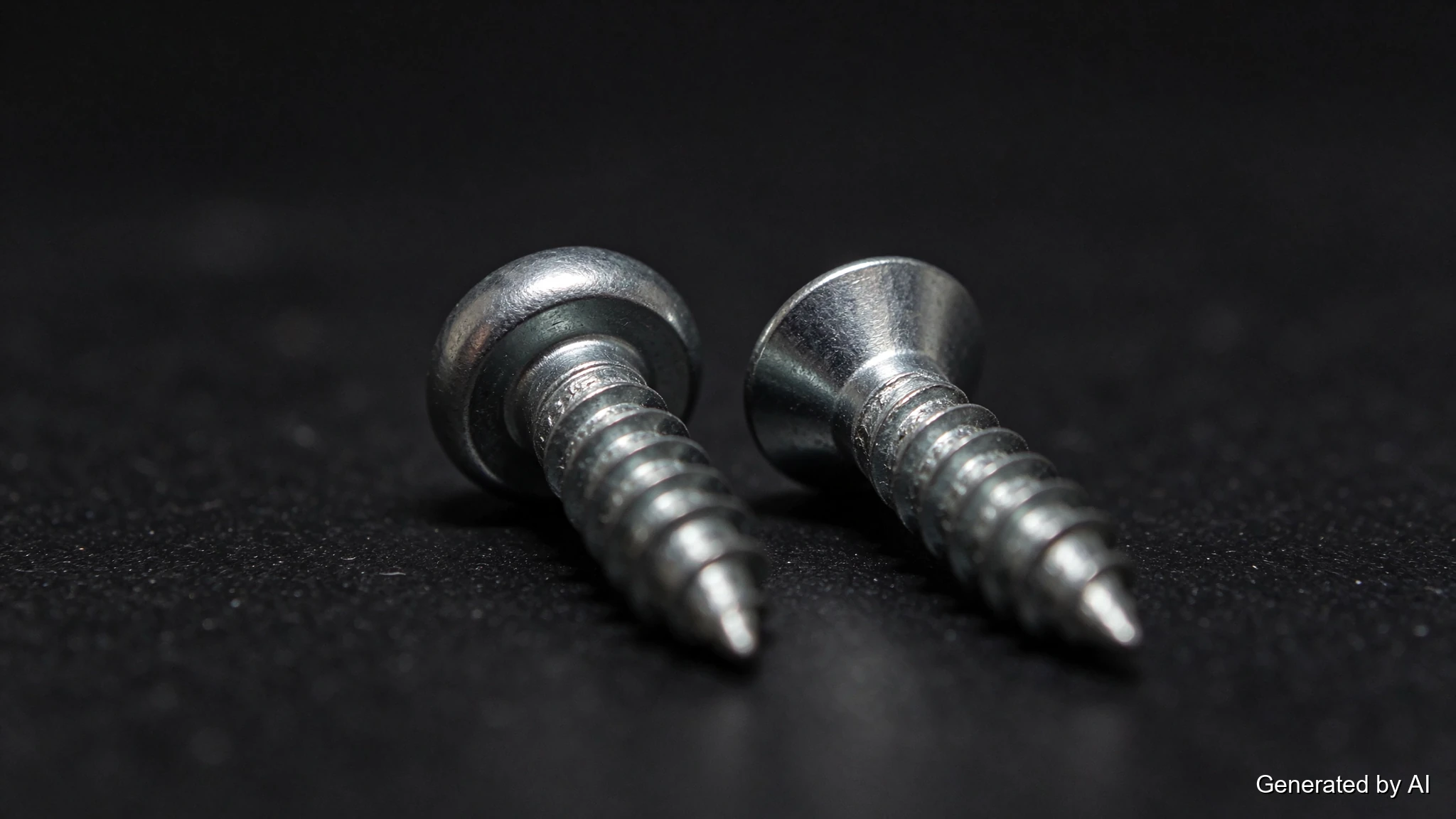
- Pan head: a rounded, slightly domed head that sits proud of the surface. Pan head self tapping screws are the general-purpose choice for sheet metal and plastic housings where flushness is not required.
- Countersunk head: a conical head designed to end flush inside a matching countersink. Used where the head must not protrude: slides, covers, mating surfaces.
- Hex washer head: a hex head with an integrated washer flange that spreads clamping load and speeds up driver alignment. Common on structural sheet work and outdoor equipment.
- Flange head: similar load-spreading idea in a flanged dome or hex, often with a serrated bearing face to resist loosening.
Head height also matters beyond flushness: a pan head adds standoff, a countersunk head consumes sheet thickness, and washer-faced heads tolerate oversized holes. When a housing cover meets a gasket, the head choice is as structural as the screw itself. Current self-tapping screw listings show most of these head families in one place, which is the fastest way to compare what each head actually looks like seated.
Drive Types: Phillips, Torx, and Hex
The drive recess decides how much torque reaches the thread before the bit cams out:
- Phillips: a widely used cross-shaped drive, but more prone to cam-out under excessive torque.
- Torx: a star-shaped drive that generally provides better torque transfer and reduced cam-out compared with Phillips drives.
- Hex (internal and external): available in both forms; hex drives can provide reliable torque transmission when properly sized and matched with the driver, and are common on hex washer and flange heads.
Match the drive to the required installation torque and screw design. Proper bit fit and controlled torque matter more than the drive name, because the thread, screw strength, or base material can fail before the recess does. A Phillips recess is more likely to cam out; Torx and hex generally tolerate more input before that happens — but neither raises the screw's own torque limit.
How to Choose: Material, Thickness, and Corrosion
A three-step selection covers most self-tapping screw decisions:
- Base material first, tip second. Self-drilling screws are suitable when drilling a pilot hole separately is undesirable; their use depends on the drill-point design, material properties, and total drilling thickness, so check the manufacturer's specified drilling capacity. Otherwise, match thread-forming tips to suitable ductile materials and thread-cutting tips to suitable metals, castings, or certain brittle plastics.
- Thickness and size second. Select the screw length from the total material thickness, head style, and required thread engagement; blind holes also need clearance at the bottom. Required engagement and protrusion depend on the joint design and screw specifications.
- Corrosion third. Stainless for outdoor and humid environments; zinc-plated steel for dry interiors; dissimilar-metal contact (stainless in aluminum) deserves a look at galvanic pairs for long-life outdoor joints.
Two installation details decide whether a correctly chosen screw still fails. The recommended pilot-hole diameter depends on the screw design, base material, material thickness, and required thread engagement — always follow the screw manufacturer's recommended pilot-hole dimensions. For thread-cutting screws in blind holes, leave enough space to accommodate the generated chips. Drive torque is the other half: a powered driver running clutch-free will over-run a formed thread in plastic or thin sheet in a fraction of a turn. Set the clutch on a scrap offcut so the screw seats and stops, and finish the last fraction by hand on the first parts of a run.
Gauge stacking, stainless grades, and aluminum-specific tips all change that first choice: self-tapping screws for metal need a gauge-and-coating pass on top of the same three steps.
Common Uses Across Assemblies
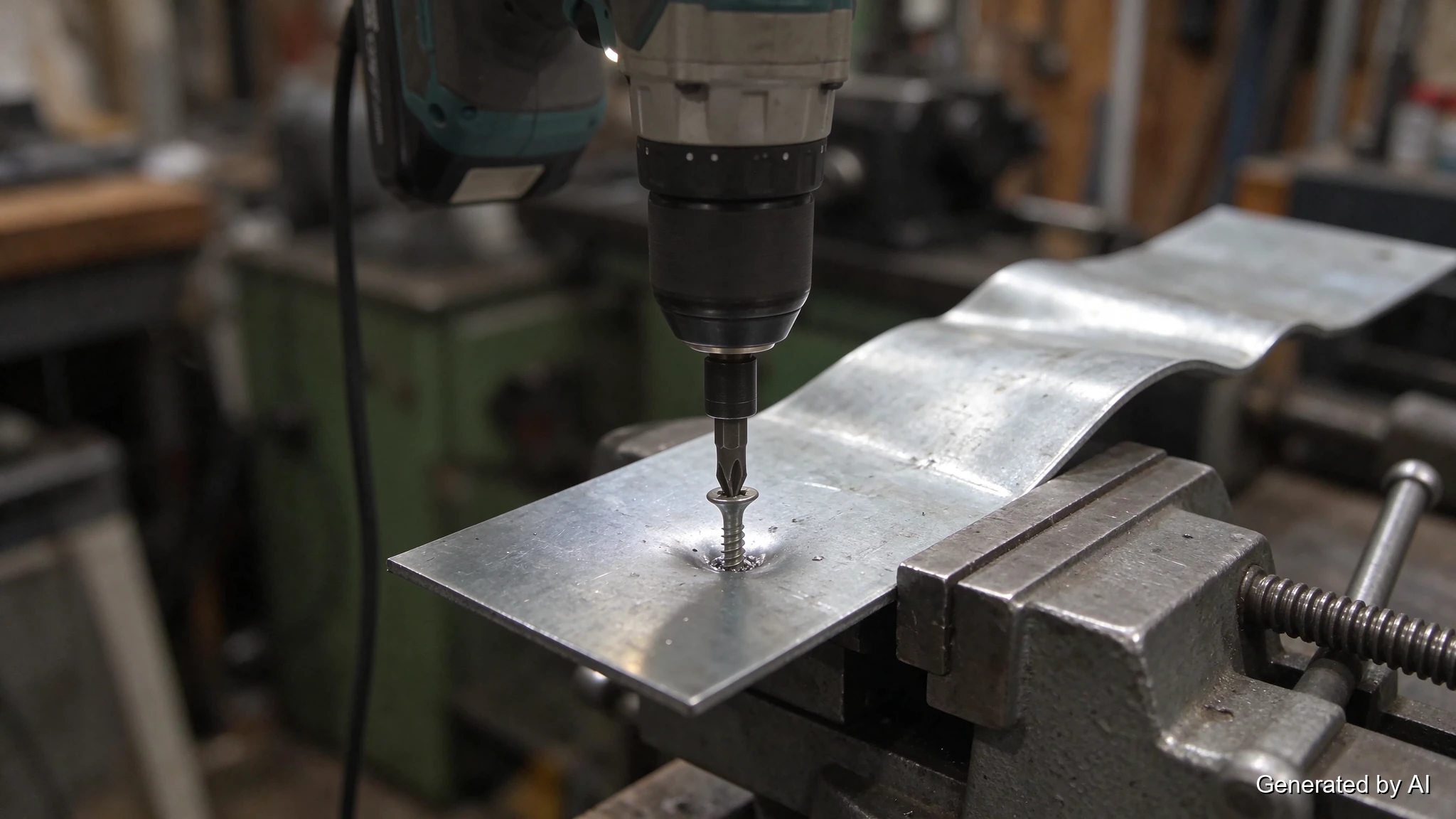
The family shows up wherever sheet, plate, or housings meet: enclosure covers and back panels, mounting electronics into aluminum extrusion frames, ducting and HVAC sheet work, appliance and equipment panels, and maintenance jobs where a tapped hole would be wasted effort. The same three-step selection applies across all of them, with material-specific detail added at the first step.
FAQ about Self-Tapping Screws
Q: What does a self-tapping screw do?
A self-tapping screw cuts or forms its own internal thread in the hole it enters, creating the mating thread as it is driven. The receiving part needs only a correctly sized hole, or none at all in the self-drilling case.
Q: What are the types of self-tapping screws?
By tip: thread-forming (displaces material), thread-cutting (removes chips), and self-drilling (carries a drill point). By head: pan, countersunk, hex washer, and flange. By drive: Phillips, Torx, and hex. The tip decides how the thread is formed, the head decides the seating, and the drive affects how reliably torque reaches the joint.
Q: What head styles are available for self-tapping screws?
Pan head sits proud for general covers, countersunk ends flush inside a countersink, hex washer spreads load with an integrated washer face, and flange heads combine a bearing surface with the head profile. The choice shows up in seating height and load spread.
Q: Can self-tapping screws be reused?
With reduced reliability. Re-driving into its own cut thread can over-cut the profile and loosen the fit, particularly in softer materials. For joints that are serviced repeatedly, a threaded insert gives the hole a durable internal thread instead.
Q: Do self-tapping screws work in metal?
Yes, which is their home territory: thread-cutting tips suit most metals and harder grades, thread-forming tips suit thin and ductile sheet, and self-drilling tips handle stacked steel framing. Self-tapping screws for metal add gauge, tip, and coating choices on top of the same three steps.
Q: What is the difference between pan head and countersunk self-tapping screws?
A pan head sits proud above the surface and needs no countersink; a countersunk head ends flush inside a pre-countered hole. Pan heads tolerate thicker joints and surface mounting; countersunk heads are for sliding parts, covers, and any surface that must stay flush.
About This Self-Tapping Screws Guide
This catalog treats a self-tapping screw as three decisions: the tip that matches the base material, the head that matches the seating, and the drive that matches the torque. Those three answers eliminate most of the family at once, and the links along the way carry each topic — the self-drilling comparison, the pre-drill question, and the metal-specific selection — to its dedicated guide.
When the screw is chosen, the rest is stock: matched screws and the variants in the JLCMC self-tapping listings cover the head and drive combinations above, sized to the joint rather than the other way around.
Popular Articles
Keep Learning
Self-Tapping Screws: Types, Head Styles & How to Choose
Key Takeaways Self-tapping screws cut their own mating thread as they are driven, so no pre-tapped hole is needed on the receiving part. The tip decides how the thread is made: thread-forming tips displace material in suitable ductile stock, thread-cutting tips remove it as chips, and self-drilling tips add their own drill point. Head style decides the seating: pan heads sit proud for surface mounting, countersunk heads end flush, and hex washer heads spread load over structural joints. Match the base......
Polyurethane Bumper Energy Calculation: Impact Kinetic Formulas, Stroke & Duty Cycles
Key Takeaways Impact energy depends on contact velocity squared, so a small speed change can materially alter the stopping event. Physical bumper height is not the same as permitted compression or usable stopping distance. Include work from a drive force that continues during compression, plus gravity or rotational effects where applicable. Hardness describes indentation resistance; it is not an energy rating or a complete force-deflection curve. Repeated impacts require a duty assessment as well as a......
Rubber Vibration Isolator Natural Frequency Calculation & Rigid Bypass Troubleshooting Standards
Key Takeaways Trace every mechanical connection between the isolated assembly and its surroundings, including services and guards. Compression, shear and tension are different loading conditions; use the data for the intended direction. A mount must be loaded appropriately, not merely kept below its maximum capacity. Keep deliberate retention hardware compatible with the movement needed for isolation. Compare vibration before and after changes at consistent operating conditions and measurement locatio......
What Is a Torx Screw? Star Drive and Security Torx Explained
If you have seen a screw with a six-point star recess, you have likely seen a Torx screw. So, what is a Torx screw? It is a screw with a six-lobe drive profile. You use a Torx bit to turn the screw. People often call this shape a star drive because of its six-lobe form. The standard Torx profile has six smooth, round lobes rather than sharp points. Other six-lobe drive profiles may look similar, but their dimensions can differ, and their tools may not be interchangeable. This shape gives the tool broa......
How to Drill Out a Stripped Screw Safely?
A stripped screw often turns a simple repair into a hard job. The driver slips because the screw recess no longer gives the bit a firm grip. A broken head or rusted screw creates a similar problem. Drilling screws out should come after simpler removal methods fail. Your goal is to remove enough metal to free the screw head without harm to the part. Good control matters more than force. A drill bit that moves off center might damage the hole or nearby surface. Start with a small bit and keep the drill ......
How to Remove a Stripped Hex Bolt: 7 Effective Removal Methods
A stripped hex bolt loses enough tool contact that a normal hex key or socket slips under force. The damage might affect an internal hex recess or the outer bolt head. Rust can make the problem worse because the thread then needs more force to turn. The safest stripped hex bolt removal method starts with a damage check. Use the least harsh option first, then move to stronger methods only if needed. Your main goal is to remove the bolt without harm to the thread or nearby part. What Is a Stripped Hex B......