Warehouse Scanning Systems: Complete Implementation Guide
11 min
- What Are Warehouse Scanning Systems?
- Types of Warehouse Scanner Hardware
- Essential Warehouse Scanning Workflows
- Warehouse Scanning Software Essentials
- Integration with WMS and ERP Systems
- Implementation Roadmap
- Cost Considerations and ROI Analysis
- Frequently Asked Questions
In today's rapidly evolving supply chain landscape, precision and efficiency are not merely competitive advantages, they are fundamental requirements for business survival. As order volumes surge and customer expectations for speed and accuracy reach unprecedented levels, warehouse scanning systems have emerged as critical infrastructure for organizations seeking to optimize their operations.
These sophisticated technological ecosystems serve as the nervous system of modern warehouses, capturing, processing, and transmitting critical data that drives informed decision-making across every facet of inventory management. From receiving docks to shipping stations, scanning systems create a digital thread that connects physical inventory movements with enterprise software platforms, enabling real-time visibility and control.
This comprehensive guide explores the essential components of warehouse scanning systems, examines various hardware and software options, and provides actionable implementation strategies to help organizations maximize their return on investment while achieving operational excellence.
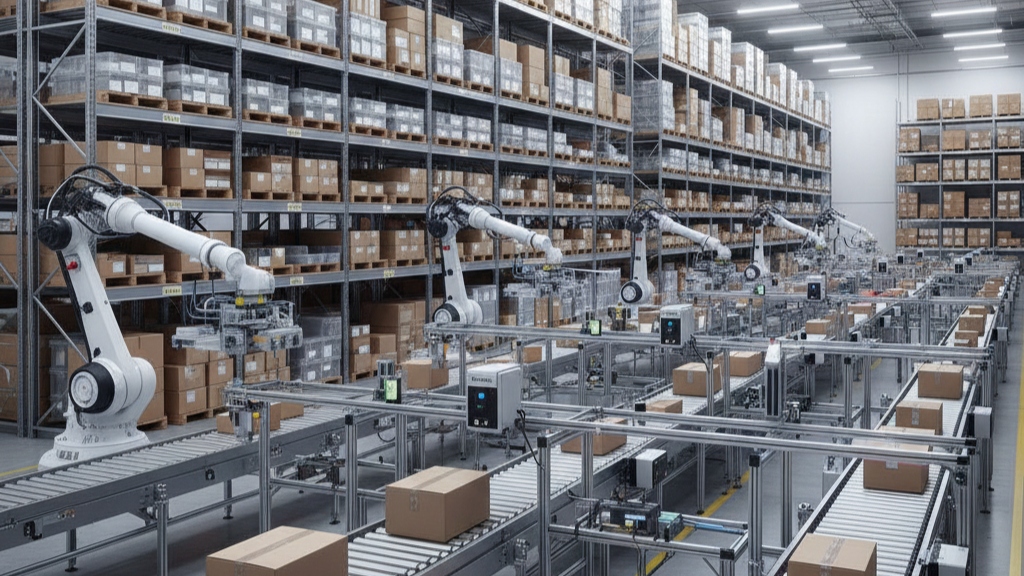
Example image of an automated warehouse scanning system.
What Are Warehouse Scanning Systems?
A warehouse scanning system represents an integrated combination of hardware and software technologies designed to digitize and automate inventory tracking throughout the supply chain. These systems capture essential data points including product locations, SKU details, batch numbers, expiration dates, and inventory quantities, providing organizations with unprecedented visibility into their warehouse operations.
The fundamental purpose of warehouse scanning systems extends beyond simple barcode reading. These comprehensive solutions enable businesses to:
• Eliminate manual data entry errors that cost organizations millions annually in mis-shipments and inventory discrepancies
• Accelerate operational workflows from receiving through shipping, reducing order cycle times by up to 50%
• Maintain perpetual inventory accuracy levels exceeding 99.5%, minimizing stockouts and overstock situations
• Enable data-driven decision making through real-time analytics and comprehensive reporting capabilities
• Support regulatory compliance and traceability requirements across industries including pharmaceuticals, food and beverage, and electronics
Types of Warehouse Scanner Hardware
Selecting the appropriate scanning hardware requires careful consideration of operational requirements, environmental conditions, and budget constraints. Each scanner type offers distinct advantages for specific use cases within the warehouse environment.
Handheld Barcode Scanners
Handheld scanners remain the most widely deployed scanning technology in warehouse environments due to their versatility, reliability, and cost-effectiveness. These devices are available in multiple configurations to address diverse operational needs:
• 1D Linear Imagers: Ideal for standard UPC and Code 128 barcodes, offering reliable performance at competitive price points
• 2D Area Imagers: Capable of reading both 1D and 2D symbologies including QR codes and Data Matrix, with superior damaged-code reading capabilities
• Laser Scanners: Provide extended scanning ranges up to 30 feet, excelling in high-bay warehouse applications
• Rugged Industrial Models: Engineered to withstand multiple drops to concrete, extreme temperatures, and exposure to dust and moisture
Modern handheld scanners offer multiple connectivity options including Bluetooth for wireless mobility, Wi-Fi for real-time data synchronization, and USB for tethered applications. Battery life considerations are critical for multi-shift operations, with premium models delivering 12+ hours of continuous scanning on a single charge.
Wearable Scanning Solutions
Wearable scanning technology has gained significant traction in high-volume fulfillment environments where worker productivity directly impacts operational costs. These hands-free solutions include:
• Ring Scanners: Lightweight devices worn on the finger, enabling single-handed picking and scanning operations
• Wrist-Mounted Units: Combine scanning capabilities with mobile computing power in a wearable form factor
• Voice-Directed Systems: Integrate scanning with voice prompts for eyes-free, hands-free operation
Organizations implementing wearable scanning solutions typically report productivity improvements of 15-25% in picking operations, along with reduced worker fatigue and improved ergonomics.
Fixed-Position and Automated Scanners
Fixed-position scanners are strategically mounted at critical points throughout the warehouse to enable automated data capture without human intervention. Common deployment locations include:
• Conveyor Integration: Omnidirectional scanners mounted above or beside conveyor lines capture package data at speeds exceeding 100 packages per minute
• Dock Door Applications: Automated scanning tunnels verify inbound and outbound shipments, eliminating manual check processes
• Sortation Systems: High-speed scanners direct packages to appropriate destinations based on barcode data
RFID Scanning Technology
Radio-frequency identification represents the next evolution in warehouse scanning technology, offering capabilities that extend beyond traditional barcode systems. RFID systems utilize radio waves to communicate between tags attached to items and readers that capture tag data without requiring line-of-sight access.
Key advantages of RFID warehouse scanning include simultaneous reading of multiple items, bulk scanning of entire pallets in seconds, enhanced durability of RFID tags compared to printed barcodes, and the ability to store substantial data directly on the tag. These capabilities make RFID particularly valuable for high-value inventory tracking, serialized product management, and cold chain monitoring applications.
Essential Warehouse Scanning Workflows
Effective warehouse scanning systems support comprehensive workflows that span the entire operational spectrum. Understanding these workflows is essential for designing an implementation strategy that delivers measurable business value.
Receiving and Putaway Operations
The receiving process represents the critical first opportunity to establish inventory accuracy. Scanning systems enable immediate verification of incoming shipments against purchase orders, flagging discrepancies for resolution before items enter inventory. Directed putaway functionality guides workers to optimal storage locations based on product velocity, dimensions, and storage requirements, establishing the foundation for efficient subsequent operations.
Inventory Management and Cycle Counting
Traditional annual physical inventory counts are increasingly being replaced by continuous cycle counting programs enabled by scanning technology. ABC classification methodologies prioritize counting frequency based on item value and movement velocity, with A-items counted weekly, B-items monthly, and C-items quarterly. This approach maintains perpetual inventory accuracy while eliminating the operational disruptions associated with full warehouse shutdowns.
Order Picking and Fulfillment
Scanning systems play a pivotal role in ensuring order accuracy during the picking process. Each item scan verifies the correct SKU, quantity, and location, preventing the mis-picks that lead to customer dissatisfaction and costly returns. Modern scanning solutions support multiple picking methodologies including single order, batch, zone, and wave picking, with scan verification ensuring accuracy regardless of the approach employed.
Packing and Shipping Verification
The packing station represents the final quality control checkpoint before orders enter the shipping stream. Scanning systems at pack stations verify order completeness, trigger automated label generation, and integrate with weight verification systems to catch errors before packages leave the facility. This multi-layer verification approach significantly reduces shipping errors and associated costs.
Warehouse Scanning Software Essentials
While hardware captures the data, software transforms that data into actionable business intelligence. Determining the optimal software carries the same weight as finalizing your scanning equipment.
Cloud-Based vs. On-Premise Solutions
| Factor | Cloud-Based | On-Premise |
| Upfront Costs | Lower initial investment | Higher capital expenditure |
| Maintenance | Automatic updates included | Requires internal IT resources |
| Accessibility | Anywhere with internet | Limited to internal network |
| Scalability | Highly scalable | Hardware-dependent scaling |
| Data Control | Vendor-managed security | Full organizational control |
Mobile Device Management
As scanning device fleets expand across warehouse operations, mobile device management (MDM) software becomes essential for maintaining security, deploying updates, and troubleshooting issues. MDM platforms enable IT teams to remotely configure devices, enforce security policies, and monitor device health across the entire fleet from a centralized dashboard.
Integration with WMS and ERP Systems
The true value of warehouse scanning systems is realized through seamless integration with existing enterprise software platforms. Real-time data synchronization between scanning devices and warehouse management systems (WMS) ensures that inventory records remain accurate and current, enabling proactive decision-making and preventing stockouts or overstock situations.
Modern scanning solutions utilize robust APIs and support industry-standard protocols including REST and SOAP to ensure fast, reliable data transfer. Integration with popular e-commerce platforms such as Shopify, Magento, and WooCommerce streamlines order fulfillment processes and provides customers with real-time shipment tracking information.
Implementation Roadmap
Successful warehouse scanning system implementation requires methodical planning and execution. The following roadmap provides a structured approach to deployment:
1. Current State Assessment: Document existing workflows, identify manual processes suitable for automation, and evaluate infrastructure readiness including network coverage and power availability.
2. Requirements Documentation: Define functional requirements, technical specifications, and success criteria. Prioritize requirements into must-have and nice-to-have categories to guide vendor selection.
3. Vendor Evaluation: Research providers with relevant industry experience, request demonstrations, check references, and conduct pilot programs with top candidates.
4. Timeline Development: Establish implementation milestones, allocate resources, and build contingency time for testing and issue resolution.
5. Training and Change Management: Develop comprehensive training programs, communicate benefits to staff, and establish support mechanisms for post-implementation success.
Cost Considerations and ROI Analysis
Warehouse scanning system investments encompass hardware acquisition, software licensing, implementation services, and ongoing maintenance. Understanding the total cost of ownership enables accurate ROI calculations and informed decision-making.
Hardware investment strategies should consider both upfront purchase costs and long-term total cost of ownership including maintenance, repairs, and battery replacement. Alternative acquisition models including equipment leasing and certified refurbished devices can reduce initial capital requirements while maintaining operational capabilities.
The ROI calculation for warehouse scanning systems should incorporate quantifiable benefits including labor cost savings from improved productivity, reduced error-related expenses, inventory carrying cost reductions, and revenue gains from improved order accuracy and faster fulfillment. The standard ROI formula is:
ROI = (Total Benefits - Total Costs) / Total Costs x 100
Organizations typically achieve positive ROI within 12-24 months of implementation, with benefits continuing to compound as operational efficiency improves and error rates decline.
To complement these strategic insights, mastering the practical application of your equipment is the next logical step toward total facility efficiency. Our detailed tutorial on how to use a barcode scanner offers a hands-on roadmap for training your workforce and optimizing daily scanning ergonomics. Once your team is equipped with the right techniques, pairing them with professional-grade hardware ensures long-term reliability. We invite you to explore the JLCMC Scanner portfolio, where industrial durability meets precision engineering, providing the robust performance needed to turn these high-level implementation strategies into a tangible competitive advantage.
Frequently Asked Questions
What is the best warehouse scanning system for small businesses?
Small businesses should prioritize scalable, cloud-based scanning solutions that balance affordability with growth capacity. Entry-level options include smartphone-based scanning applications for basic inventory tracking, progressing to dedicated handheld scanners as order volumes increase. When selecting a system, prioritize those with a scalable subscription structure, support for high-throughput concurrent collection, an intuitive user interface, and pre-integration with popular e-commerce platforms like Shopify and Amazon.
How do I choose between 1D and 2D barcode scanners?
1D scanners are sufficient for basic inventory tracking using standard UPC and Code 128 barcodes. However, 2D scanners offer superior future-proofing, capable of reading both 1D and 2D symbologies including QR codes and Data Matrix. Additionally, 2D imagers provide better performance with damaged or poorly printed codes and can capture images for documentation purposes. Industries requiring serialized tracking, such as healthcare and electronics, should invest in 2D scanning capabilities.
Can warehouse scanners integrate with existing WMS or ERP systems?
Yes, most modern scanning systems are designed for integration with existing warehouse management and enterprise resource planning platforms. The integration complexity depends on API availability, data format compatibility, and customization requirements. When evaluating solutions, verify the provider's experience with your specific WMS or ERP platform and inquire about pre-built connectors or middleware options that can simplify the integration process.
How do I calculate ROI for warehouse scanning systems?
Calculate ROI by comparing the total benefits against total costs over a defined period, typically three to five years. Quantifiable benefits include labor savings from improved productivity, reduced error-related costs, inventory carrying cost reductions, and revenue gains from faster fulfillment. Total costs encompass hardware, software licensing, implementation services, training, and ongoing maintenance. Divide the net benefit by total costs and multiply by 100 to express ROI as a percentage.
What are the most common implementation challenges?
Common implementation challenges include inadequate wireless network coverage causing connectivity issues, staff resistance to changing established processes, insufficient training leading to low adoption rates, compatibility issues between hardware and software systems, and scope creep resulting from poorly defined requirements. Mitigate these risks through comprehensive planning, infrastructure assessment, change management programs, and phased rollout approaches that allow for learning and adjustment.
How does RFID compare to traditional barcode scanning?
RFID offers several advantages over traditional barcode scanning, including the ability to read multiple items simultaneously without line-of-sight, bulk scanning capabilities for entire pallets, enhanced tag durability, and greater data storage capacity. However, RFID implementation costs are significantly higher, and the technology may be unnecessary for operations with simple tracking requirements. Many organizations employ hybrid approaches, using barcodes for general inventory and RFID for high-value or serialized items.
What scanning capabilities should I look for in a 3PL partner?
When evaluating third-party logistics providers, assess their scanning capabilities across several dimensions: real-time visibility into inventory and order status, modern hardware and software infrastructure, customizable workflows to accommodate your specific requirements, robust integration capabilities with your systems, and a demonstrated commitment to continuous improvement. Request documentation of their inventory accuracy metrics and inquire about their approach to technology upgrades and process optimization.
Keep Learning
The Essence of Barcode Symbology: A System of Data Encoding Rules
Introduction Most people only notice barcodes when something moves through a checkout counter or gets sorted in a warehouse. It's a quick flash of light, sometimes a beep, and then the moment is gone. But what's actually happening is more structured than it looks. A barcode is not just a visual pattern—it's a structured relationship between how data is encoded and how machines interpret it under imperfect conditions. In practice, that agreement is called a barcode symbology. And once you start looking......
Spot Common Barcode Scanner Issues Early to Prevent Business Losses
Barcode scanning sits quietly at the center of modern operations. From warehouse receiving docks to hospital inventory rooms and retail checkout counters, it enables speed, traceability, and accuracy at scale. When scanning works, workflows move seamlessly. When it doesn’t, even a small disruption can trigger inventory discrepancies, shipping delays, or reconciliation errors that ripple through the system. A recurring problem with barcode scanners rarely stems from sudden device failure. Instead, most......
Understanding 1D Barcode Technology: Types, Standards, and Applications
In today's fast-paced business environment, efficiency and accuracy are paramount. The 1D barcode, also known as a linear barcode, stands as one of the most transformative technologies in data capture and inventory management. From the checkout counters of retail stores to the complex supply chains of global logistics, these simple yet powerful codes have revolutionized how businesses track, manage, and process information. This comprehensive guide explores the world of 1D barcodes, examining their st......
Explore Barcode Scanner Types: Technology, Form Factor, and Practical Uses
If you have ever stood in a checkout line, watched a warehouse worker pull items from shelves, or seen a nurse scan a patient's wristband, you have witnessed barcode scanning in action. It is one of those technologies that has become so integrated into routine workflows that most people rarely think about what is actually happening when that red light flashes across a label. But for the people responsible for choosing, implementing, or maintaining these systems, the differences between scanner types m......
Barcode Scanner Basics: What It Is & How It Works
Originally used as a simple retail tool, barcodes have now evolved into a core technology widely applied across industries such as logistics, healthcare, manufacturing, and asset management. They play a key role in inventory management, compliance tracking, and real-time data processing, ensuring operational accuracy across various sectors. To truly understand the capabilities of barcode scanner technology, one must look beyond the printed label. The real impact comes from how quickly information is t......
Scan Code Types: What They Are & Why They Matter
Barcodes and matrix symbols quietly move products and components through every industry—from retail checkout lanes to medical equipment parts. Choosing the right scan code affects scanning speed, data accuracy, label durability, and long-term scalability. Some codes excel at rapid retail scanning. Others are engineered for tiny or curved surfaces, like surgical instruments, electronics, or micro-packaging. The right type ensures readable codes even when space is limited, or labels are damaged, while t......