Advantages and Disadvantages of Articulated Robots
10 min
- Introduction
- Advantages of Articulated Robots
- Disadvantages of Articulated Robots
- When Are Articulated Robots the Right Choice?
- Key Factors to Evaluate Before Choosing an Articulated Robot
- Frequently Asked Questions About the Pros & Cons of Articulated Robots
- Conclusion
Introduction
Articulated robots offer high flexibility, multi-axis movement, and the ability to handle complex manufacturing tasks, making them suitable for a wide range of automated applications. However, their advantages come with trade-offs, including higher initial investment, programming complexity, maintenance requirements, and safety considerations. Understanding these advantages and disadvantages helps manufacturers determine when articulated robots provide practical value and when other automation solutions may be more appropriate.
Advantages of Articulated Robots
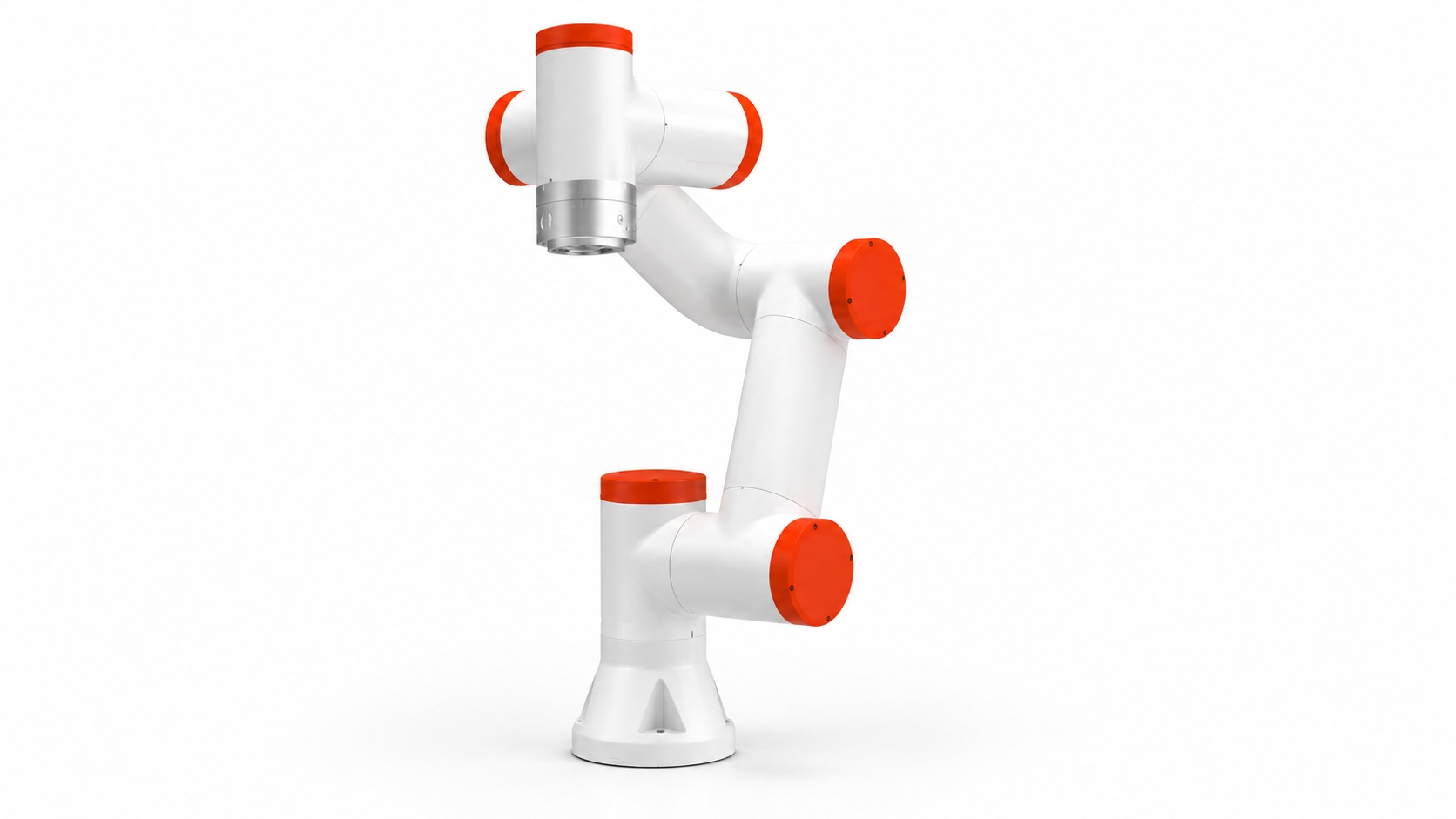
Articulated robots provide several operational advantages, particularly in applications that require flexible movement, precise positioning, and the ability to handle different tasks within the same workstation. Their multi-joint structure allows them to perform movements that would be difficult to achieve with simpler mechanical systems.
Key advantages include:
- High flexibility: Multiple joints allow articulated robots to adjust their posture and approach workpieces from different directions. This flexibility is particularly useful for tasks involving complex part geometries, confined access points, or changing tool orientations.
- Versatile working envelope: Articulated robots can reach different positions and work from multiple directions within a three-dimensional space. Their actual working envelope depends on arm reach, mounting configuration, joint limits, and surrounding obstacles, so the nominal reach alone does not determine usable coverage.
- Precision and repeatability: Properly selected, calibrated, and configured articulated robots can perform consistent positioning and precision operations. However, absolute positioning accuracy and repeatability are different performance measures. A robot may repeatedly return to the same position without accurately reaching the programmed target.
- Adaptability to multiple tasks: Changing the end effector and adjusting the robot program can allow the same system to handle different operations. For example, a robot may perform material handling, machine tending, and assembly tasks with appropriate tooling and application-specific configuration.
- Consistent automated operation: Articulated robots can perform repetitive movements with consistent timing and positioning, reducing variations associated with manual operations. When integrated with an appropriate production process, they can improve throughput and support more predictable production schedules.
- Complex motion capability: Multiple independently controlled joints enable articulated robots to follow continuous trajectories, change tool orientations, and approach workpieces from different angles. This makes them suitable for applications such as robotic welding, painting, dispensing, and complex assembly.
The main advantage of articulated robots is their combination of movement flexibility and task adaptability. They do not necessarily provide the highest speed, lowest cost, or greatest precision for every application. Their value depends on whether the complexity of the task justifies the capabilities of the robot and whether its configuration matches the production requirements.
Disadvantages of Articulated Robots
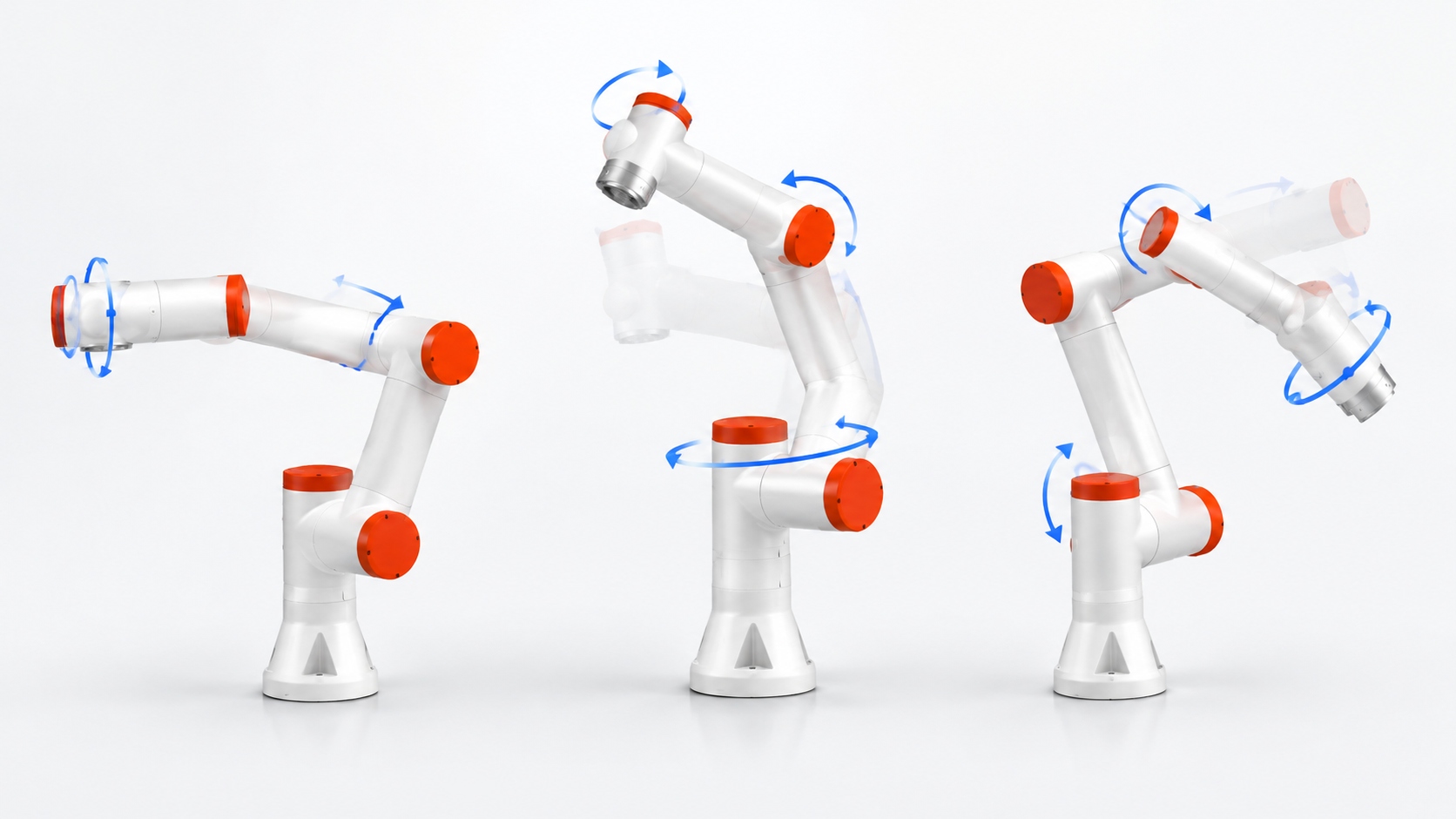
Despite their flexibility, articulated robots introduce several technical and economic challenges. These limitations are particularly relevant when evaluating installation costs, production cycle times, programming resources, and long-term equipment reliability.
Key disadvantages include:
- High initial and integration costs: The purchase price of the robot is only one part of the total investment. A complete installation may also require a controller, end effector, fixtures, sensors, peripheral equipment, safety devices, programming, and system integration. These additional costs can make articulated robots less economical for simple operations with limited production volume.
- Programming and setup complexity: Coordinating multiple axes requires appropriate configuration of coordinate systems, motion paths, joint limits, and tool positions. Programming and commissioning may take additional time, especially when applications involve complex trajectories, frequent product changes, or tight process tolerances. Effective deployment also requires personnel with relevant technical skills.
- Cycle-time limitations in certain tasks: Multi-axis movement does not automatically result in faster production. For simple, fixed, and highly repetitive operations, the additional motion flexibility may provide little practical benefit. Actual cycle time depends on trajectory length, payload, acceleration and deceleration limits, positioning requirements, and the process itself.
- Maintenance and downtime: Articulated robots contain mechanical transmission components, lubrication systems, cables, motors, and other parts that require periodic inspection and maintenance. Wear, component failure, or improper maintenance can affect positioning performance and equipment availability. Unexpected downtime may also interrupt upstream and downstream production processes.
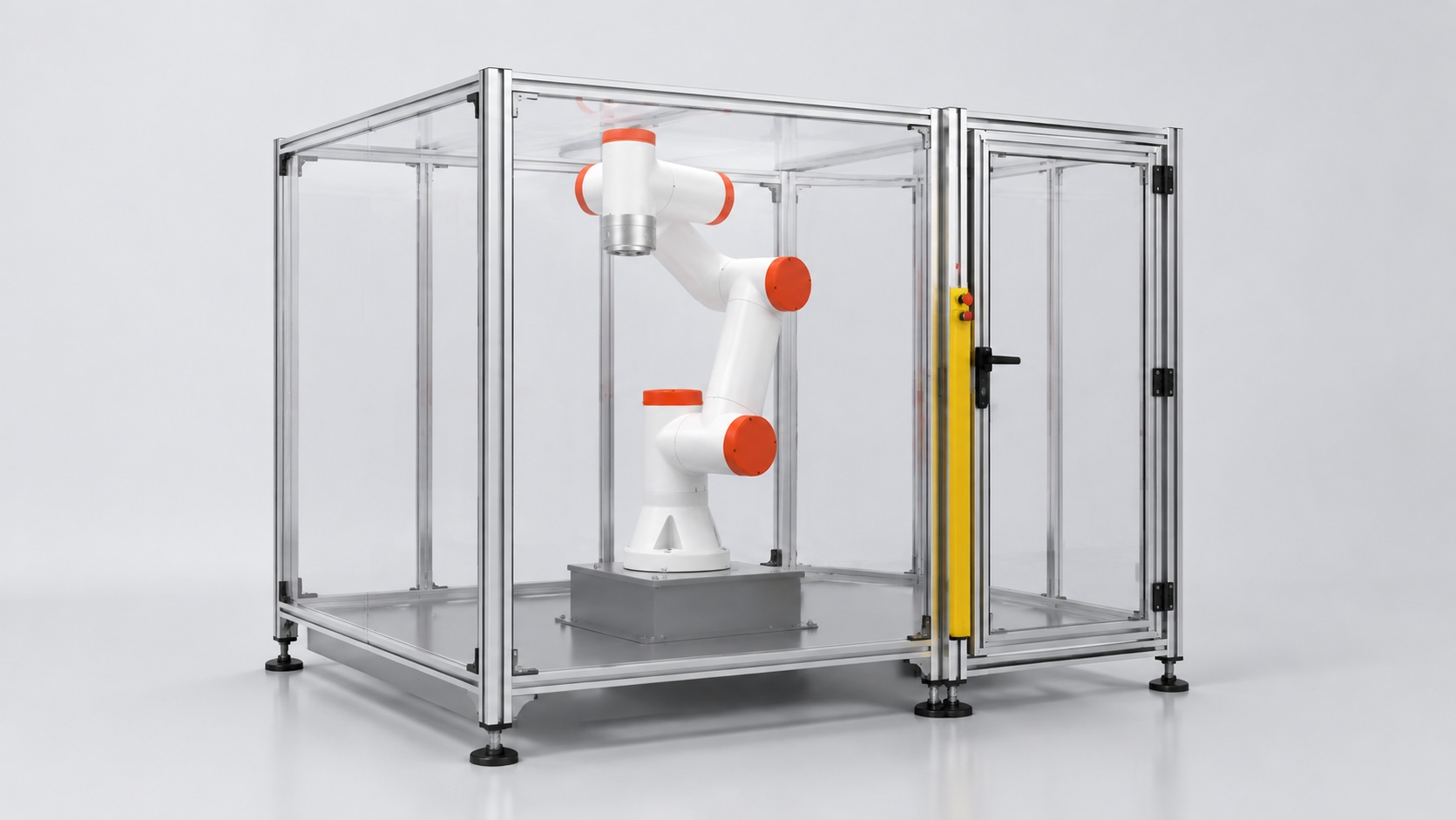
- Safety and workspace requirements: The robot's movement range and potential collision hazards require careful workstation planning. Guarding, safety sensors, interlocks, emergency stops, and other protective measures may be necessary depending on the application and risk assessment. These requirements can increase installation costs and limit how equipment and personnel are arranged around the robot.
- Payload and reach trade-offs: Payload capacity and arm reach must be evaluated together with the required movement and performance. A robot's rated payload does not necessarily represent its effective capacity under every configuration. Long arm extension, unfavorable joint positions, and additional tooling can affect achievable speed, stiffness, and positioning performance.
These disadvantages do not make articulated robots inherently uneconomical or difficult to operate. They indicate that the actual cost and deployment complexity depend on the application, production environment, and available technical resources. A robot that is unnecessarily complex for a simple task may increase costs without delivering proportional productivity gains.
When Are Articulated Robots the Right Choice?
Articulated robots are most suitable when their movement flexibility and ability to handle complex tasks provide measurable operational benefits. The decision should account for production requirements, available space, investment constraints, and the technical capabilities of the team responsible for deployment.
The following comparison provides a practical starting point for evaluating their suitability.
| Evaluation Factor | Articulated Robots Are a Good Fit When... | Reconsider the Choice When... |
| Task complexity | Operations require multiple orientations, complex trajectories, or access to workpieces from different directions. | Movements are simple, fixed, and do not require multi-axis flexibility. |
| Production needs | Multiple operations, product variations, or frequent changeovers require adaptable automation. | Maximum cycle speed for a single standardized operation is the primary objective. |
| Budget | Expected long-term automation benefits can justify integration, operating, and maintenance costs. | Initial investment and total implementation costs are strictly limited. |
| Workspace | Sufficient space is available for the robot, workpieces, peripherals, and required safety measures. | Equipment layout is restricted or cannot accommodate the necessary working envelope and safety provisions. |
| Technical resources | The team has the programming, commissioning, troubleshooting, and maintenance capabilities needed to support the system. | Necessary technical support is unavailable and cannot be reasonably supplemented. |
Articulated robots are generally worth considering when flexibility and complex motion capabilities create clear production value. When operations are simple, highly standardized, and subject to strict cycle-time or cost constraints, other automation solutions may be more appropriate. The decision should reflect the actual demands of the process rather than the general capabilities of the robot.
If your application requires flexible multi-axis movement urgently, explore JLCMC's articulated robot arms. With different axis configurations, reaches, and working radii available, you can compare options based on your payload, workspace, and automation requirements before selecting a suitable model.
Key Factors to Evaluate Before Choosing an Articulated Robot
Selecting an articulated robot requires more than matching a model's specifications to a basic application description. Several technical and operational factors should be verified under realistic working conditions before making an investment decision.
- Total Cost of Ownership (TCO): Evaluate the full cost over the expected service life of the system, including robot procurement, tooling, integration, installation, energy consumption, routine maintenance, spare parts, and potential downtime. A lower purchase price does not necessarily result in a lower long-term operating cost.
- Payload and Reach: Confirm that the robot can handle the actual workpiece and end effector while maintaining the required reach and movement capability. The combined weight of the workpiece, tooling, and associated accessories must be considered. Also check whether the required positions fall within the robot's usable working envelope.
- Cycle Time and Performance: Evaluate cycle time using the actual payload, target trajectory, and process requirements. Manufacturer specifications provide useful reference values, but real production performance may differ because of acceleration limits, path constraints, positioning accuracy requirements, and peripheral equipment response times.
- Programming and Maintenance Capability: Assess whether the engineering team can configure, program, commission, and troubleshoot the robot. Long-term maintenance resources are equally important. Consider the availability of trained technicians, replacement components, technical support, and the documentation needed to maintain consistent operation.
- Safety and Integration Requirements: Examine the workstation layout, robot movement range, potential collision points, and how personnel interact with the equipment. Determine the necessary guarding and safety control measures through an appropriate risk assessment. Integration with existing machinery, sensors, controllers, and production systems should also be verified.
These factors should be validated against the intended operating conditions before procurement. Relying exclusively on a robot's specification sheet or initial purchase price can overlook important performance constraints and long-term costs.
Frequently Asked Questions About the Pros & Cons of Articulated Robots
What Is the Biggest Advantage of an Articulated Robot?
The biggest advantage of an articulated robot is its multi-axis flexibility. Multiple joints allow it to change orientation, approach workpieces from different directions, and execute complex motion paths. This makes it particularly useful for tasks such as welding, painting, and assembly. However, the practical value of this flexibility depends on the complexity and requirements of the application.
What Is the Biggest Disadvantage of an Articulated Robot?
The main disadvantages are relatively high initial investment, integration complexity, and ongoing maintenance requirements. The most significant cost driver varies between projects. For one application, specialized tooling and safety equipment may dominate the budget, while another may require substantial programming resources or incur higher costs from production downtime.
Are Articulated Robots Expensive to Maintain?
Maintenance costs depend on the robot model, operating conditions, workload, and maintenance strategy. Regular inspections, lubrication, cable checks, and replacement of worn components contribute to routine expenses. Access to spare parts and qualified technicians also affects maintenance costs. Unexpected failures can be more expensive because downtime may interrupt the entire production process.
Are Articulated Robots Suitable for Small Manufacturing Businesses?
Articulated robots can be suitable for small manufacturing businesses when production volume, labor requirements, and task complexity justify the investment. Applications involving repetitive handling, welding, or machine tending may offer opportunities for automation. However, businesses should evaluate integration costs, available technical support, production utilization, and expected return on investment before purchasing a system.
Are Articulated Robots Suitable for High-Precision Applications?
Yes. Articulated robots can be used in certain high-precision applications, including assembly, dispensing, and robotic machining operations. Suitability depends on the specific model's positioning accuracy, repeatability, payload, structural stiffness, and calibration requirements. Process factors such as tooling, workpiece positioning, temperature variation, and external measurement systems can also influence the final result.
What Should Be Considered Before Investing in an Articulated Robot?
The main considerations include working envelope, payload capacity, required cycle time, positioning performance, integration requirements, total cost of ownership, and workplace safety. Manufacturers should also assess programming and maintenance capabilities. These factors need to be evaluated against actual production conditions to determine whether the selected robot can meet both current and expected operational requirements.
Conclusion
Articulated robots offer significant advantages in applications that require flexible movement, multiple working orientations, and the ability to perform complex automated tasks. However, these capabilities come with trade-offs in initial investment, programming, integration, maintenance, and safety requirements. Choosing the right system requires evaluating task complexity, performance targets, total cost of ownership, and production conditions together. When the robot's capabilities match the demands of the application, it can provide substantial long-term automation value.
For an affordable automation solution, explore JLCMC's robot lineup, featuring 4-axis and 6-axis robotic arms for a wide range of industrial applications. With entry-level models starting at just $2,000, JLCMC makes industrial robotic automation more accessible.
Keep Learning
How to Measure Thread Size: Pitch, TPI & Bolt Threads
Key Takeaways How to measure thread size comes down to two numbers: the major diameter (measured across the thread crests) and the pitch, which is threads per inch (TPI) on inch threads and millimeters between crests on metric threads. A thread pitch gauge is the purpose-built tool: fan out the blades, find the one whose teeth mesh with no visible gaps, and read the size stamped on it. Measure the major diameter with a caliper across a full thread, away from the chamfered end; the reading narrows the ......
Advantages and Disadvantages of Articulated Robots
Introduction Articulated robots offer high flexibility, multi-axis movement, and the ability to handle complex manufacturing tasks, making them suitable for a wide range of automated applications. However, their advantages come with trade-offs, including higher initial investment, programming complexity, maintenance requirements, and safety considerations. Understanding these advantages and disadvantages helps manufacturers determine when articulated robots provide practical value and when other autom......
Types of Taps: A Complete Guide to Tap and Die Types
Key Takeaways Types of taps differ mainly in three ways: where the chips go (spiral point vs spiral flute), how the thread is formed (cut vs form), and how much lead taper the front carries (taper, plug, bottoming). Hand taps come as a three-piece set — taper, plug, and bottoming — distinguished by the length of the chamfered lead, and the right one depends mainly on whether the hole goes through. Spiral point taps push chips forward ahead of the cut and suit through holes; spiral flute taps pull chip......
Metric Screw Size Chart: M1–M24, Pitch & Tap Drill
Key Takeaways The M in an M8 bolt is the major diameter in millimeters: M8×1.25 reads as an 8mm outer diameter with a 1.25mm thread pitch, and coarse pitch is assumed when the pitch is not written. The metric screw size chart below covers the ISO coarse series M1–M24 with pitch, inch equivalents, and the common tap drill for each size. M8 and 5/16 inch sit only 0.06mm apart on diameter, but their thread pitches come from different systems; the two look-alikes must not be mixed in one assembly. Fine pi......
Drill Bit Size Chart: Number, Letter, Fractional & Metric
Key Takeaways A drill bit size chart has to cover four systems — fractional (inches), number (#1–#80), letter (A–Z), and metric (mm) — because the same physical diameter can carry three different callouts. Number sizes provide intermediate diameters between standard fractional-inch drill sizes, allowing finer selection where 1/64-inch increments are too coarse — which is why a 1/4-20 tap takes a #7 drill (0.201 inch). Convert decimal inches to millimeters by multiplying by 25.4; the charts below give ......
2-Bolt vs. 4-Bolt Flange Bearing Units: Selection Differences That Matter
Key Takeaways Housing geometry and space: A two-bolt flange bearing unit normally uses an oval or diamond-shaped housing, making it ideal when the mounting face is narrow or access is limited. Bolt count vs. capacity: A four-bolt flange bearing unit normally uses a square housing suited for wider interfaces, but bolt count alone does not establish the unit's load capacity. Machine interface priority: Choose the housing pattern based on the machine interface first. Then verify shaft size, published loa......