Self-Drilling vs Self-Tapping Screws: What Is the Difference?
8 min
- Self-Drilling vs Self-Tapping: Quick Answer
- What Is a Self-Tapping Screw?
- What Is a Self-Drilling Screw?
- Are Self-Drilling Screws Also Self-Tapping?
- How to Choose for the Material and Joint
- Installation Sequence and Common Failure Modes
- Common Uses
- Frequently Asked Questions
- Choose the Right Screw for the Job
People often treat self-drilling and self-tapping screws as the same fastener. The two terms have a close link, but they do not mean the same thing.
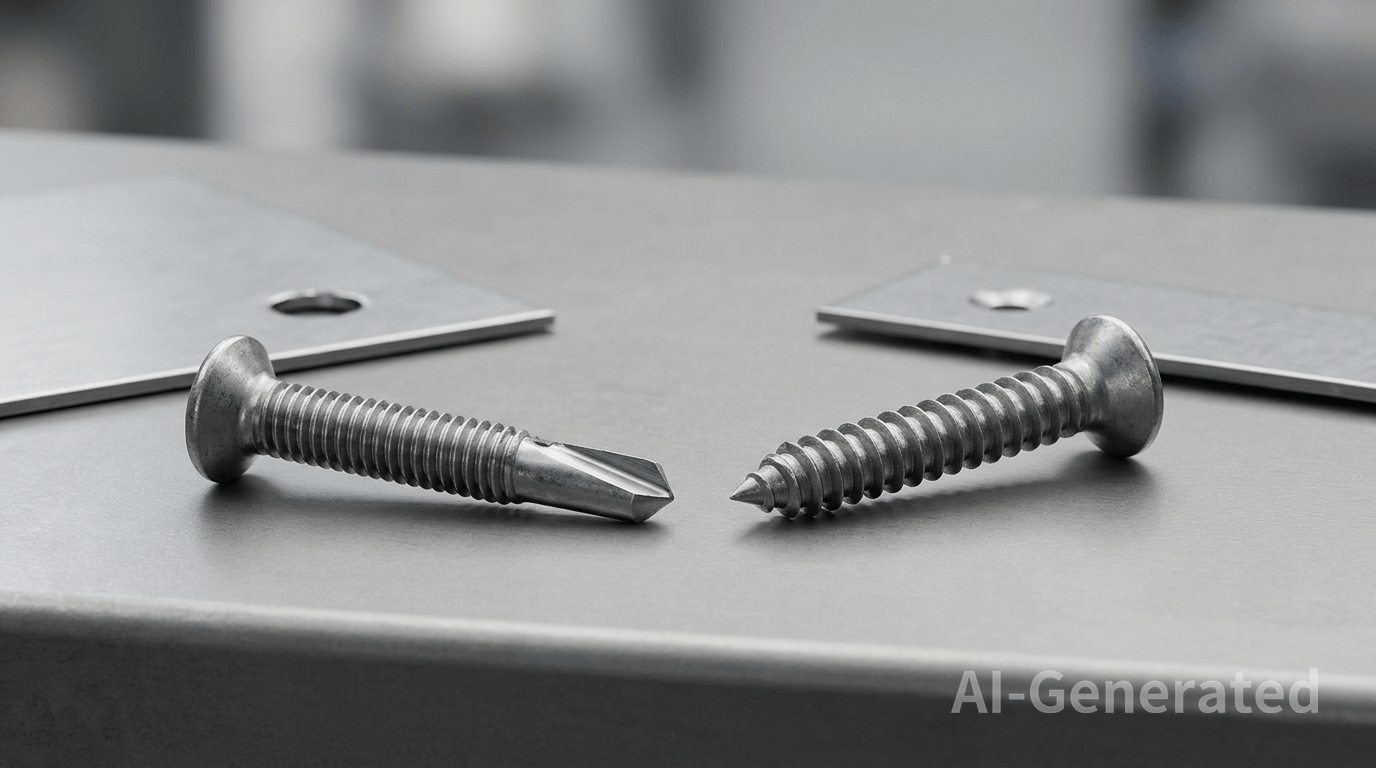
A self-tapping screw forms or cuts its own matching thread as you drive the screw into a suitable base material. Depending on the screw design and material, some self-tapping screws need a pre-drilled pilot hole, while others can be installed directly. A self-drilling screw is a type of self-tapping screw with a drill point at the tip, which drills the hole before the threaded section engages the base material. Hilti describes self-drill screws as self-tapping screws with a drill point.
The main difference comes down to hole prep. Once you know what the tip does, the choice becomes much easier.
Self-Drilling vs Self-Tapping: Quick Answer
Here is a quick look at self-drilling, self-tapping screws and standard self-tapping screws.
| Feature | Self-Tapping Screw | Self-Drilling Screw |
| Creates its own hole | Not in every case; no dedicated drill point | Yes, within its rated capacity |
| Creates its own thread | Yes | Yes |
| Tip | Pointed or blunt, based on type | Drill-style point |
| Pilot hole | Depends on the screw type, base material, and maker's specifications | Usually not needed |
| Main benefit | Creates thread in the base material | Creates hole and thread in one step |
Bossard notes that self-drilling screws remove the separate pilot-hole step for suitable metal work. The screw drills the hole before the thread enters the base material.
What Is a Self-Tapping Screw?
Thread-Form or Thread-Cut Types
A self-tapping screw creates its own thread as you drive it into the base material. Some types push material aside to form the thread. Other types cut material from the hole. A self-tapping screw does not always create the first hole. Some jobs need a pilot hole before you insert the screw.
For example, Bossard shows self-cut screws that first require a drilled or cast pilot hole. The screw then cuts an internal thread into that hole. This point often causes confusion. "Self-tapping" refers to the screw's effect on the thread. It does not always mean the screw drills through solid material on its own.
The correct pilot-hole size matters. A hole that is too large shortens the thread engagement and reduces holding strength. A hole that is too small raises installation torque and can lead to screw breakage, thread damage, or cracking of the base material. The recommended pilot-hole size depends on the screw design and the base material, so follow the maker's specifications.
What Is a Self-Drilling Screw?
Drill Point Followed by Its Thread
People often ask, what is a self-drilling screw? It is a self-tapping screw with a drill-style point at the tip. The point cuts a hole before the threaded part reaches the material. The drill point looks similar to the tip of a small drill bit. Once the point passes through the material, the thread follows into the new hole.
This makes self-drilling and tapping screws useful where you want to reduce hole prep. You still need to match the screw to the material thickness. JLCMC states that makers offer drill points in several lengths for different steel thickness ranges.
If someone asks, What's a self-drilling screw, check the tip first. A clear drill-style point gives you the easiest clue.
If you're working with sheet metal or steel assemblies, choosing the right drill point and drilling capacity is essential. Explore JLCMC self-drilling screws to find fasteners suited to your material thickness and joint requirements.
Are Self-Drilling Screws Also Self-Tapping?
The Category Link
Yes. Self-drill screws fall under the self-tapping category because they create their own thread after the drill point makes the hole. Hilti states this relationship directly.
The reverse is not true. A standard self-tapping screw might need a pilot hole, so it does not always count as a self-drill screw.
This is why the phrase self-tapping self-drilling screws needs some care. Every self-drill screw has a self-tapping function. Not every self-tapping screw has a drill point.
People also use self-drilling self-tapping as a product term. Check the actual tip instead of relying only on the product name.
How to Choose for the Material and Joint
Base Material and Total Drill Thickness
Start with the base material and the total thickness the drill point must pass through. A self-drill screw has a set drill capacity. Check the drill capacity the maker rates for that specific screw and application. For a joint made of several material layers, confirm the total thickness falls within the rated drilling range. Hilti states that screw point choice should match the rated drill capacity for the base steel. Then check the screw length, thread length, and clamping requirements separately. A screw that can drill through the material is not necessarily the right length for the joint, and the overall screw length does not determine its drilling capacity.
Next, check whether the job already has a pilot hole. If a correct pilot hole exists, a standard self-tapping screw might suit the joint. Think about corrosion needs too. Outdoor work often needs a screw finish that suits the site.
The head also matters. Some joints need a broad head for load spread. Others need a washer under the head for seal support. When people compare self-drilling and self-tapping screws, the best choice depends on the joint rather than the name alone.
Installation Sequence and Common Failure Modes
Point Capacity and Drill Speed
For a self-drilling screw, place the point at the correct spot. Keep the tool straight with the screw. Start at a controlled speed. Let the drill point cut through the material before the thread takes full load.
Do not push a drill point beyond its rated thickness. A point that cannot pass through the material may get hot or dull, but failure can also come from other causes: base material hardness or thickness beyond the screw's range, unsuitable tool speed or axial pressure, a screw that is not perpendicular to the work surface so the point drifts, or a worn point that builds too much heat in the cut. Do not assume more axial pressure will fix a failed drilling job, because excessive pressure can damage the drill point or overload the screw before the hole is complete. Hilti also calls for a screw tool with variable speed and a position perpendicular to the work surface for its self-drilling fasteners.
Once the thread enters the hole, keep the screw straight. Stop when the head reaches the joint as the product guide requires. Too much force after full seat can strip the new thread. Too little force can leave a loose joint.
With a self-tapping screw and pilot hole, check the hole size before you start. The screw needs enough material for the thread to hold. If the screw spins with no grip, remove it and inspect the hole. Do not keep the tool on the screw.
Common Uses
People often use self-drill screws with sheet metal. They also appear in steel framework where the selected screw matches the base thickness. Some self-drill products also suit a metal sheet-to-timber joint. Hilti notes this use for certain reduced-diameter drill points.
Self-tapping screws have a wider range of forms. You see them in metal and plastic parts. The exact screw must suit the base material.
Bossard notes that some self-tapping screw types work with polymer materials without a pilot hole. The choice still depends on the material. This answers another common question: what are self-drilling screws? They are fasteners with a drill point plus a thread that follows through the new hole.
Frequently Asked Questions
Do self-tapping screws need a pilot hole?
Some do. The need depends on the screw type, the base material, and the maker's installation specifications.
Can self-drilling screws go into wood or plastic?
Some products suit those materials, but you should check the maker's specs first. Do not assume a metal self-drilling screw suits every base.
What does a drill-point screw look like?
The tip looks like a small drill bit. The threaded section starts behind the drill point.
Choose the Right Screw for the Job
People often search for self-drilling and tapping screws because they want one fastener to make the hole and form the thread. A self-drill screw serves this role when its drill capacity suits the material. If you still ask what a self-drilling screw is, remember one simple clue. Look at the tip. A drill-style point separates it from a standard self-tapping screw.
For self-tapping self-drilling screws, check the point capacity before you buy them. For a standard self-tapping screw, check whether a pilot hole is needed. A good match protects the screw and gives the thread the grip it needs.
The best choice depends on your base material, hole preparation, and drilling requirements. Explore JLCMC fastener options to help identify screws that match your project's installation needs.
Popular Articles
Keep Learning
What Is a Torx Screw? Star Drive and Security Torx Explained
If you have seen a screw with a six-point star recess, you have likely seen a Torx screw. So, what is a Torx screw? It is a screw with a six-lobe drive profile. You use a Torx bit to turn the screw. People often call this shape a star drive because of its six-lobe form. The standard Torx profile has six smooth, round lobes rather than sharp points. Other six-lobe drive profiles may look similar, but their dimensions can differ, and their tools may not be interchangeable. This shape gives the tool broa......
How to Drill Out a Stripped Screw Safely?
A stripped screw often turns a simple repair into a hard job. The driver slips because the screw recess no longer gives the bit a firm grip. A broken head or rusted screw creates a similar problem. Drilling screws out should come after simpler removal methods fail. Your goal is to remove enough metal to free the screw head without harm to the part. Good control matters more than force. A drill bit that moves off center might damage the hole or nearby surface. Start with a small bit and keep the drill ......
How to Remove a Stripped Hex Bolt: 7 Effective Removal Methods
A stripped hex bolt loses enough tool contact that a normal hex key or socket slips under force. The damage might affect an internal hex recess or the outer bolt head. Rust can make the problem worse because the thread then needs more force to turn. The safest stripped hex bolt removal method starts with a damage check. Use the least harsh option first, then move to stronger methods only if needed. Your main goal is to remove the bolt without harm to the thread or nearby part. What Is a Stripped Hex B......
Self-Drilling vs Self-Tapping Screws: What Is the Difference?
People often treat self-drilling and self-tapping screws as the same fastener. The two terms have a close link, but they do not mean the same thing. A self-tapping screw forms or cuts its own matching thread as you drive the screw into a suitable base material. Depending on the screw design and material, some self-tapping screws need a pre-drilled pilot hole, while others can be installed directly. A self-drilling screw is a type of self-tapping screw with a drill point at the tip, which drills the ho......
Self-Drilling Screw Types and How to Choose Them
Self-drilling screws come in several forms for different jobs. The main differences appear in the drill point, head style, thread form, and screw material. Each feature affects how the screw enters the base material and how the final joint holds. A good choice starts with the material type and total material depth. People often compare self-drilling screw types by head shape alone. The drill point matters just as much because it must pass through the full material stack. Self-Drill Screw Types at a Gl......
Torx Screw Types and How to Identify Them
Torx screws use a six-lobe drive profile. The shape gives the bit broad contact with the recess, so the tool fits with less slip than many older drive styles. You still need the right bit size and drive form. A loose bit often harms the recess. People often group every star screw under one name. That leads to wrong bit choice. The main Torx screw types differ by drive location and lobe shape. Some also use a center pin for access control. If you know what to look for, you save time and protect the scr......