Self-Drilling Screw Types and How to Choose Them
7 min
- Self-Drill Screw Types at a Glance
- Drill-Point Styles and Capacity
- Common Head Styles
- Thread and Shank Features
- Material and Corrosion Factors
- Application-Based Selection
- Installation Checks and Common Faults
- Frequently Asked Questions
- Choose the Right Self-Drill Screw
Self-drilling screws come in several forms for different jobs. The main differences appear in the drill point, head style, thread form, and screw material. Each feature affects how the screw enters the base material and how the final joint holds. A good choice starts with the material type and total material depth.
People often compare self-drilling screw types by head shape alone. The drill point matters just as much because it must pass through the full material stack.
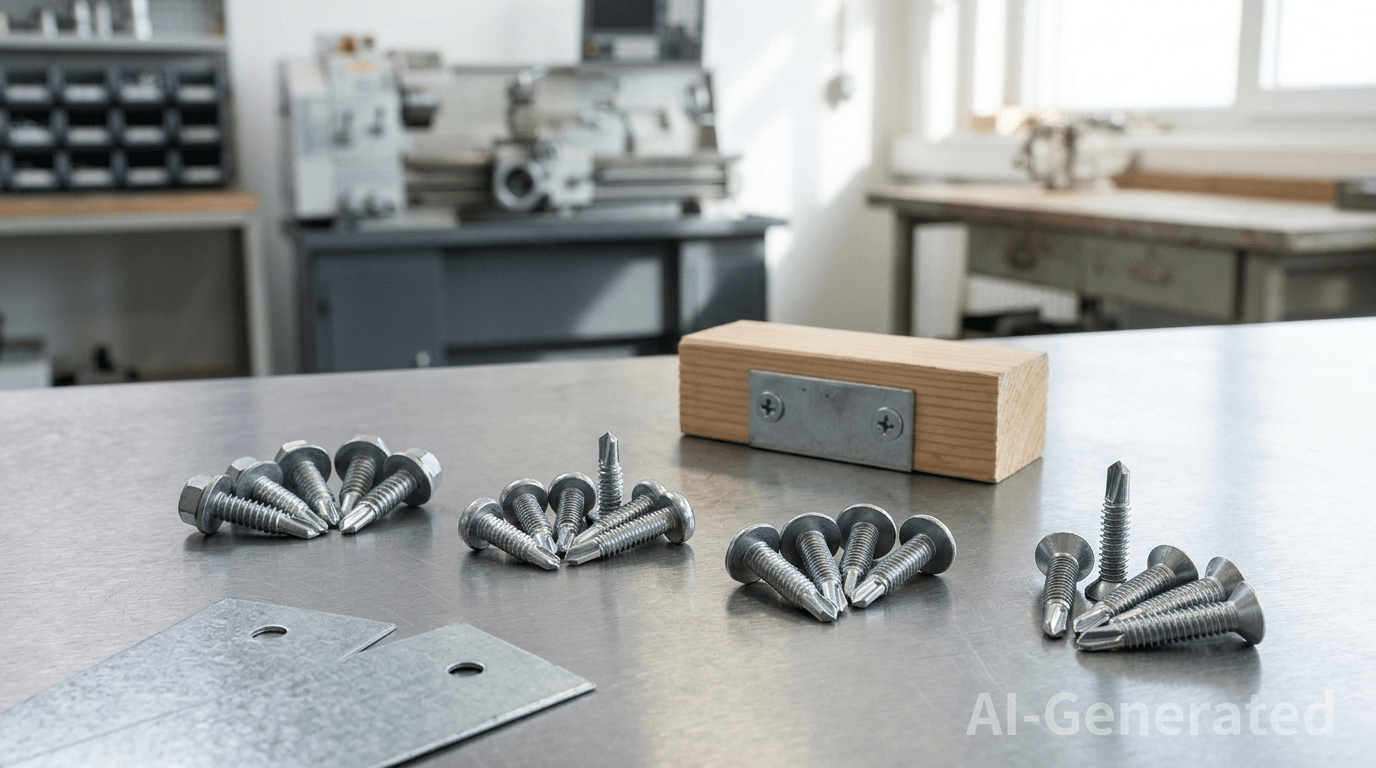
Self-Drill Screw Types at a Glance
You can group self-drill screws by drill point and head style. Thread form also helps separate one screw from another. Material and surface finish affect where the screw suits the job. The final choice should match the joint rather than one feature alone.
| Feature | Main Options | What to Check |
| Drill point | Short or long point styles | Total material depth |
| Head | Hex washer, pan, truss, wafer | Tool access and surface contact |
| Thread | Fine or coarse forms | Base material and grip needs |
| Screw material | Carbon steel or stainless steel | Strength and site conditions |
| Surface finish | Zinc or other protective finish | Corrosion risk |
| Use | Metal to metal or wood to metal | Joint design |
The types of self-drilling screws vary across brands and product ranges.
Drill-Point Styles and Capacity
Match the Point to Total Material Depth
The drill point makes the first hole before the thread enters the material. Some screws use a short point for thin sheet, while other products use a longer point for a deeper material stack. Point designs differ for different material thicknesses, but point length alone does not determine drilling capacity. Point geometry, flute length, the base material, and installation conditions also affect performance. The drill point must complete the required hole-forming process before the threads engage the supporting material. If the threads engage too early, the screw may bind, separate the joined layers, or fail to form a proper hole. The drill flutes must also provide enough space to evacuate chips throughout drilling. Select a screw with suitable drilling capacity and flute geometry for the intended material thickness.
Do not use one universal thickness rule for every drill point. Point numbers and point styles differ across product ranges. A screw maker should state the drill capacity for each model. Check that value against the thickness and type of every layer the point must pass through. Also confirm the fastener thickness or clamping range the screw is rated for, because drilling capacity and clamping range are separate specifications.
Choosing the right drill point starts with your material type and total drilling depth. Explore JLCMC self-drilling screws to compare available options and find a fastener that matches your joint requirements.
Common Head Styles
Hex Washer, Pan, Truss, Wafer, and Countersunk Heads
A hex washer head has a hex-shaped top with a broad base. You drive it with a socket or nut driver. The broad base helps spread contact across the surface. Some versions also accept a seal washer for exterior sheet work.
A pan head has a low round top and a flat contact area below it. People often use this form where a neat profile matters and a driver bit has clear access. A truss head has a wider and lower shape. Its broad face helps spread pressure over a larger surface.
Wafer heads have a low profile with a wide face. They suit jobs where you need broad contact without a tall head. Countersunk heads sit inside a shaped recess so the top stays close to the surface level. Each head style serves a different joint need.
These head options form an important part of self-drilling screw types. The head tells you how the screw sits against the top material. The drill point tells you how the screw passes through the base. Do not treat these two features as the same part of screw choice.
Thread and Shank Features
Fine and Coarse Thread Choices
Thread form affects how the screw grips the base material. Fine threads place more thread turns within a set length. Coarse threads have more space between each thread. The right choice depends on more than the base material type or thread spacing. Base material thickness, screw size, thread engagement conditions, and the specific product design all matter, and the clamping method and thread load mechanism in the application also affect the choice.
Some self-drill screws also have special shank features. For example, some wood-to-metal screws have wings near the drill point. These wings help open space through the wood layer before the screw reaches the metal base. The wings then break away once they contact the metal.
Material and Corrosion Factors
Carbon Steel and Stainless Steel Options
Carbon steel self-drill screws suit many general metal jobs. The exact strength and surface treatment vary by product. A protective finish helps slow corrosion in suitable conditions. You should still check whether the finish suits an indoor or outdoor site.
Stainless steel offers greater corrosion resistance for many wet or exposed areas, but corrosion resistance alone does not determine drilling capability. The screw's material grade, drill-point hardness, and overall design must suit the base material. Some self-drilling products use a bi-metal construction that combines a corrosion-resistant body with a hardened drill point. Always check the manufacturer's specifications to confirm the product suits the intended substrate.
Exposure conditions, material grade, and drill-point design all affect fastener selection. Explore JLCMC fasteners to compare available materials and finishes for your application.
Application-Based Selection
Metal to Metal
For metal-to-metal work, start with total drill depth. The point must pass through every metal layer before the thread takes full load. Next, check the thread form against the base metal. Head style then depends on surface contact and tool access.
Wood to Metal
Wood-to-metal joints need a screw made for both layers. Some screws use special wings to clear the wood before the point reaches steel. The drill point then creates the hole in the metal base. Check the product data for the wood depth and steel depth.
Roof and Wall Sheet Work
Sheet work often needs a broad head or a seal washer. The washer helps protect the joint from water where the product design supports this purpose. The drill point still needs the correct capacity for the sheet and support below it. Do not choose a screw from head shape alone.
HVAC and General Assembly
HVAC work often uses self-drill screws for thin metal sheet and duct parts. General metal assembly also uses them where one-step hole creation saves a separate pilot-hole task. Screw size and point choice still depend on the joint. Check the product guide before use on thicker material.
Installation Checks and Common Faults
Start with the correct driver bit or socket. Hold the screw straight to the work surface so the drill point enters at the right angle. Use steady tool speed and firm control. Too much pressure might damage the point before it cuts through the metal.
Watch the drill point as it passes through the base. The thread should enter after the point has made the hole. If the screw spins without progress, stop and check the point. A dull point or excessive material depth might be the cause.
The same care applies across the types of self-drilling screws. A correct product still needs correct tool control. Straight tool contact and a suitable point help the screw form a clean joint.
Frequently Asked Questions
What is the difference between head type and drill-point type?
The head controls surface contact and tool access. The drill point controls how the screw makes its hole.
Which point suits a given material depth?
Use the screw maker's drill-capacity data. Do not rely on one universal thickness chart for every brand.
Are all drill-point screws interchangeable?
No. Drill capacity and thread form vary between products. Head style and material also affect the choice.
Choose the Right Self-Drill Screw
The right screw starts with the material and total drill depth. After that, check the thread and head style. You should also review corrosion needs before you place the order. Each choice affects how well the screw fits the joint.
Popular Articles
Keep Learning
What Is a Torx Screw? Star Drive and Security Torx Explained
If you have seen a screw with a six-point star recess, you have likely seen a Torx screw. So, what is a Torx screw? It is a screw with a six-lobe drive profile. You use a Torx bit to turn the screw. People often call this shape a star drive because of its six-lobe form. The standard Torx profile has six smooth, round lobes rather than sharp points. Other six-lobe drive profiles may look similar, but their dimensions can differ, and their tools may not be interchangeable. This shape gives the tool broa......
How to Drill Out a Stripped Screw Safely?
A stripped screw often turns a simple repair into a hard job. The driver slips because the screw recess no longer gives the bit a firm grip. A broken head or rusted screw creates a similar problem. Drilling screws out should come after simpler removal methods fail. Your goal is to remove enough metal to free the screw head without harm to the part. Good control matters more than force. A drill bit that moves off center might damage the hole or nearby surface. Start with a small bit and keep the drill ......
How to Remove a Stripped Hex Bolt: 7 Effective Removal Methods
A stripped hex bolt loses enough tool contact that a normal hex key or socket slips under force. The damage might affect an internal hex recess or the outer bolt head. Rust can make the problem worse because the thread then needs more force to turn. The safest stripped hex bolt removal method starts with a damage check. Use the least harsh option first, then move to stronger methods only if needed. Your main goal is to remove the bolt without harm to the thread or nearby part. What Is a Stripped Hex B......
Self-Drilling vs Self-Tapping Screws: What Is the Difference?
People often treat self-drilling and self-tapping screws as the same fastener. The two terms have a close link, but they do not mean the same thing. A self-tapping screw forms or cuts its own matching thread as you drive the screw into a suitable base material. Depending on the screw design and material, some self-tapping screws need a pre-drilled pilot hole, while others can be installed directly. A self-drilling screw is a type of self-tapping screw with a drill point at the tip, which drills the ho......
Self-Drilling Screw Types and How to Choose Them
Self-drilling screws come in several forms for different jobs. The main differences appear in the drill point, head style, thread form, and screw material. Each feature affects how the screw enters the base material and how the final joint holds. A good choice starts with the material type and total material depth. People often compare self-drilling screw types by head shape alone. The drill point matters just as much because it must pass through the full material stack. Self-Drill Screw Types at a Gl......
Torx Screw Types and How to Identify Them
Torx screws use a six-lobe drive profile. The shape gives the bit broad contact with the recess, so the tool fits with less slip than many older drive styles. You still need the right bit size and drive form. A loose bit often harms the recess. People often group every star screw under one name. That leads to wrong bit choice. The main Torx screw types differ by drive location and lobe shape. Some also use a center pin for access control. If you know what to look for, you save time and protect the scr......