Torx Screw Types and How to Identify Them
7 min
- Torx Types at a Glance
- Standard Internal Torx
- Security Torx with a Center Pin
- External Torx
- Proprietary or Enhanced Variants
- Head Style vs Drive Type
- How to Choose the Correct Bit
- Frequently Asked Questions
- Choose the Right Torx Part
Torx screws use a six-lobe drive profile. The shape gives the bit broad contact with the recess, so the tool fits with less slip than many older drive styles. You still need the right bit size and drive form. A loose bit often harms the recess.
People often group every star screw under one name. That leads to wrong bit choice. The main Torx screw types differ by drive location and lobe shape. Some also use a center pin for access control. If you know what to look for, you save time and protect the screw head.
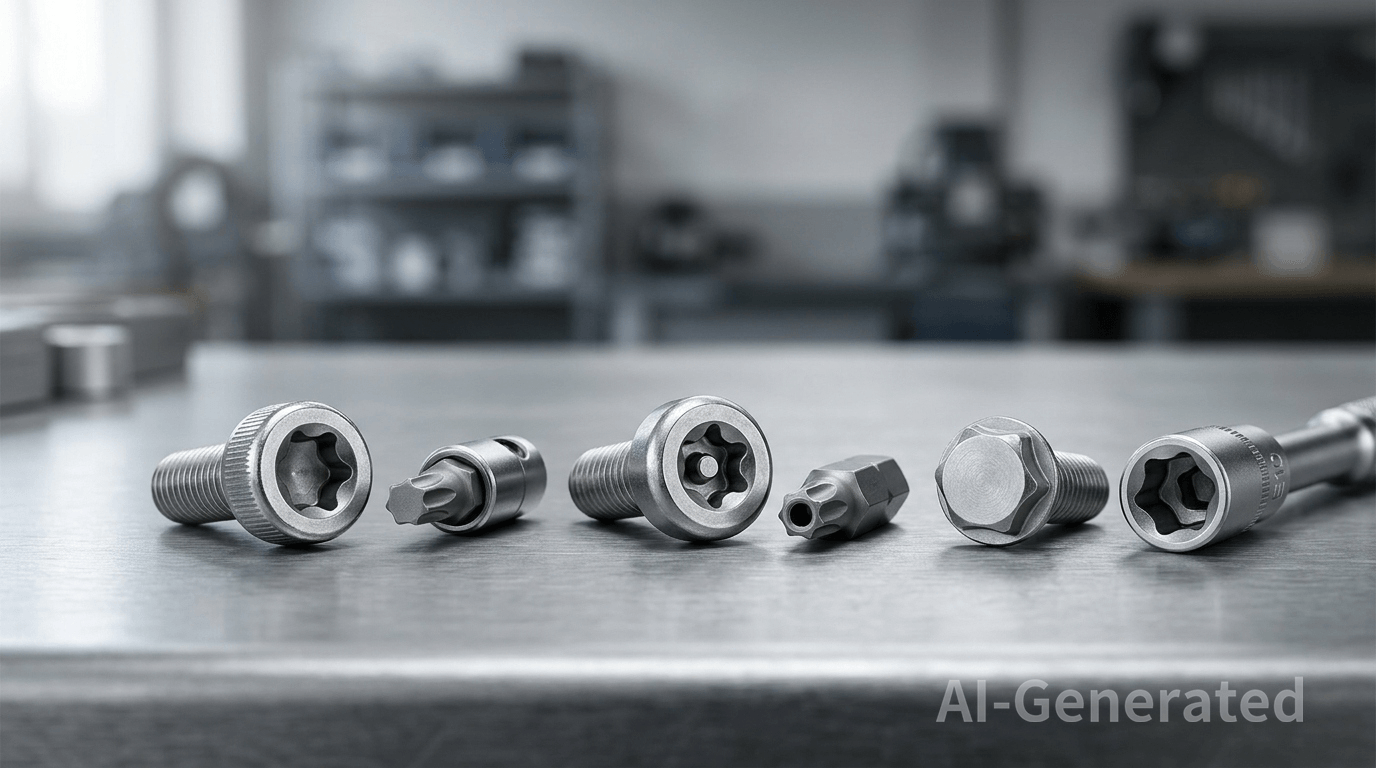
Torx Types at a Glance
| Type | What you see | Tool |
| Standard internal Torx | Six-lobe recess inside the head | Torx bit |
| Security Torx | Six-lobe recess with a center pin | Hollow-tip security Torx bit |
| External Torx | Six-lobe shape on the outside | E-Torx socket |
| TORX PLUS | Related six-lobe profile with a different lobe form | TORX PLUS tool |
| TORX PARALOBE | A distinct drive profile specified by the manufacturer | Matching TORX PARALOBE tool |
These different Torx types look related, but shape alone does not prove tool fit. Check the exact drive before you apply force.
Standard Internal Torx
Six-Lobe Recess and Size Code
Standard internal Torx has a six-lobe recess inside the screw head. The bit enters the recess and contacts the side walls of each lobe. Acument lists standard TORX internal tool sizes from T1 to T100.
You will often see a size such as T10 or T20 on a bit set. The code refers to drive size, not thread size. Two screws with the same thread size might use a different Torx recess.
Place the bit straight into the recess. The bit should sit deep with little side play. If the bit rocks inside the head, try the correct size from your set.
Among common Torx screw head types, standard internal Torx appears in many screw head forms. The drive and head shape are separate features.
Security Torx with a Center Pin
Center Pin and Hollow-Tip Bit Fit
Security Torx has the same six-lobe look, plus a solid pin at the center. Acument lists this form as TORX Tamper Resistant or RESISTORX. Its official description says the center post works with a special tamper-resistant TORX tool.
A normal solid Torx bit hits the center pin, so the bit does not reach full depth. A security bit has a hole at the tip. The hole gives the center pin space.
Look into the recess before you pick a bit. If you see a center post, choose the hollow-tip tool in the same size. People often miss the pin in poor light.
This Torx type often appears where the maker wants less access with common tools. The center pin changes the drive form, not the head style.
External Torx
Male Head Profile and Socket Fit
External Torx reverses the layout. The six-lobe shape sits on the outside of the fastener head. Your tool fits over the head instead of inside a recess.
Acument lists external TORX sizes from E4 to E44. The company also states that external TORX sockets have a smaller diameter than standard hex sockets for a fastener of the same size.
You will see labels such as E8 or E10 on socket sets. A T-size bit does not replace an E-size socket. Check the full outer profile before you choose a socket.
Proprietary or Enhanced Variants
Only Variants from Current Official Documents
Acument lists TORX PLUS and TORX PARALOBE as distinct drive systems in the TORX family. TORX PLUS features a different lobe geometry from standard TORX. TORX PARALOBE also uses its own drive profile. These systems have specific tool requirements, so check the manufacturer's specifications before selecting a driver.
The similar star look does not make these profiles equal to standard Torx. Use the exact tool for each system. Do not assume a standard T bit fits a TORX PLUS or TORX PARALOBE recess.
This point matters when you compare different Torx types. A small shape change affects contact between the bit and recess. A poor match raises the risk of wear.
Do Not Assume Fit from a Similar Star Shape
Many screw drives use a star-like form. Visual similarity does not prove the screw belongs to the TORX family. Check the product guide or service manual when the profile looks unusual.
If a bit stops high in the recess, remove the bit and check the drive. Your tool should reach full depth with a close fit.
Head Style vs Drive Type
Common Screw Heads with a Torx Drive
People often mix up drive type and screw head style. The drive refers to the part your tool contacts. The head style refers to the outer form of the screw head.
A pan head has a broad top with a low dome. A countersunk head sits flush in a cone-shaped seat. A button head has a low round form. Each head style might pair with a Torx drive, subject to the screw maker's design.
This is why a list of Torx screw head types needs clear labels. "Torx" tells you about the drive. Words such as pan head or countersunk tell you about the head form.
Head style, dimensions, and drive compatibility all matter when selecting a replacement fastener. Explore JLCMC machine screws to compare available options for your assembly requirements.
How to Choose the Correct Bit
Full Bit Fit and a Clean Recess
First, clear dirt from the recess with a safe hand tool or soft brush. Dirt blocks full bit depth. Next, place the bit straight into the drive. A correct bit should sit deep and feel stable.
Check the size mark on the bit. Match T sizes with internal Torx. Match E sockets with external Torx. For a center-pin recess, use a hollow-tip security bit.
Do not keep force on a bit that slips. Stop and inspect the lobes. If the bit tip looks worn, replace the bit. A fresh tool protects the screw head.
The right Torx type matters as much as size. T20 and TORX PLUS 20 are not names for the same profile. Read the tool mark before use.
Frequently Asked Questions
Is every star-shaped screw Torx?
No. Other driving systems use a star-like shape. Check the exact profile before you choose a bit.
What is the star screw with a pin in the middle?
People often call this Security Torx. Acument uses TORX Tamper Resistant or RESISTORX for its center-pin form.
Are standard and security bits interchangeable?
A security Torx bit may fit a standard internal Torx recess of the corresponding size, provided the drive profiles and dimensions are compatible. A standard solid Torx bit cannot fully engage a center-pin security recess.
Choose the Right Torx Part
The easiest way to sort Torx screw types starts with the drive location. Check for an internal recess or an external profile. Then look for a center pin and read the tool size.
You should match the drive before you add force. If you need a replacement screw or bit, record the size and head style first. A clear match saves the screw head and helps your tool fit well.
Set screws serve different purposes from conventional headed screws. Explore JLCMC fasteners to find options suited to your component-securing requirements.
Popular Articles
Keep Learning
What Is a Torx Screw? Star Drive and Security Torx Explained
If you have seen a screw with a six-point star recess, you have likely seen a Torx screw. So, what is a Torx screw? It is a screw with a six-lobe drive profile. You use a Torx bit to turn the screw. People often call this shape a star drive because of its six-lobe form. The standard Torx profile has six smooth, round lobes rather than sharp points. Other six-lobe drive profiles may look similar, but their dimensions can differ, and their tools may not be interchangeable. This shape gives the tool broa......
How to Drill Out a Stripped Screw Safely?
A stripped screw often turns a simple repair into a hard job. The driver slips because the screw recess no longer gives the bit a firm grip. A broken head or rusted screw creates a similar problem. Drilling screws out should come after simpler removal methods fail. Your goal is to remove enough metal to free the screw head without harm to the part. Good control matters more than force. A drill bit that moves off center might damage the hole or nearby surface. Start with a small bit and keep the drill ......
How to Remove a Stripped Hex Bolt: 7 Effective Removal Methods
A stripped hex bolt loses enough tool contact that a normal hex key or socket slips under force. The damage might affect an internal hex recess or the outer bolt head. Rust can make the problem worse because the thread then needs more force to turn. The safest stripped hex bolt removal method starts with a damage check. Use the least harsh option first, then move to stronger methods only if needed. Your main goal is to remove the bolt without harm to the thread or nearby part. What Is a Stripped Hex B......
Self-Drilling vs Self-Tapping Screws: What Is the Difference?
People often treat self-drilling and self-tapping screws as the same fastener. The two terms have a close link, but they do not mean the same thing. A self-tapping screw forms or cuts its own matching thread as you drive the screw into a suitable base material. Depending on the screw design and material, some self-tapping screws need a pre-drilled pilot hole, while others can be installed directly. A self-drilling screw is a type of self-tapping screw with a drill point at the tip, which drills the ho......
Self-Drilling Screw Types and How to Choose Them
Self-drilling screws come in several forms for different jobs. The main differences appear in the drill point, head style, thread form, and screw material. Each feature affects how the screw enters the base material and how the final joint holds. A good choice starts with the material type and total material depth. People often compare self-drilling screw types by head shape alone. The drill point matters just as much because it must pass through the full material stack. Self-Drill Screw Types at a Gl......
Torx Screw Types and How to Identify Them
Torx screws use a six-lobe drive profile. The shape gives the bit broad contact with the recess, so the tool fits with less slip than many older drive styles. You still need the right bit size and drive form. A loose bit often harms the recess. People often group every star screw under one name. That leads to wrong bit choice. The main Torx screw types differ by drive location and lobe shape. Some also use a center pin for access control. If you know what to look for, you save time and protect the scr......