What Is a Pan Head Screw? Design, Uses, and Selection
7 min
- Pan Head Screw Definition and Quick Identification
- What Does a Pan Head Screw Look Like?
- Common Pan Head Screw Configurations
- What Are Pan Head Screws Used For?
- How to Choose a Pan Head Screw
- Frequently Asked Questions
- Conclusion
You see pan head screws on almost every product you own. Laptops, light switches, cabinets, control panels. Once you learn to spot the shape, you start noticing pan heads on every shelf and cabinet.
Pan Head Screw Definition and Quick Identification
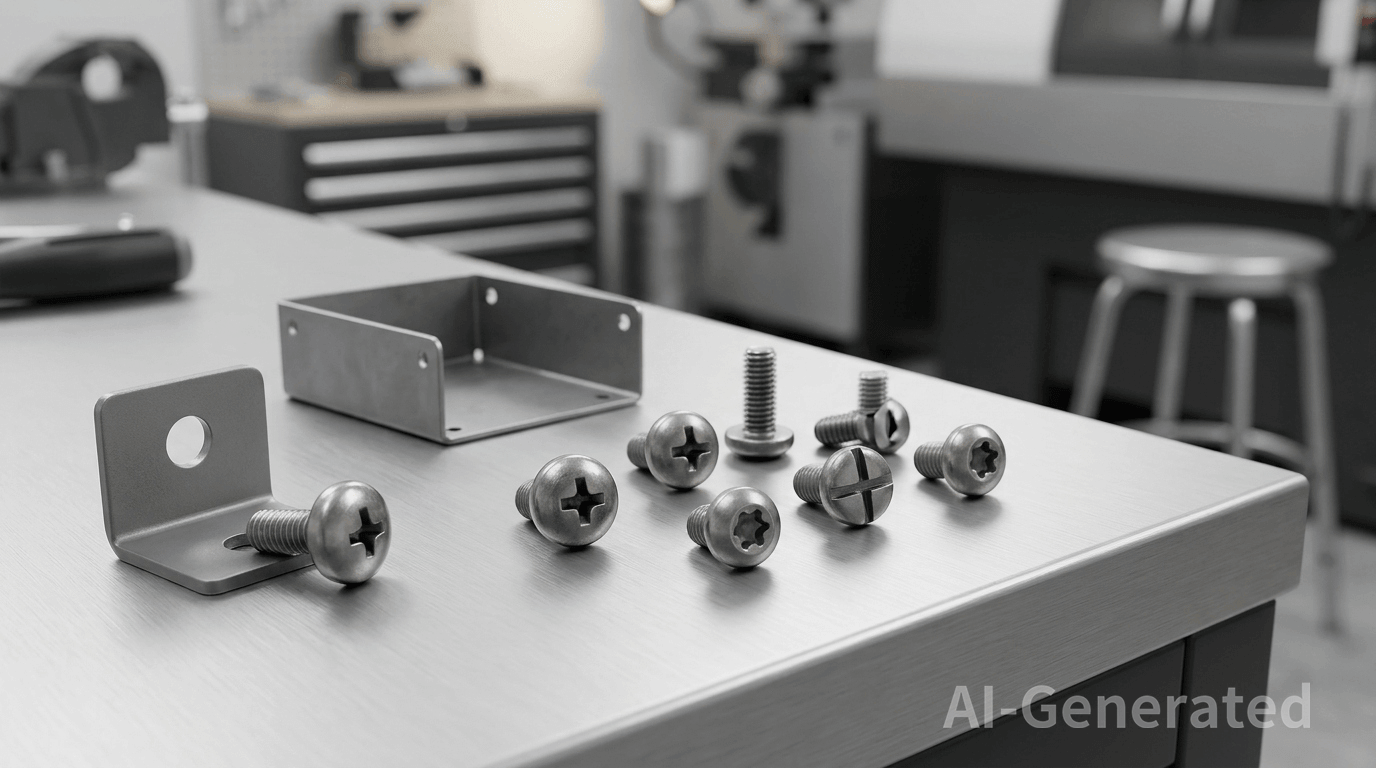
What is a pan head screw? A fastener with a low, rounded head and a flat underside, resting flush on top of the material. The head looks like a small upside-down pan, wide across the top with a slight dome and rounded outer edge.
Head shape, bearing surface, and how it sits above the material
The top of the head curves gently. The sides drop down at a near-vertical angle. The bottom of the head stays flat, so the screw grips the surface with a wide, even bearing area. This flat bearing surface distributes the clamping load over the contact area beneath the head. The risk of the head indenting or pulling through the material, however, depends on the head dimensions, the material properties, and the applied clamping force.
Unlike a countersunk screw, a pan head sits above the surface after you drive the screw home. You feel a slight bump when you run your finger across a panel with pan head screws. Manufacturers pick this style when a raised head causes no clearance problem.
Head style is separate from drive style and thread type
People mix up head shape with drive shape and thread type, but these are three different choices. Head shape describes the outer profile. Drive shape describes the tool socket cut into the top (Phillips, slotted, Torx). Thread type describes how the shaft grips the material (machine threads, wood threads, self-tapping threads).
A pan head screw comes with a Phillips drive, a slotted drive, or a hex socket depending on the maker. A pan head screw carries machine threads for a tapped hole or coarse threads for wood. The head shape stays constant while drive and thread vary based on your project.
What Does a Pan Head Screw Look Like?
What does a pan head screw look like? Picture a shallow dome sitting on top of a straight shaft, wider than the shaft itself, with rounded shoulders and a flat base. Hold one next to a coin. The head looks close to a small button with slightly higher walls.
Visual comparison with truss, button, round, and flat heads
Line up five screws side by side and the differences stand out fast:
- Pan head: Wide, low dome with a flat underside and near-vertical sides.
- Truss head: Wider and flatter than a pan head, with a low profile spreading load over a larger area.
- Button head: Rounded like a half-sphere, taller than a pan head.
- Round head: A full dome shape, higher and rounder than a pan head.
- Flat head: Angled underside built to sit flush inside a countersunk hole.
A pan head sits between a flat head and a round head in profile. Wide enough for good grip, low enough to avoid sticking up too far.
Common Pan Head Screw Configurations
Pan heads pair with many thread and drive combinations, giving you plenty of types of pan head screws to pick from depending on the material you fasten.
Machine, tapping, self-drilling, and wood applications
- Machine screws: Straight threads made for a tapped hole or a nut. Common in electronics and metal enclosures.
- Self-tapping screws: Sharp threads cutting their own path into sheet metal or plastic.
- Self-drilling screws: A drill-point tip that creates a hole in suitable materials before the threads engage. Drilling capacity depends on the screw design, material type, and material thickness, so check the manufacturer's specified drilling capacity for the application.
- Wood screws: Coarse threads with a sharp point, built to grip wood fibers.
Each version keeps the pan head shape while swapping the thread design to match the base material.
Phillips, slotted, hexalobular, and hex-socket drives
- Phillips drive: A cross-shaped socket, common on consumer products.
- Slotted drive: A single straight groove, an older style still used on light switch plates.
- Hexalobular (Torx) drive: A six-point star socket, built to resist cam-out during power driving.
- Hex socket drive: A hexagon-shaped socket driven with an Allen key, common on machinery.
Pick your drive based on the tools you own and how much torque the job needs. Torx and hex socket drives can provide secure tool engagement when the driver fits correctly. Their suitability for higher installation torque depends on the drive geometry, fastener size, tool fit, and the maker's specifications. Phillips and slotted drives also remain suitable for many applications when used within their intended limits.
What Are Pan Head Screws Used For?
What are pan head screws used for? Any job where you want a strong grip, a low profile, and no need for the screw to sit flush inside the surface.
Enclosures, electronics, brackets, panels, and light assemblies
- Enclosures: Plastic and metal housings on power tools, appliances, and control boxes use pan heads to hold panels together without extra thickness.
- Electronics: Circuit boards, computer cases, and small devices rely on pan head machine screws for their compact size and steady grip.
- Brackets: Shelf brackets, mounting brackets, and support arms hold up well under a wide pan head bearing surface.
- Panels: Access panels on cabinets and machinery use pan heads because you remove and replace them often.
- Light assemblies: Light fixtures, switch plates, and junction box covers use pan heads for their neat, rounded look.
For electronics, enclosures, and compact assemblies, the right thread size and screw length help ensure a proper fit. Explore JLCMC pan head screws to compare available dimensions and thread options for your application.
How to Choose a Pan Head Screw
Match the screw to the job by working through a short checklist instead of guessing.
Thread, length, drive, material, finish, clearance, and washer needs
- Thread: Grab machine threads for a tapped hole or a nut. Grab wood or self-tapping threads for solid wood or soft material.
- Length: Pick a length long enough for a solid grip but short enough to stay clear of the back side.
- Drive: Go with Phillips or slotted when you drive by hand. Switch to Torx or hex socket when a power tool or heavy torque comes into play.
- Material: Steel holds up under load. Stainless steel fights off rust. Brass works fine for light, decorative jobs.
- Finish: Zinc plating gives basic rust protection. Black oxide adds a darker finish and a bit of corrosion resistance.
- Clearance: Measure your space first. A raised pan head needs room, so check before you buy.
- Washer needs: Slide a flat washer or lock washer under the head whenever you need wider load spread or a tighter hold against vibration.
Frequently Asked Questions
Is a pan head screw the same as a pan head bolt?
No. A pan head describes the head style, not whether a fastener is classified as a screw or a bolt. Screws and bolts may have different intended fastening arrangements, depending on the applicable standard and design. Identify the fastener by its specified product type and thread configuration rather than by the head shape alone.
Do pan head screws sit flush with the surface?
No. A pan head screw sits above the material after you drive it in. Only a countersunk head sits flush inside a shaped recess.
When should a truss head be used instead?
Switch to a truss head when you need a wider bearing surface than a pan head offers, such as on soft or thin material prone to pull-through.
Conclusion
A pan head screw gives you a strong grip, a low profile, and options across threads, drives, and materials. Check your material, your tool, and your clearance before you buy. Browse a full range of pan head screws today and find the exact fit for your next project.
Before choosing a pan head screw, check the head diameter, height, drive type, thread, and available clearance. Explore JLCMC fasteners to compare available specifications and identify an option that fits your assembly requirements.
Popular Articles
Keep Learning
Polyurethane Bumper Energy Calculation: Impact Kinetic Formulas, Stroke & Duty Cycles
Key Takeaways Impact energy depends on contact velocity squared, so a small speed change can materially alter the stopping event. Physical bumper height is not the same as permitted compression or usable stopping distance. Include work from a drive force that continues during compression, plus gravity or rotational effects where applicable. Hardness describes indentation resistance; it is not an energy rating or a complete force-deflection curve. Repeated impacts require a duty assessment as well as a......
Rubber Vibration Isolator Natural Frequency Calculation & Rigid Bypass Troubleshooting Standards
Key Takeaways Trace every mechanical connection between the isolated assembly and its surroundings, including services and guards. Compression, shear and tension are different loading conditions; use the data for the intended direction. A mount must be loaded appropriately, not merely kept below its maximum capacity. Keep deliberate retention hardware compatible with the movement needed for isolation. Compare vibration before and after changes at consistent operating conditions and measurement locatio......
What Is a Torx Screw? Star Drive and Security Torx Explained
If you have seen a screw with a six-point star recess, you have likely seen a Torx screw. So, what is a Torx screw? It is a screw with a six-lobe drive profile. You use a Torx bit to turn the screw. People often call this shape a star drive because of its six-lobe form. The standard Torx profile has six smooth, round lobes rather than sharp points. Other six-lobe drive profiles may look similar, but their dimensions can differ, and their tools may not be interchangeable. This shape gives the tool broa......
How to Drill Out a Stripped Screw Safely?
A stripped screw often turns a simple repair into a hard job. The driver slips because the screw recess no longer gives the bit a firm grip. A broken head or rusted screw creates a similar problem. Drilling screws out should come after simpler removal methods fail. Your goal is to remove enough metal to free the screw head without harm to the part. Good control matters more than force. A drill bit that moves off center might damage the hole or nearby surface. Start with a small bit and keep the drill ......
How to Remove a Stripped Hex Bolt: 7 Effective Removal Methods
A stripped hex bolt loses enough tool contact that a normal hex key or socket slips under force. The damage might affect an internal hex recess or the outer bolt head. Rust can make the problem worse because the thread then needs more force to turn. The safest stripped hex bolt removal method starts with a damage check. Use the least harsh option first, then move to stronger methods only if needed. Your main goal is to remove the bolt without harm to the thread or nearby part. What Is a Stripped Hex B......
Self-Drilling vs Self-Tapping Screws: What Is the Difference?
People often treat self-drilling and self-tapping screws as the same fastener. The two terms have a close link, but they do not mean the same thing. A self-tapping screw forms or cuts its own matching thread as you drive the screw into a suitable base material. Depending on the screw design and material, some self-tapping screws need a pre-drilled pilot hole, while others can be installed directly. A self-drilling screw is a type of self-tapping screw with a drill point at the tip, which drills the ho......